What Is A Typical Roman Breakfast?
A typical Roman breakfast is a cornetto and a cappuccino or espresso taken standing at the bar, and the two-price system that catches every visitor once. Here is how it works.
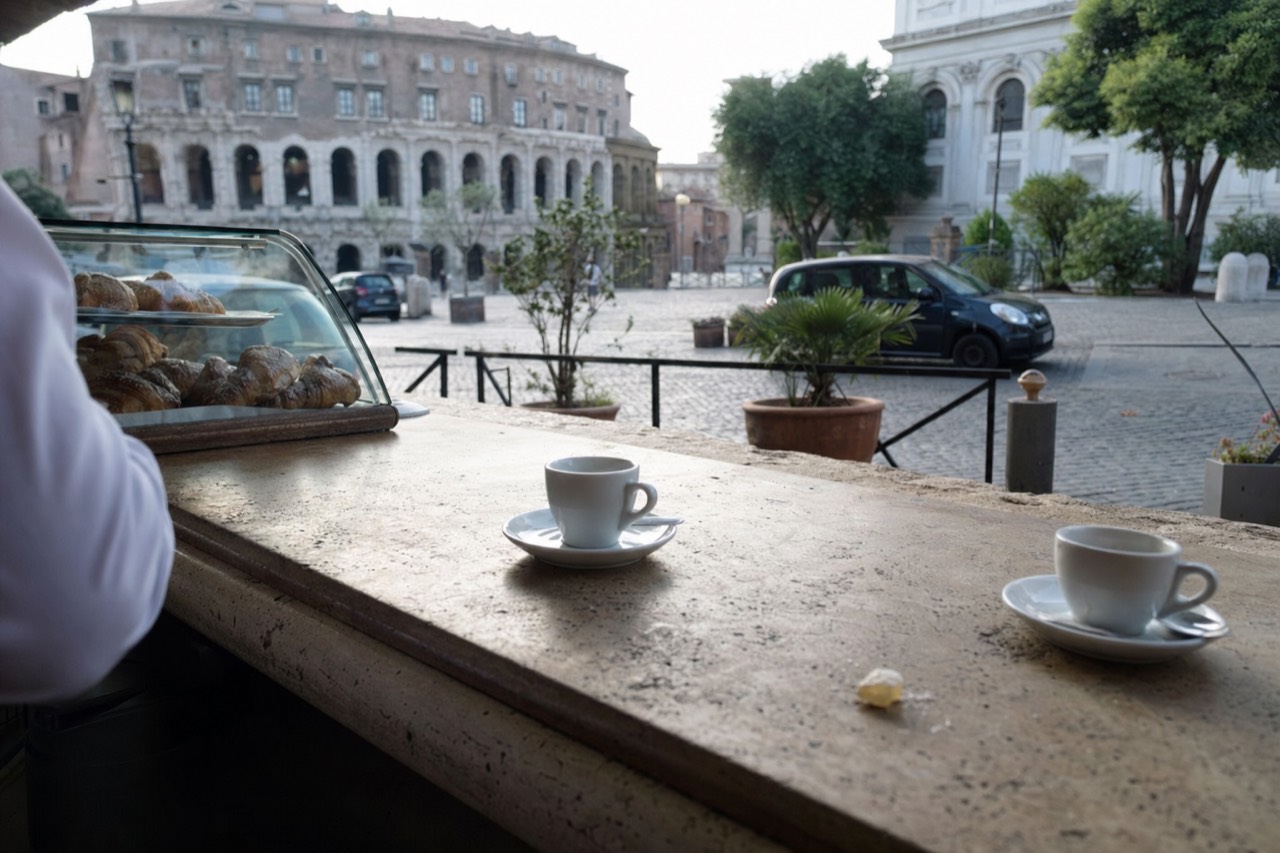
A cornetto and a cappuccino, taken standing at the bar, in under ten minutes. That is the whole answer, and it has been the whole answer for generations of Romans: a sweet croissant-shaped pastry, a coffee drink chosen by the clock, a marble counter, no table, no menu negotiation, no sitting down. The bar is the institution, the counter is the price, and the morning is the deadline.
Most visitors get the pastry part right and the posture wrong. They sit. The moment you sit, in most Roman bars, you are buying a different product at a different posted price, and often table service on top of it. The coffee does not change. The cup does not change. What changes is what you are charged for, and the bar is required to show both prices before you order, which is the one piece of law that quietly protects every breakfast in the city.
There is also a clock rule that every Roman applies and no visitor is warned about: milky coffee belongs to the morning. A cappuccino at eight is normal. A cappuccino after lunch is, in the Roman view, a digestive error, and ordering one marks you as foreign faster than any accent. None of this is snobbery. It is a working city's breakfast, built for speed, built around coffee, and almost completely unchanged by tourism because it was never aimed at tourists in the first place.
The format is worth understanding before the details, because the format is the price. A Roman breakfast at the bar is the cheapest genuinely Roman thing a visitor can do in the city, cheaper than any attraction, any tour, any restaurant meal, and the reason is structural: you are not renting a table, you are not occupying a waiter's time, and you are not staying long enough to matter. The economy of the bar counter is the whole reason Romans eat breakfast this way, and it is the same reason a visitor who eats breakfast the Roman way starts every day in Rome spending almost nothing.
This page walks through what Romans actually order, how the two-price system works and where it comes from, why the cappuccino clock rule exists, where the best breakfast counters in the centre are, and how the morning ritual connects to the market morning that follows it. Along the way it links to the budget eating in Rome guide, because breakfast at the bar is the anchor of any cheap day in the city, and to the what to eat in Rome overview for the rest of the day.
How Does The Bar Two-Price System Work?
Every drink in an Italian bar carries two posted prices: one for drinking it standing at the counter, al banco, and one for drinking it seated at a table, al tavolo, and you are choosing which of the two products you are buying the moment you decide where to stand or sit. The table price is higher, and table service, where charged, must appear on the price list before you order. This is not a hidden charge or a tourist surcharge: it is a legal, posted, two-tier system, and the price list near the till or the entrance is where both numbers live.
The law behind it is regional. Lazio regional law 21/2006, article 16, requires that where service is provided at the table, the price list must be available to the customer before ordering, and must show any service component clearly enough that the final price is easy to understand. The same article does something else that matters later in your day: it prohibits a separate coperto charge outright, which makes Rome the inverse of Florence on that point. For breakfast, the practical reading is simple. Look at the list before you order, decide standing or sitting, and you will never be surprised by the bill.
Here is where visitors get caught, and it is always the same story. They order at the bar, in the crush, then carry the cup to a table, or they sit down first and expect counter prices to follow them. In many bars the seating is a different transaction altogether, sometimes with a waiter attached, sometimes with a service line on the receipt. The bar is not tricking anyone: the two prices were posted, in Italian, the whole time. The mistake is assuming the price follows the drink rather than the position.
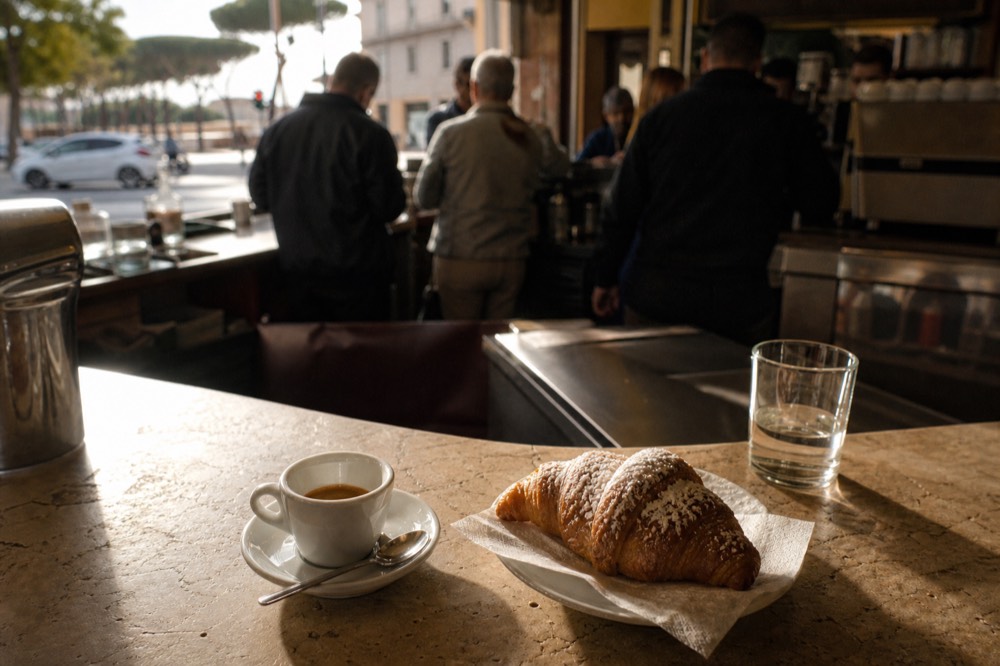
The Roman move, and the one that costs the least, is to pay first or order at the counter, drink standing at the counter, and leave. Romans do this in three to five minutes. They rest the saucer on the marble, they drink the espresso in two sips, they eat the cornetto in three bites standing up, and they are out the door. It looks hurried to a visitor and it is not: it is the intended use of the room. The table is for later in the day, for the long afternoon pause, or for tourists, and everyone in the bar knows which is which.
The system rewards you for behaving like a local, which is rare in a tourist city. The best breakfast in Rome is not a hidden one, and it is not expensive: it is the same cornetto and cappuccino the regular beside you is having, at the counter, at the posted counter price, in a room that has been doing exactly this since before your grandparents were born.
| What changes | Standing at the counter, al banco | Sitting at a table, al tavolo |
|---|---|---|
| Which posted price you pay | The counter price on the list | The table price on the same list |
| Service charge | Not applicable | May appear, but must be shown on the list before you order |
| Time it takes | A few minutes | As long as you like |
| Who does it | Nearly all Romans before work | Visitors, slow mornings, afternoon pauses |
| The legal protection | The price list at the till | Lazio law 21/2006 art. 16: list shown before ordering, service component displayed |
What Do Romans Actually Order For Breakfast?
The order is a cornetto, plain or filled, and a coffee drink chosen by the hour: espresso or macchiato as the default, cappuccino or caffè latte in the earlier morning, and never a milky coffee once the lunch hour has passed. The cornetto is the Italian cousin of the croissant, slightly softer and less buttery than the French version, and it comes in three standard forms: plain, with apricot or cherry jam, and with chocolate, which Romans call cornetto con crema only when the filling is custard. The coffee is where the vocabulary matters.
The espresso is the base of everything and it has a dozen local variations worth knowing. A caffè is a plain espresso. A caffè macchiato is an espresso marked with a splash of milk. A cappuccino is the full milky drink, named for the Capuchin friars whose robes match the colour, and a caffè latte is mostly milk. A marocchino layers espresso, cocoa and milk foam in a small glass. A caffè corretto is an espresso corrected with a shot of liquor, which is a mid-morning or after-lunch object, not a breakfast one. Romans also order the ristretto, a shorter, denser pull, and the lungo, a longer one.
The pairing logic is consistent and worth copying. The sweeter the pastry, the shorter and more bitter the coffee. A plain cornetto with an espresso is the purist's order. A jam or chocolate cornetto pushes the balance toward a cappuccino, whose milk softens the sugar. A maritozzo, the Roman cream bun, is the breakfast of Sunday and of pastry shops rather than bars, and it demands the strongest coffee on the list. Ordering a milky drink with a heavy afternoon meal, on the other hand, is the classic foreign move, and the clock rule explains why in the next section.
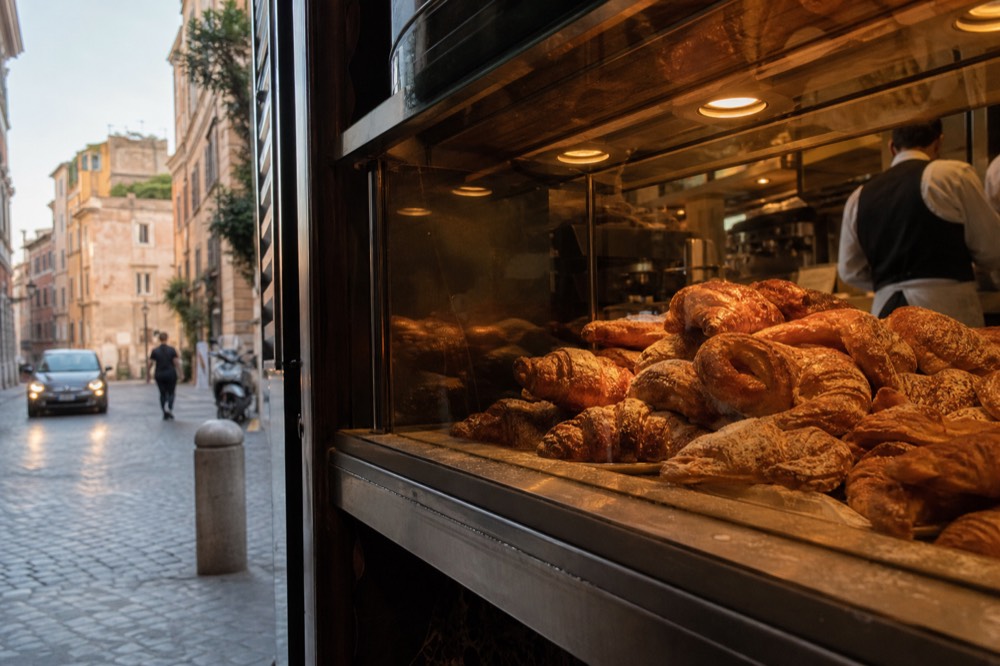
The maritozzo deserves its own sentence, because it is the one Roman breakfast item that travels badly and stays local. It is a sweet, soft, brioche-style bun split open and filled with a thick layer of whipped cream, and it was the breakfast of Roman labourers a century ago, a portable, filling, cheap start to a working day. The modern versions appear in pasticcerie rather than corner bars, and the savoury revival in Trastevere has made it an all-day object. The pricing mechanic at a pastry counter is the same as at the bar: posted, per item, and paid at the till.
One ordering habit that saves confusion: pay first in bars that use a till system, the cassa, take the receipt, then order at the counter with the receipt in hand. In smaller bars you order, drink and pay on the way out. Watch what the person before you does. The room will tell you its own system within thirty seconds of standing in it, and no Roman bar has ever been offended by a visitor copying the locals at the counter, because that is what the counter is for.
| The order | What it is | When Romans have it |
|---|---|---|
| Caffè | A single espresso | Any hour, the default |
| Caffè macchiato | Espresso with a splash of milk | Morning through afternoon |
| Cappuccino | Espresso with steamed milk and foam | Before roughly 11:00, with breakfast |
| Cornetto | Soft Italian croissant, plain, jam or chocolate | Morning, at the bar |
| Maritozzo con panna | Cream-filled sweet bun | Sunday mornings, pastry shops |
| Granita di caffè con panna | Coffee granita with cream | Hot months, a slow breakfast |
Why Do Italians Never Order Cappuccino After Morning?
The rule is a digestion convention rather than an etiquette law: milky coffee is considered a morning drink because Romans believe milk after a full meal sits heavy on the stomach and interferes with digestion, so a cappuccino ordered after lunch reads as a dietary mistake, not a moral one. No official body enforces it. No waiter will refuse you. But the belief is near universal, culturally inherited, and old enough that it now functions as a shibboleth separating locals from visitors in every bar in the city.
The honest version of the rule is that it is folk physiology, and the honest answer to it is that you can order whatever you like. Romans do, occasionally, and the barman will make it without comment. What the rule actually does is give you the local rhythm of the day. Milk belongs to the start, when the stomach is empty and the day is beginning. The afternoon and evening belong to the short, bitter drinks that end a meal rather than fill one. If you eat on Roman time, breakfast at eight, lunch at one, dinner at nine, the coffee clock arranges itself around you without effort.
There is a practical edge to it too. A cappuccino after a big Roman lunch is genuinely filling: it is a small meal of hot milk on top of pasta. Nobody who has eaten a proper plate of carbonara wants one, which is why the rule exists in the first place. The visitor version of the mistake is subtler: a cappuccino at four in the afternoon as a pick-me-up, in a bar, in the centre, which marks you immediately in a way no amount of fluent Italian will undo.
The counter-move, if you want coffee in the afternoon and want to look like you know the room, is the espresso, or the macchiato if the day is long. Order it, drink it standing in two sips, leave a few coins or round up, and go. Tipping in Italian bars is not expected at all: rounding the bill or leaving small change for genuinely good service is the local habit, and no percentage has ever been the Italian standard.
Where Do You Find The Best Roman Breakfast In The Centre?
The Roman breakfast is a bar and pasticceria thing, not a restaurant thing, and the centre of Rome is dense with historic counters: the coffee bars around the Pantheon, the pastry shops of the old streets, and the market mornings of Testaccio and Esquilino, nearly all of them walk-in, no reservation, friction-free places. Of the sixty best-known Roman tables and counters, the breakfast end sits at the bottom of the friction scale: coffee counters, gelaterie that double as pastry shops in the morning, and bakeries where you queue for minutes, not hours.
Two historic coffee counters sit a few steps from the Pantheon, and both are institutions. Tazza d'Oro is the granita di caffè house, a standing bar by the Pantheon whose coffee granita with cream is the one Roman breakfast that is genuinely a destination: shaved coffee ice, cream, a spoon, and a slow morning in a hot month. Sant'Eustachio Il Caffè, near Piazza Navona and the Pantheon quarter, is open every day of the year except two, Christmas Day and the Ferragosto holiday of 15 August, and its signature gran caffè is sugared at the bar unless you say otherwise, a small detail that is worth knowing before you order one.
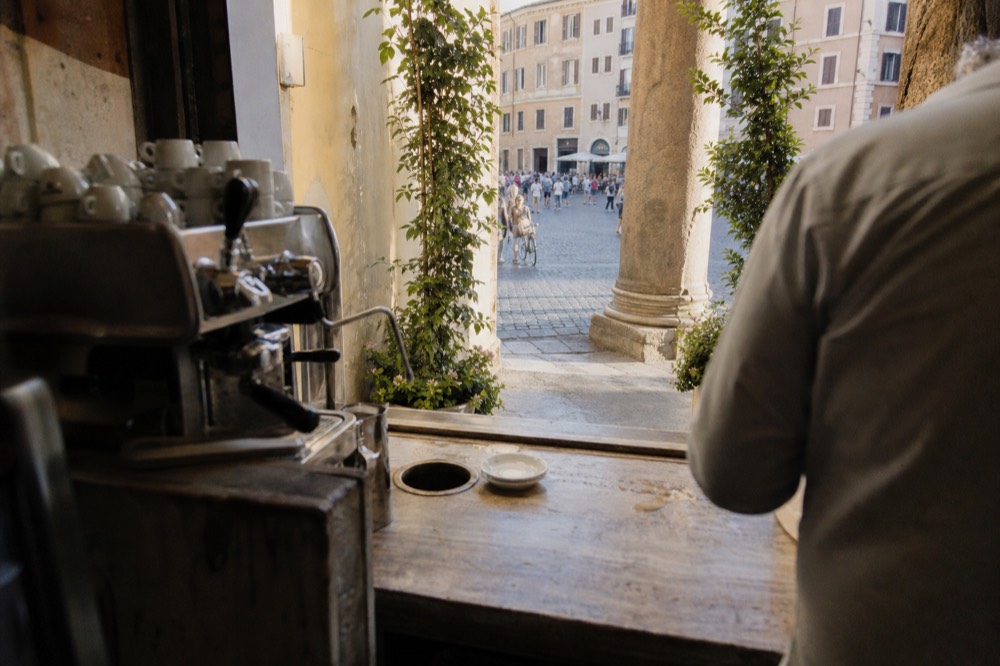
Away from the coffee houses, the pastry shops carry the maritozzo end of breakfast. Pasticceria Regoli near Vittorio Emanuele, in a tiled old hall, is the classic cream-bun address, a walk-in counter closed on Tuesdays, busier on Sunday mornings than at any other time. In Testaccio and Trastevere the corner bars serve the neighbourhood the way they always have: cornetti in a glass case, coffee from the machine, locals in and out in minutes, and no reason at all for a visitor to be nervous, because nothing in the transaction requires a reservation, a table, or any Italian beyond pointing.
The market morning is the other half of Roman breakfast culture, and it is the half most visitors miss. Nuovo Mercato Testaccio opens Monday to Saturday at 07:00 and trades until 15:30, and its morning is a working food economy: butchers, produce stalls, the pizza counter, and the sandwich boxes that feed the neighbourhood at lunch. Breakfast there is coffee at a bar stall and something hot from a counter, eaten standing between crates, which is about as far from the hotel breakfast buffet as Rome gets. The market's own published hours are the ones to trust: Monday to Saturday, 07:00 to 15:30, closed Sunday.
For a visitor who wants the market morning without having to decode it alone, the market food tours are the structured route in. The fourteen-tastings walk through Testaccio, from $77.81 per person (checked September 2026), about three and a half hours in a small group, covers fourteen tastings across eight family-run establishments including the market itself, with free cancellation and pickup available. It is a lunch-and-market experience rather than a breakfast one, but it lands you inside the same morning economy the breakfast bar anchors, with the market's stalls and counters explained as you go.
What Does A Roman Breakfast Cost A Visitor?
The cost mechanic is the two-price system, and the visitor's control over it is total: stand at the counter and you pay the counter price, sit at a table and you pay the table price plus any service shown on the list, so the same breakfast can cost several times what the person standing beside you paid, and both prices are posted before you order. The spread between the two posted prices varies bar to bar and is not a fixed rule, so treat the position, not a number, as the decision. The table is a comfort you are buying; the counter is the local price.
This is why the bar breakfast anchors any budget day in Rome, and the eating in Rome on a budget guide covers the rest of the mechanics: the nasoni, the free public drinking fountains that number over 3,000 across the city by the water utility's own count, the pizza al taglio counters that price by weight, and the markets. Breakfast at the bar is the one meal where behaving exactly like a Roman is also the cheapest available option, with no trade-off at all. You are not economising by standing up. You are doing it correctly.
A practical budget picture, using the only fixed figures this site can print, the tour prices: the bar breakfast is the cheap end of the Roman food day, the street-food walks run from around $48 per person (checked September 2026), and the market tours that include a full tasting itinerary run from $74.62 per person for fourteen tastings to $128.83 for nine tastings including three Roman pastas (see Food Tour Prices). Between the coffee counter and the market tour sits an entire spectrum, and the breakfast bar is the floor of it.
| The breakfast move | What it costs you | What it costs in effort |
|---|---|---|
| Espresso and cornetto at the counter | The posted counter price | Minutes, no table, no service |
| The same order carried to a table | The posted table price, plus any service shown on the list | A seat, a slower morning |
| Coffee granita with cream at a historic bar | A posted item price, seasonal | A queue at peak, eaten on the spot |
| Maritozzo at a pasticceria | The posted per-item price | A short counter queue, Sunday busiest |
| Market morning with a guide | From $74.62 per person (checked September 2026) on the tasting walks | About three and a half hours, booked ahead |
The one thing not to do is treat the bar as a restaurant and expect the mechanics to transfer. There is no coperto in Rome, that charge is prohibited by the regional law, but there is also no table to hold at a bar, no reservation to make, and no waiter assigned to you unless you have chosen the seated service. The bar is a machine for feeding a city quickly and cheaply, and it works best when you use it the way it was built to be used.
Is Breakfast In Rome Worth Planning Around?
Yes, and the planning is inverted: the Roman breakfast rewards zero planning and one piece of knowledge, because the best breakfast counters take no bookings, keep no lists and post their prices on the wall, so the entire strategy is knowing the two-price system, the cappuccino clock and where the historic bars are, then walking in. Of the sixty best-known Roman tables and counters, the breakfast end is overwhelmingly friction-free: walk-in counters, no reservations, short waits. The friction in Roman food sits elsewhere, at dinner, at the trattorias that take no bookings and the starred rooms that hold your card. Breakfast is the easy half of the city.
The morning also sets up the rest of the day better than any other meal. A bar breakfast at eight puts you on Roman time before lunch, which starts the clock on the 12:30 to 15:00 window, which in turn lines up dinner with the 19:00 or later kitchen openings. The rhythm compounds: eat breakfast like a Roman and the rest of the day's meal times arrange themselves, including the aperitivo hour that fills the gap between the afternoon and a nine o'clock dinner. Visitors who fight the rhythm eat at odd hours in the places that cater to odd hours, and those are the rooms where the two-price system quietly works against them.
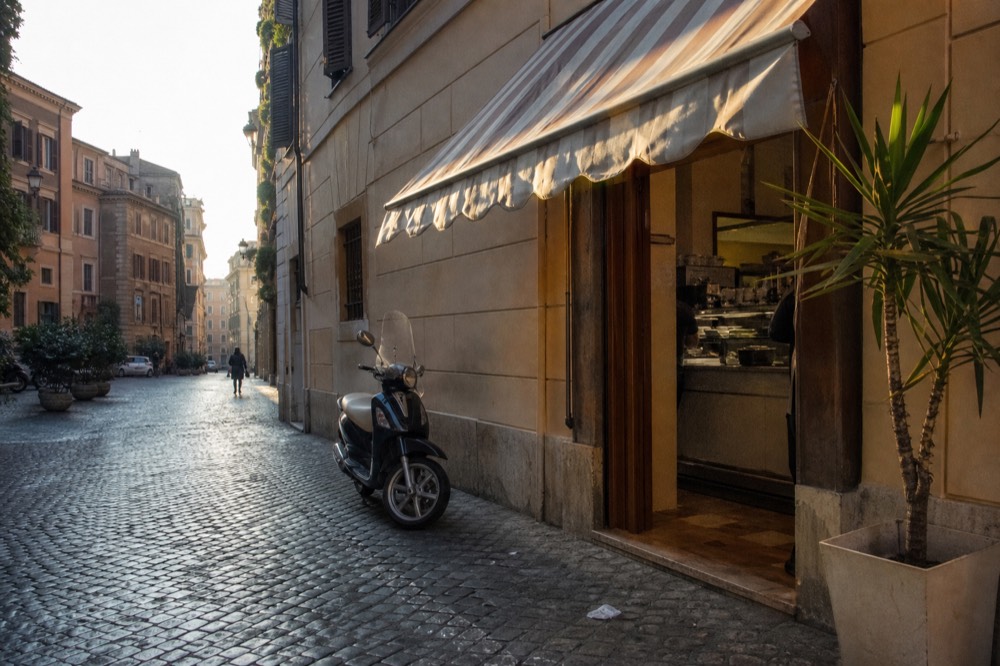
The deeper answer, and the one this site exists to give, is that the bar breakfast is the clearest example of how Rome's food culture is built for residents and merely shared with visitors. The site publisher, Best Restaurants in Rome, ranks the city's tables by how they work, and the bar counter is where everything works: the price is posted, the product is unchanged for tourists, the locals and the visitors pay the same posted figure for the same standing position, and the only way to pay more is to choose to sit. There is no tourist version of the cornetto. That is rarer than it sounds, and it is worth planning your morning around, even if the plan is only a street name and a decision to stand.
For travellers who want the morning food economy in one outing, the market tour is the format that does it: a guided route through the stalls and counters of a working market, tastings fixed in price before you go, booked in advance like a ticket, and free cancellation on the listings in this roster. The related tour on this page, the Testaccio market visit with local tastings, is the direct route into the market whose breakfast-hour economy this article describes, and the two other cards below cover the covered-market and small-group alternatives.
The three formats above are the same family of outing at different depths: the full fourteen-tasting small-group walk, the four-hour covered-market route at Trionfale, and the pickup-included market visit. All three run in the morning-to-afternoon band, all include free cancellation, and none of them is a breakfast tour, because Roman breakfast is not a tour product. It is a counter, a coin and a standing position. The tours cover the market morning that the breakfast bar opens.
A closing thought on the coffee question every visitor asks, which is whether the coffee in Rome is really better or whether memory flatters it. The honest answer is structural. Roman bars turn over enormous volumes of espresso daily, the machines are used constantly, the beans are roasted for the drink rather than the bag, and the barman pulls hundreds of shots a day. Volume, freshness and practice are the difference, and they are also why the price at the counter stays low: the system is built for speed and repetition. The best cup in Rome is not a secret. It is the one closest to where you are standing.
A typical Roman breakfast is a cornetto and a coffee taken standing at the bar, and the questions below cover the details visitors ask about most: the two posted prices for the same drink, the cappuccino clock rule, the coperto ban in Lazio, the maritozzo and whether to tip at the counter. Each answer is short and practical, and each one is the version a Roman would give you across the marble, in the three minutes the counter allows, before the morning rush takes over the room.
Common Questions About A Typical Roman Breakfast In Rome
What Is A Typical Roman Breakfast?
A cornetto and a coffee drink taken standing at the bar. The coffee is usually an espresso or macchiato, or a cappuccino earlier in the morning, and the whole thing takes a few minutes at the counter, at the posted counter price, before work.
Is It Rude To Order A Cappuccino After Lunch In Rome?
It is not rude, and no bar will refuse you. It is a digestion convention: Romans consider milky coffee a morning drink that sits heavy after a full meal. Ordering one after lunch marks you as a visitor, but the barman will still make it.
Why Does The Same Coffee Cost Two Different Prices In A Roman Bar?
Italian bars post two prices for the same drink: one for drinking it standing at the counter, al banco, and one for sitting at a table, al tavolo. Lazio regional law 21/2006 requires the price list to be available before you order, so both prices are posted and the position you choose is the price you pay.
Is There A Cover Charge For Sitting At A Table In Rome?
A coperto charge is prohibited in Lazio by regional law 21/2006, article 16. What a bar or restaurant may lawfully charge instead is a servizio component, and only where the price list shows it before you order. Check the list near the till before you sit.
What Is A Maritozzo?
A soft sweet bun split open and filled with thick whipped cream. It is the historic Roman breakfast pastry, traditionally a working man's start to the day, and today it is found in pastry shops and at Sunday counters, with a recent savoury revival in Trastevere.
Should You Tip In A Roman Bar?
Tipping is not expected in Italian bars. Italians leave nothing, round the bill up, or leave small change for genuinely good service. No percentage is an Italian standard, and nobody at the counter will be waiting for one.