Rome Cooking Classes Compared By Format
Eight cooking classes, compared by what you make, how long it takes, where you meet and what is included, so the format, not the price, drives the choice.
Short answer
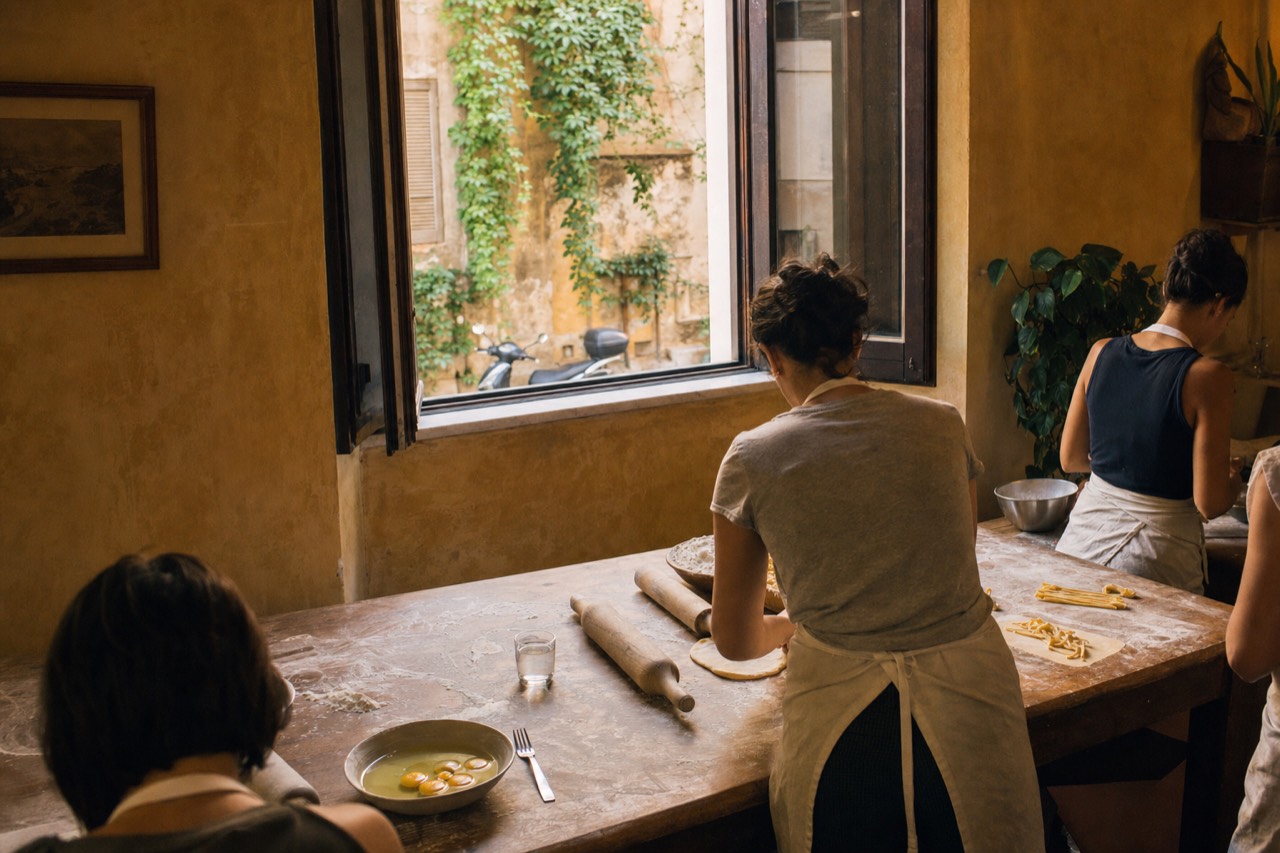
Rome cooking classes run from 2 to 6 hours and from $41.33 to $147.98 per person (checked September 2026). The main formats are pasta only, pizza and gelato, a market visit followed by cooking, and a home kitchen in Testaccio. Every roster listing includes free cancellation, and most classes end with you eating what you made.
Rome has eight cooking class listings, and the differences between them are almost entirely differences of format, not of quality. One runs two hours and teaches a single pasta shape; another runs six hours, walks a market first and ends with lunch. The shortest costs from $41.33 per person (checked September 2026), the longest from $147.98, and the gap is explained by what each one includes rather than by any verdict on which kitchen is better.
This page compares them on that basis. It uses the published durations, group sizes, inclusions and meeting points, plus the facts on what the four canonical Roman pastas actually are, so you can match a class to the trip you are actually taking. A family with two hours before dinner wants a different class from a traveller who wants to spend a whole morning on it.
Why Take A Cooking Class In Rome?
A cooking class is the one food plan in Rome that cannot be lost to a full room. Every other dinner plan in the city depends on a reservation system, a queue or a closing day, and several of the best trattorias take no bookings at all. A class is booked in advance like a ticket, the seat exists the moment you pay, and the only remaining variable is showing up on time.
That is not a small thing in a city where the friction is concentrated exactly where the food is best. Da Enzo al 29, the most-recommended trattoria in Trastevere, states on its own site that it takes no reservations at all, in any service, and seats people in the order they arrive. Armando al Pantheon opens its book thirty days ahead and releases a new day of tables at midnight, online only. Tonnarello has five rooms in one neighbourhood and still refuses to manage a book.
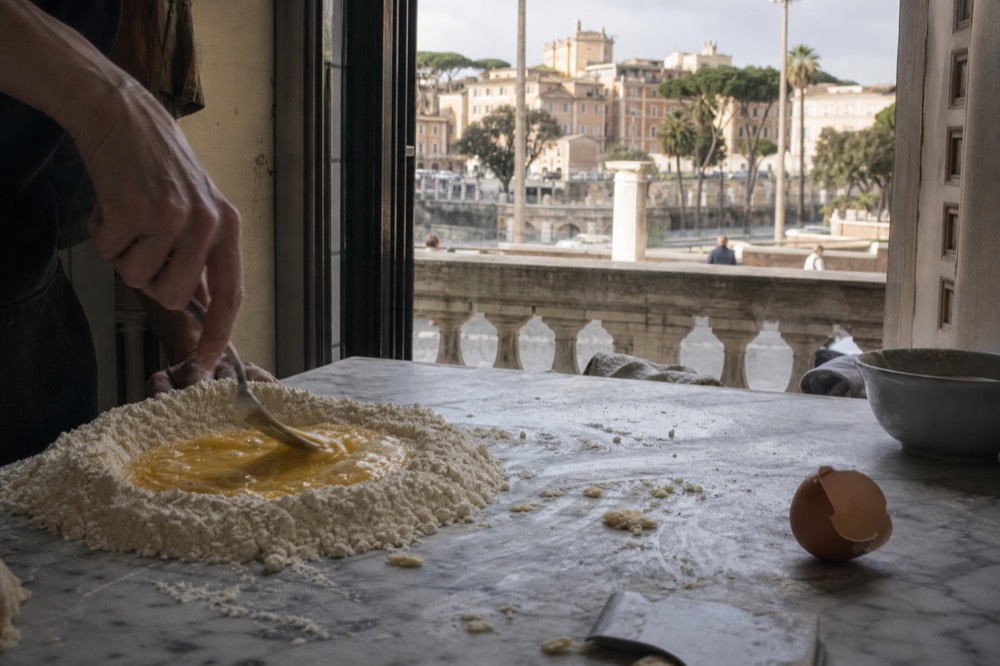
The Roman hook is stronger still, and it is the reason a class here is more useful than the same class in another city. The four canonical Roman pastas, carbonara, cacio e pepe, gricia and amatriciana, are the easiest Italian dishes to reproduce at home. They have short ingredient lists and no elaborate technique; what they demand is a working sense of the proportions and the timing, which is exactly what a class teaches. You leave with a dinner you can cook in your own kitchen for the rest of your life.
There is a second, quieter advantage. The classes that walk a market first, and there are several on the roster, put you inside a working Roman market at the hour it actually trades, which most visitors never see because they arrive after the produce has been sold. The street food and market pages cover those markets in their own right if that is the half you want.
What Is The Best Cooking Class In Rome?
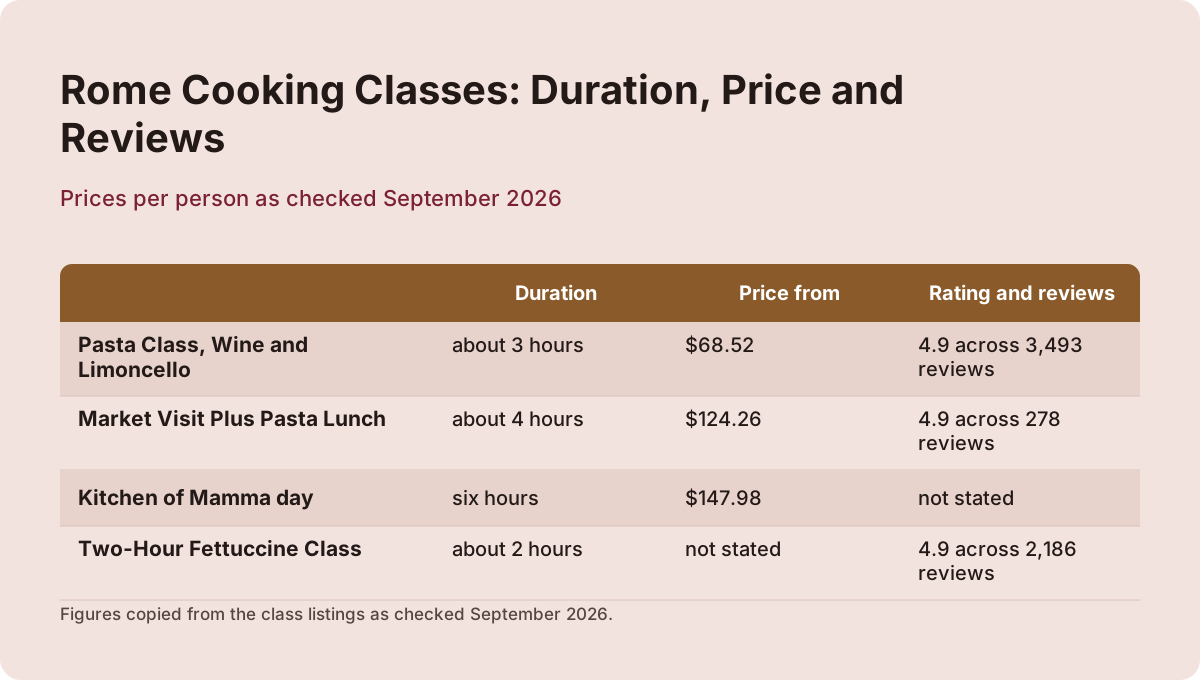
There is no single best class, because the formats do not compete. The pasta class by the Pantheon, from $68.52 per person (checked September 2026), rated 4.9 across 3,493 reviews, is the best all-round choice for a first visit. A six-hour market and class day suits a traveller with a whole morning. A two-hour fettuccine class suits a tight schedule, and the pizza plus tiramisu class is the one for children or reluctant cooks.
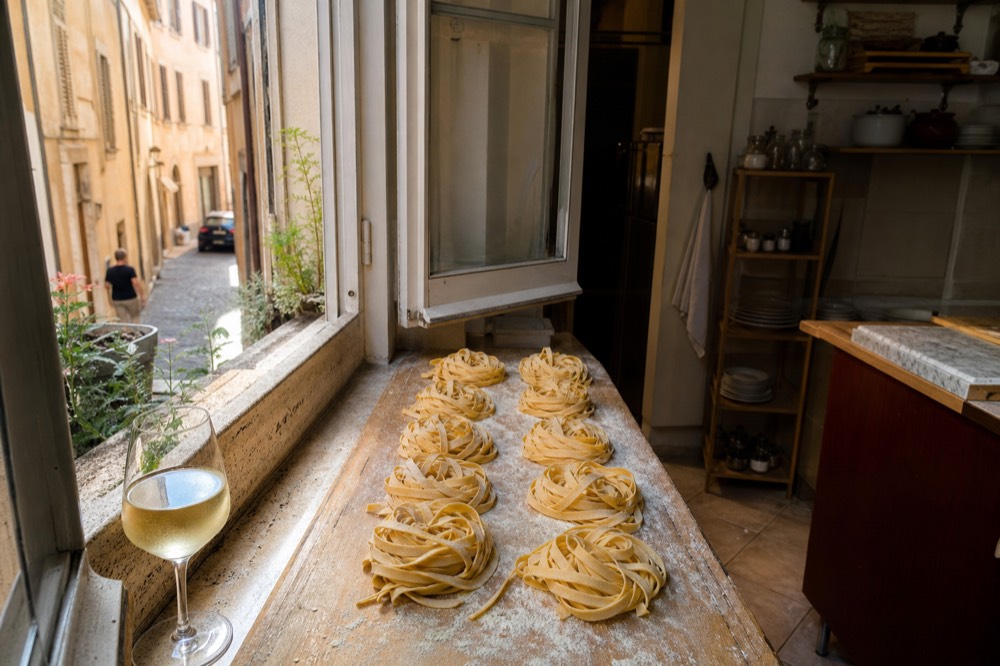
The differentiators are the number of things you make, the wine and whether it flows freely, and whether the class ends with a full meal. The Pantheon pasta class has you eat the pasta you made as a meal, with wine, dessert and limoncello included. The six-hour Kitchen of Mamma day adds a market walking tour before the cooking and lunch of the pasta made in class, with wine. The two-hour fettuccine class includes bruschetta, fettuccine with a sauce of your choice, and coffee or tea.
Ratings help here because the review counts are large and the spread is small. Every pasta class on the roster sits at 4.8 or above; the Pantheon class carries 3,493 reviews (checked September 2026) at 4.9, the fettuccine class 2,186 at 4.9, the fresh pasta class with wine and gelato 928 at 4.9, and the Testaccio home cooking class 88 at 4.9. The smaller counts are not a quality signal, they are a scale signal, and for a class the scale matters less than for a tour because the room is small either way.
| Class | Duration | Group format | What you make and eat | Rating and reviews |
|---|---|---|---|---|
| Pasta Class, Wine and Limoncello | about 3 hours | standard | Pasta you make, eaten as a meal, wine, dessert, limoncello | 4.9 across 3,493 reviews (checked September 2026) |
| Two-Hour Fettuccine Class | about 2 hours | small group | Bruschetta, fettuccine with a sauce of your choice, coffee or tea | 4.9 across 2,186 reviews (checked September 2026) |
| Two Pasta Shapes, Unlimited Wine | about 3 hours | standard | Fresh fettuccine and ravioli with sauces, prosecco, unlimited wine, gelato | 4.9 across 928 reviews (checked September 2026) |
| Three Sauces, Home Kitchen | about 3.5 hours | standard | You cook and eat cacio e pepe, amatriciana and carbonara | 4.9 across 88 reviews (checked September 2026) |
| Market Visit Plus Pasta Lunch | about 4 hours | standard | Market visit, homemade pasta lunch, a glass of Italian wine and coffee | 4.9 across 278 reviews (checked September 2026) |
The table is the honest comparison: nothing on it is a bad choice, and the decision is purely what you want to walk away holding. If the goal is one memorable evening near the centre, the Pantheon class. If the goal is fluency in the four Roman sauces, the Testaccio home kitchen. If the goal is a whole day built around food, the six-hour market and class format.
Which Format Suits You: Market First, Pasta Only, Or Pizza And Gelato?
Choose the market-and-class format if you have four to six hours and want the shopping half of Roman cooking, not just the cooking half. Choose pasta only if you want the canonical Roman sauces in a single sitting. Choose pizza and gelato if the group includes children or anyone who wants dessert as the headline, and choose the home kitchen if you want to cook the four pastas in a domestic room rather than a school.
The market-and-class format is the deepest experience on the roster and the only one that includes the shopping. The Market Visit Plus Pasta Lunch class, from $124.26 per person (checked September 2026) and rated 4.9 across 278 reviews, meets at Via Palestro 51 and runs about four hours: a market visit, then a homemade pasta lunch, a glass of Italian wine and coffee. The Kitchen of Mamma day, from $147.98 (checked September 2026) and rated 4.8 across 140 reviews, runs about six hours from the same meeting point and adds the walking tour of the market before the class and lunch.
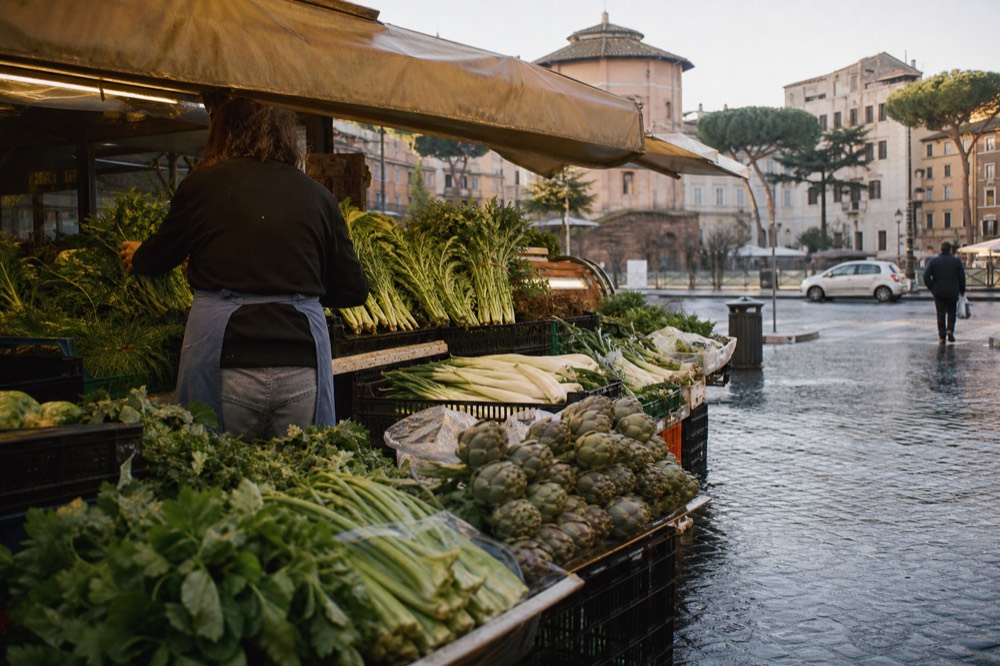
The market half is not decorative. Nuovo Mercato Testaccio trades Monday to Saturday 07:00 to 15:30 and is closed Sunday, which makes any class built around a market a morning plan by definition. Picking the ingredients yourself, at the hour the traders are actually working, is the part of the format that travellers report most often in reviews on the live listings, and it is the part that no restaurant dinner can replicate.
Pasta-only classes are the compact version, and they split into two kinds. The Pantheon class and the two-pasta-shapes class both include wine with the meal and run about three hours. The fettuccine class runs two hours, is small group, and keeps the inclusions tight: bruschetta, one pasta with a sauce of your choice, and coffee or tea. The pizza and gelato classes run on the same logic, with the Pizza Plus Tiramisu class at from $41.33 per person (checked September 2026), rated 5 across 1,501 reviews, the cheapest entry on the whole roster and the one with flowing wine included.
One placement note that matters for planning: only the two-hour fettuccine class has a meeting point the listing publishes on Piazza Navona itself, at Restaurant Tucci, Piazza Navona 94. The pizza class that sounds similar meets at Osteria Pasquino on Piazza di Pasquino, which is a different square, and one pizza and tiramisu listing on the roster publishes no meeting point at all, so its page says nothing about where it starts. Check the meeting point on the operator's live listing before you build a day around one.
What Do You Actually Cook: The Four Roman Pastas?
The four canonical Roman pastas are carbonara, cacio e pepe, gricia and amatriciana, and their ingredient lists are shorter than almost anything else in Italian cooking. Carbonara is pasta, guanciale, pecorino romano, egg and black pepper. Cacio e pepe is pecorino, black pepper and pasta water. Gricia is guanciale, pecorino and pepper, and amatriciana adds tomato. No cream, no garlic, no onion.
Those lists are the real tradition, not folklore. La Cucina Italiana's own carbonara recipe states the traditional plate comprises only five ingredients: pasta, pecorino romano, eggs, guanciale and pepper. Amatriciana is stronger still, it is a registered Traditional Speciality Guaranteed under EU Regulation 2020/395, and the registered specification excludes garlic, onion and pork belly by name. Gricia, sometimes called amatriciana bianca, is the tomato-free ancestor of the same family.
| Sauce | Core ingredients | What is excluded | The class that teaches it |
|---|---|---|---|
| Carbonara | Pasta, guanciale, pecorino romano, egg, black pepper | Cream, garlic, onion, pancetta | Three Sauces, Home Kitchen |
| Cacio e pepe | Pecorino romano, black pepper, pasta water | Everything else | Three Sauces, Home Kitchen |
| Gricia | Guanciale, pecorino romano, black pepper | Tomato, egg | Three Sauces, Home Kitchen |
| Amatriciana | Guanciale, pecorino, tomato, optional white wine | Garlic, onion, pork belly | Three Sauces, Home Kitchen |
This is why the home cooking class in Testaccio is the specialist option on the roster. It runs about 3.5 hours, from $103.36 per person (checked September 2026), rated 4.9 across 88 reviews, meets at Via Galvani 4, and its listed food line is exactly those three sauces, cacio e pepe, amatriciana and carbonara. Gricia comes free with the territory, since it is the same technique as amatriciana minus the tomato. No other format on the roster names the four pastas as its syllabus.
The other formats teach shapes rather than sauces, which is a different and equally real skill. The fettuccine class is about the dough and the cutting. The two-pasta-shapes class adds ravioli. The Pantheon class is a general pasta-making session with the meal attached. If your ambition is to cook Roman dinners at home, the sauces matter more than the shapes, because tonnarelli and spaghetti are both buyable anywhere and the sauce technique is what separates a plate that works from a plate that clumps.
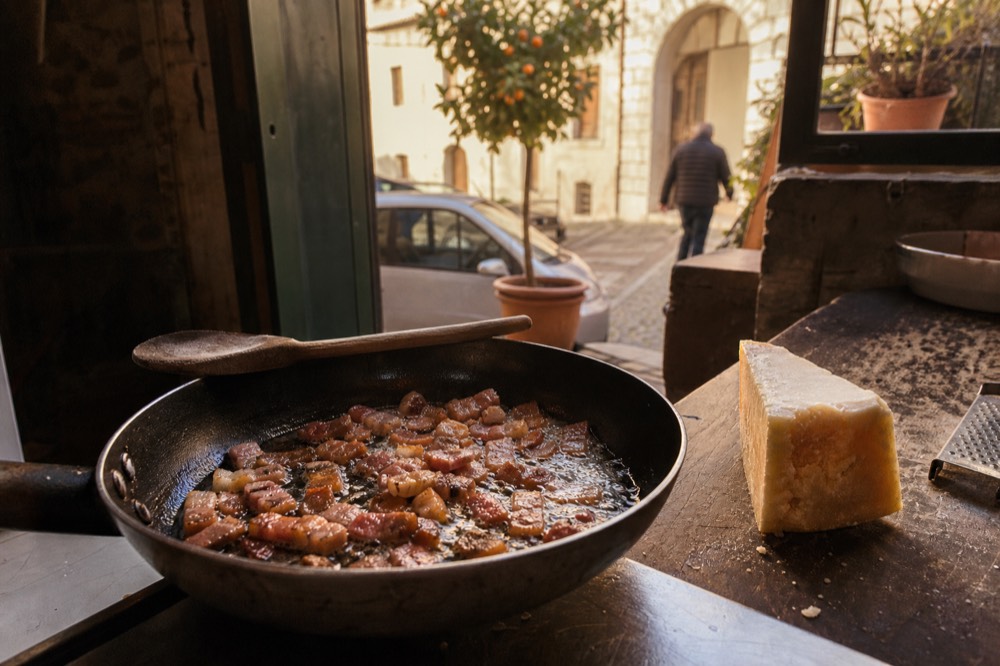
The physics, for anyone who has had cacio e pepe turn to paste at home, is now documented. A 2025 paper in Physics of Fluids identified starch concentration as the key factor in sauce stability, and found that starch concentrations below one per cent relative to the cheese mass produce system-wide clumps, a condition the authors name the Mozzarella Phase. A class teaches you the practical version of that finding: how much pasta water, at what moment, into how much cheese.
Where Do Rome Cooking Classes Meet And How Long Do They Run?
Meeting points span the historic centre, Trastevere, Testaccio and Prati, and every one of them is printed on the operator's live listing. The Pantheon class meets at Via della Gatta 14. The fettuccine class meets at Restaurant Tucci on Piazza Navona 94. The Testaccio home kitchen meets at Via Galvani 4, and both market-and-class formats meet at Via Palestro 51. Durations run from two to six hours.
Knowing the meeting point before you book is half the planning, because Rome's classes are scattered rather than clustered, and a class at the wrong end of the centre can eat an hour of your day in each direction. The pickup column below matters for the same reason: three listings on the roster include pickup, which removes the navigation problem entirely.
| Class | Meeting Point | Duration | Pickup |
|---|---|---|---|
| Pasta Class, Wine and Limoncello | Via della Gatta 14, 00186 Roma | about 3 hours | yes |
| Two-Hour Fettuccine Class | Restaurant Tucci, Piazza Navona 94 | about 2 hours | no |
| Two Pasta Shapes, Unlimited Wine | Trastevere area, coordinates provided with the option | about 3 hours | yes |
| Three Sauces, Home Kitchen | Via Galvani 4, 00153 Roma, Building C, Buzz 11 | about 3.5 hours | yes |
| Market Visit Plus Pasta Lunch | Via Palestro 51, 00185 Rome | about 4 hours | no |
| Six-Hour Market and Class | Via Palestro 51, 00185 Roma | about 6 hours | no |
| Two-Hour Pizza Class | Osteria Pasquino, Piazza di Pasquino 1 | about 2 hours | no |
| Pizza or Pasta Choice, Unlimited Wine | Via Quattro Novembre 139 | about 3 hours | no |
One listing, the pizza plus tiramisu class with flowing wine, publishes no meeting point on the roster, and the honest answer is that its page says nothing about where it starts, so the operator's live listing is the place to check. That is also where any option variations, private upgrades or schedule changes are shown.
Duration deserves one more word because it interacts with the rest of a day. A two-hour class in the centre slots into a morning or an early evening without rearranging anything. A six-hour market and class day is a commitment, and the sensible pattern is to treat it as the day's food plan rather than one item in it. Between those poles, most classes sit at about three hours, which pairs naturally with a walk on either side.
What Is The Average Cost For Cooking Classes In Rome?
The cooking classes and food walks listed here run from $41.33 to $147.98 per person (checked September 2026), and the midpoint sits around $90 depending on the mix of formats you weigh. Pizza and gelato classes cluster at the bottom of that range, pasta classes in the middle, and the market-and-class formats, which add hours and a shopping trip, at the top. Every listing on the roster includes free cancellation.
The price differences track the inclusions almost perfectly. The cheapest class, pizza plus tiramisu or gelato with flowing wine, runs three hours. The most expensive, the six-hour Kitchen of Mamma day, nearly doubles the time and adds the market tour and the lunch. Between them, the standard pasta classes with wine included sit in a narrow band, from $56.62 to $68.52 (checked September 2026).
| Class | Price per person | What the price includes |
|---|---|---|
| Pizza Plus Tiramisu, Flowing Wine | from $41.33 | Pizza, tiramisu or gelato, flowing wine, 3 hours |
| Two-Hour Pizza Class | from $56.73 (checked September 2026) | A pizza you make and eat, coffee, tea or limoncello |
| Pizza or Pasta Choice, Unlimited Wine | from $56.62 | Pizza or pasta made in class, gelato or sorbet, unlimited wine |
| Two-Hour Fettuccine Class | from $59.23 | Bruschetta, fettuccine, coffee or tea |
| Two Pasta Shapes, Unlimited Wine | from $63.87 (checked September 2026) | Fettuccine and ravioli, prosecco, unlimited wine, gelato |
| Pasta Class, Wine and Limoncello | from $68.52 | Pasta meal, wine, dessert, limoncello |
| Three Sauces, Home Kitchen | from $103.36 | Three Roman sauces cooked and eaten, 3.5 hours |
| Market Visit Plus Pasta Lunch | from $124.26 (checked September 2026) | Market visit, pasta lunch, wine, coffee |
| Six-Hour Market and Class | from $147.98 | Market walking tour, class, lunch, wine |
Free cancellation across the whole roster is worth pausing on, because it is the structural answer to the volatility of a Roman itinerary. Restaurant reservations in this city come with teeth at the top end, cards held as guarantees and penalties for changes, while a class can be rebooked if the day reshapes itself. That asymmetry alone tilts many trips toward booking the class early and deciding the dinners later.
For anyone weighing a class against other paid food plans, the food tour cost comparison covers the walking formats with the same figures-first method, and the tours overview places both formats side by side.
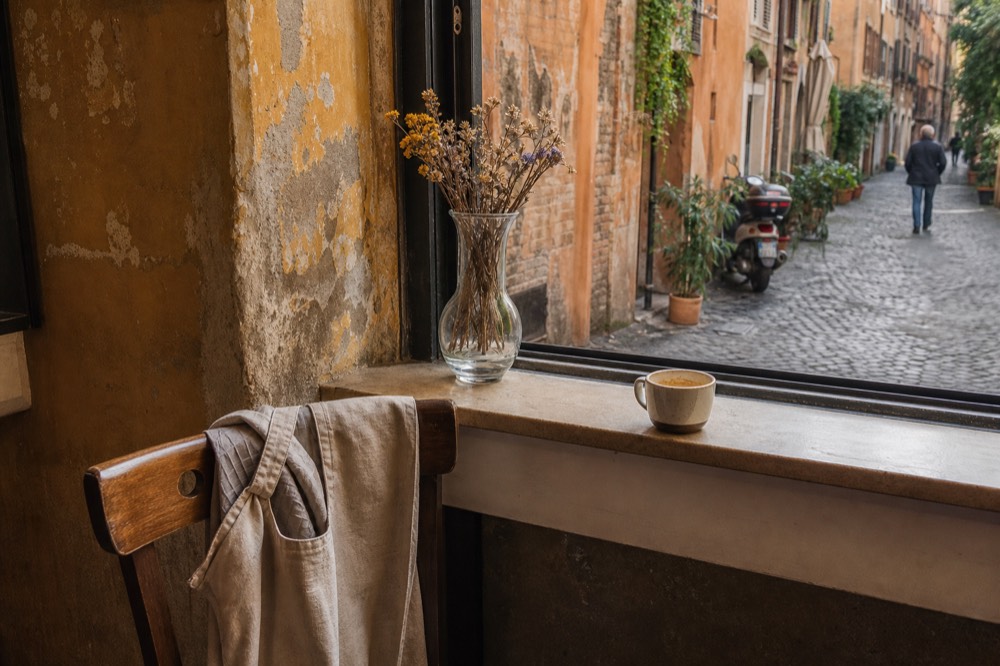
What To Wear To A Cooking Class In Italy?
Wear closed shoes, something you would not mind dusted with flour, and sleeves that stay out of the dough. Cooking classes are working kitchens, not restaurants: you stand for most of the session, you handle eggs and semolina, and pizza classes put you near a hot oven. Comfortable shoes and clothes you can wipe down are the whole of the dress code.
The practical details are few but real. Aprons are standard in these classes, but they protect the front, not the sleeves, and a loose cuff in the flour bowl is a small annoyance you can avoid. Hair tied back is the same story. For pizza formats, the oven end of the room is the warm end, so a layer you can remove partway through beats a single heavy jumper.
Beyond clothing, the packing list is short. Nothing, because everything is provided. The classes include ingredients, equipment and the meal, and the only thing you genuinely need to bring is the booking confirmation and a sense of where the meeting point is. Arriving ten minutes early is the accepted pattern; the classes start as a group and a late start cuts everyone's cooking time.
One Roman footnote that belongs here rather than anywhere else on this site, and this Best Restaurants in Rome page is the place for it: the centre's rules about sitting and eating in public apply to your pre-class snack. The city's public-order regulation prohibits sitting, including while eating or drinking, on monuments, fountains, their steps and archaeological remains. Eat your pastry at the bar where you bought it, or standing away from the marble, and the class is the comfortable part of the day.
How Does A Class Compare With Booking Rome's Restaurants?
A class converts the hardest part of eating in Rome, the reservation problem, into a solved question before you land. The best trattorias either take no bookings at all or run books with thirty-day windows, midnight releases and card guarantees, and August removes whole kitchens for weeks. A paid class seat exists the moment you book it, and free cancellation on every listing means the plan bends instead of breaking.
The contrast is starkest at the extremes. At the top, the starred rooms take a card at booking and name the penalty in advance. At the everyday end, the walk-in trattorias that travellers most want simply queue: Da Enzo al 29 takes no reservations in any service, and a dated review describes a perpetual line out the door. Both are fine systems once you know them, and the hardest tables explained page covers them in detail, but neither is a plan you can lock weeks out.
| Food plan in Rome | Can it be locked in advance? | What happens if the day changes |
|---|---|---|
| Walk-in trattoria | No, walk-in only | You queue again, or pick another room |
| Thirty-day online book | Yes, released daily at midnight | The slot is gone if you hesitate |
| Starred tasting menu | Yes, card held as guarantee | A late cancellation can be charged |
| Cooking class | Yes, paid like a ticket | Free cancellation on every roster listing |
That table is the argument, and it is the honest one: a class does not get you into a famous restaurant, none of these listings enters any of the celebrated kitchens in the city, and the claim this page makes is smaller and true. A booked class is a fixed food plan with the variables removed, and it teaches you the four pastas you can cook at home for the next twenty years. What you do with the rest of your evenings, walking into the trattorias of Trastevere and Testaccio with no booking and no anxiety, is covered by the other half of this site.
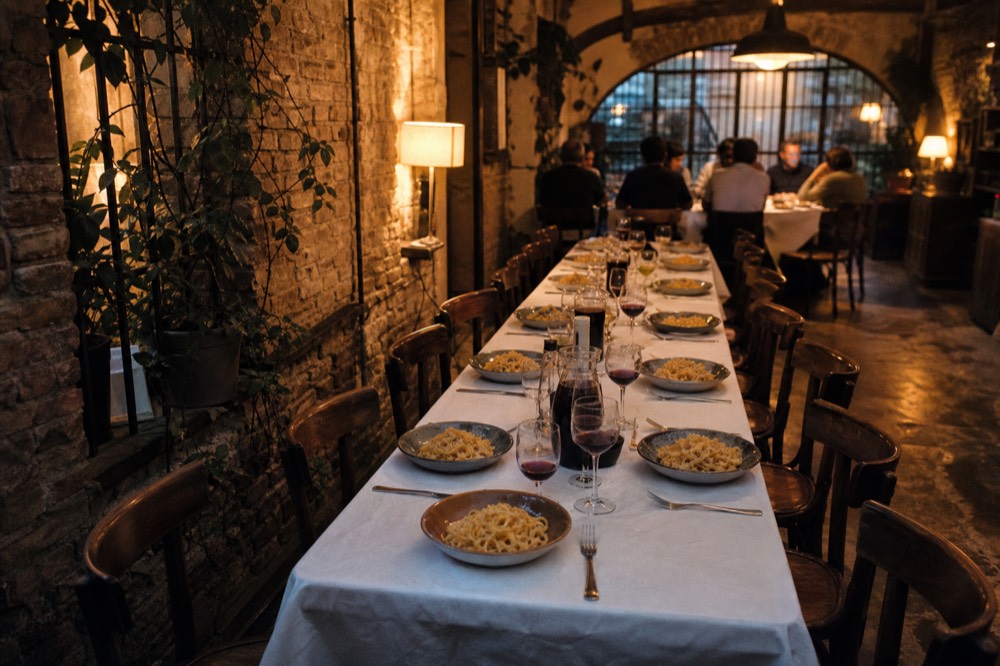
The questions below are the ones travellers actually ask before booking a Rome cooking class, and each answer states only what the classes on this page publish: prices from $41.33 to $147.98 per person (checked September 2026), durations from two to six hours, group formats from small group to standard, and free cancellation on every one of the eight classes listed here. Formats differ, and the choice between them is a choice of time and appetite, not of quality.
Common Questions About Cooking Classes In Rome
What Is The Best Cooking Class In Rome?
For a first visit, the pasta class by the Pantheon, from $68.52 per person (checked September 2026) and rated 4.9 across 3,493 reviews, is the strongest all-round choice: about three hours, the pasta you make eaten as a meal, with wine, dessert and limoncello. Travellers with a full morning should weigh the six-hour market and class format, and families the pizza and gelato classes.
What Is The Average Cost For Cooking Classes In Rome?
The classes on this page run from $41.33 to $147.98 per person (checked September 2026). Pizza and gelato classes sit at the bottom of the range, pasta classes in the middle from $56.62 to $103.36, and the market-and-class formats at the top. Every listing includes free cancellation.
What To Wear To A Cooking Class In Italy?
Closed shoes and clothes that can take a dusting of flour. You stand and cook for most of the session, sleeves should stay out of the dough, and pizza formats run warm near the oven. Aprons are provided, and nothing else needs to be brought.
How Much Does A Cooking Class In Italy Cost?
In Rome, bookable class listings run from $41.33 per person (checked September 2026) for the two-to-three hour pizza and gelato formats to $147.98 for the six-hour market and class day. Duration and inclusions, especially wine and a full meal, explain nearly all of the spread.
Do Rome Cooking Classes Include The Meal?
Every listing on the roster ends with you eating what you made. The Pantheon class includes the pasta as a meal with wine, dessert and limoncello; the fettuccine class includes bruschetta and coffee or tea; and both market-and-class formats include lunch of the pasta made in class with wine.
Where Do Rome Cooking Classes Meet?
At meeting points spread across the centre, Trastevere, Testaccio and Prati, including Via della Gatta 14 near the Pantheon, Restaurant Tucci on Piazza Navona 94, Via Galvani 4 in Testaccio and Via Palestro 51 for both market formats. Three listings include pickup, and each operator's live listing carries the exact point for the option you book.