Rome Food Markets: Where To Shop And Eat At Testaccio, Trionfale And Beyond
Rome's rionali markets are working food halls, not attractions, and nearly all of them die by early afternoon. This guide sets out the official hours, the stalls worth queueing for, and the honest differences between Testaccio, Trionfale, Mercato Centrale and Campo de' Fiori.
Short answer
Nuovo Mercato Testaccio is the market most worth the trip: it opens Monday to Saturday from 07:00 to 15:30, closed Sunday, and its food stalls, including CasaManco at banco 22 and Mordi e Vai, make it a lunch destination. Mercato Trionfale runs until 23:00 for eating. Mercato Centrale at Termini stays open until 23:30 every day.
Rome's covered markets were built to feed neighbourhoods, not to appear in photographs, and that is exactly why they are worth planning around. The Nuovo Mercato Testaccio, a covered hall in the old slaughterhouse quarter, trades Monday to Saturday and shuts at 15:30, which means a market visit in Rome is a morning-and-lunch activity, never a dinner one. Two of the markets in this guide buck that rule, and the difference between their ground floors and their eating floors is the single most useful thing to understand before you go.
This page covers the four markets a visitor actually weighs up: Testaccio, Trionfale in Prati, Mercato Centrale at Termini, and Campo de' Fiori in the centre. It gives the official hours where official hours exist, the stalls with reputations attached to them, and what to do when the market is already shut. The publisher behind this page, Best Restaurants in Rome, rates these halls by how they are actually run, not by how photogenic their aisles are.
Is Testaccio Market Worth Visiting?
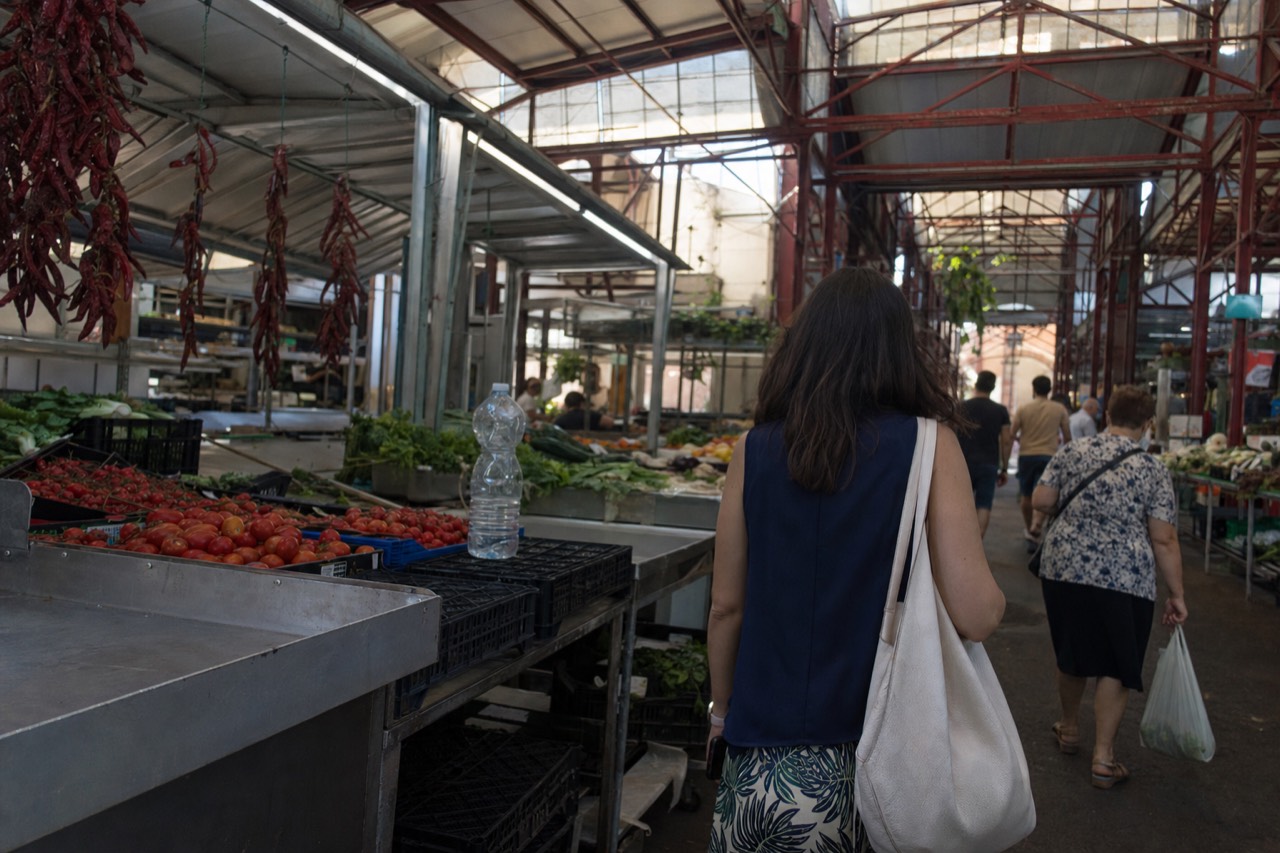
Yes, for most visitors it is. Nuovo Mercato Testaccio trades Monday to Saturday from 07:00 to 15:30, closed Sunday, and the reason to go is eating rather than sightseeing: the covered hall combines working butchers and greengrocers with a handful of famous food stalls, including CasaManco at banco 22 and Mordi e Vai, inside one unglamorous building in Testaccio.
The market sits in the quarter that fed Rome for most of the twentieth century. Testaccio was the city's slaughterhouse district, and the workers there, the vaccinari, were paid partly in the offcuts of butchery, which is the root of the neighbourhood's whole cooking tradition. The Mattatoio itself is long decommissioned, but the market hall kept trading, and the stall list still mixes household shopping with food you can eat standing up.
What makes it worth the tram ride rather than just a footnote is the density. Within one hall you have CasaManco, a pizza alla pala stall at banco 22 whose name the market's own page carries, Mordi e Vai with its boiled-meat sandwiches, Food Box, and, a few streets away on via Marmorata, the Volpetti deli for cheese and cured meats. The market's own site confirms the first three trade inside it. That is a full Roman lunch without a single reservation, which matters in a city where the trattorias people write down are the ones that take no bookings at all.
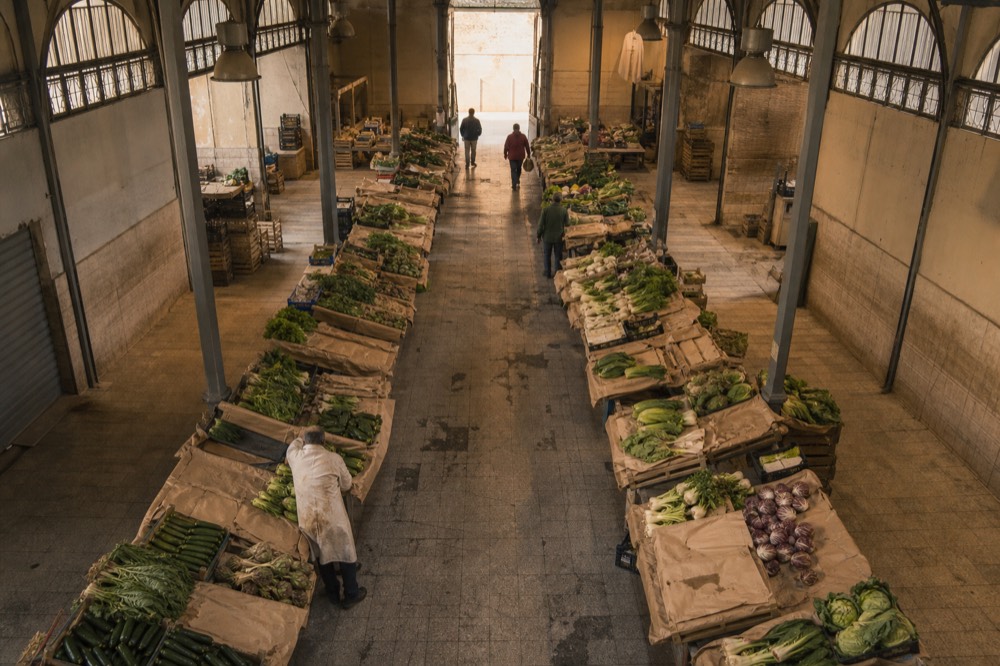
The honest qualification is timing. It is a morning market in practice even where the permitted window is wider, and by mid-afternoon it is finished. Anyone planning a market-and-dinner day around Testaccio has the plan backwards: the market is the morning, the trattorias of the same quarter are the evening, and the gap between them is when Rome closes its kitchens.
When To Visit Testaccio Market?
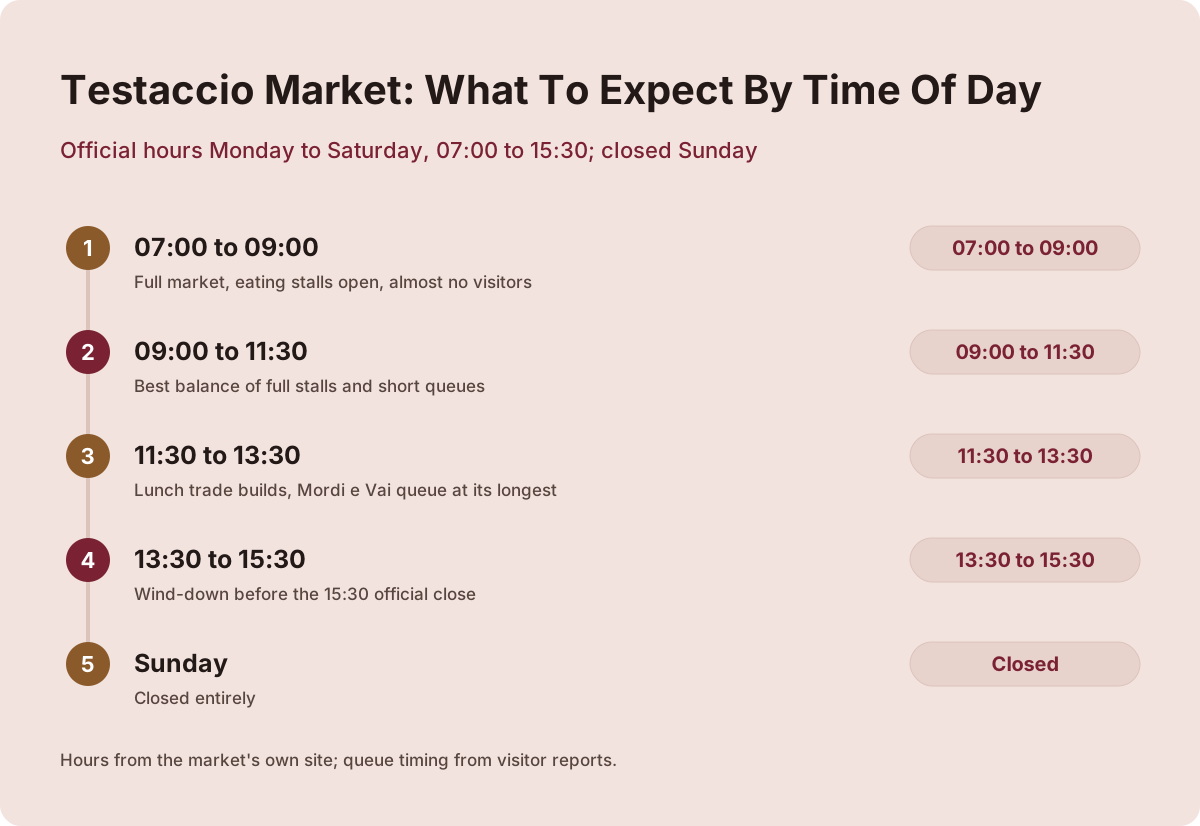
Arrive between 08:00 and 11:30 on a weekday. The market's official hours are Monday to Saturday 07:00 to 15:30, but the useful window is the morning: the produce is at its best, the eating stalls are all firing, and the lunchtime queue at Mordi e Vai, reported by visitors as running from about 12:00, has not yet formed. Sunday is closed entirely.
The market's own site states its hours plainly: open Monday to Saturday, 07:00 to 15:30, with entrances on via Beniamino Franklin, via Alessandro Volta, via Aldo Manuzio and via Lorenzo Ghiberti. That single set of published hours is what a visitor should plan on. Some listings give a later closing time, but the market's own page is the authority, and it says half past three.
Weekday versus Saturday matters more here than in most of Rome's attractions. Saturday is the busiest trading day of the market week, and the food stalls queue hardest at lunch, with one dated report describing forty-minute waits by half past two on weekends. A Tuesday or Wednesday morning gives the same stalls, shorter lines, and the butchers and greengrocers at full tilt, which is the market at its most real.
| Time of day | What you find at Testaccio |
|---|---|
| 07:00 to 09:00 | Full market, household shopping at its peak, eating stalls open, almost no visitors |
| 09:00 to 11:30 | Best balance of full stalls and short queues at the food counters |
| 11:30 to 13:30 | Lunch trade builds, Mordi e Vai queue at its longest by reports |
| 13:30 to 15:30 | Wind-down; stalls begin closing before the 15:30 official close |
| Sunday | Closed |
For travellers who want the stalls explained rather than worked out on foot, the small-group market walks are the efficient answer. The fourteen-tastings walk at Testaccio covers eight family-run establishments in one outing with a full pasta course included, which is the format that suits first-time visitors.
The three listings above approach the same cluster differently. The small-group fourteen-tasting walk runs about 3.5 hours from Piazza di S. Maria Liberatrice, the Trionfale walk spends four hours around the covered market in Prati, and the pickup-included version covers the same Testaccio ground with hotel collection. All three carry free cancellation on the live listings.
What To Eat At Testaccio Market?
Eat standing at the stalls: pizza alla pala from CasaManco at banco 22, a boiled-meat sandwich from Mordi e Vai, and fried rice croquettes from the counters nearby. The market's own stall list confirms CasaManco, Mordi e Vai and Food Box trade inside, and the whole point of the hall is that lunch here is counter food, ordered, paid for and eaten within the 07:00 to 15:30 window.
CasaManco is the market's own headline. The market's page for the stall names banco 22 and calls its pizza alla pala extraordinary, which is as close to an official endorsement as a market stall ever gets. The pricing works the way pizza al taglio pricing always works in Rome: the pieces are cut to the size you point at and weighed, so the cost follows from the weight rather than from a posted slice price (see Best Pizza In Rome).
Mordi e Vai is the stall people photograph. Its signature is the panino col bollito, a sandwich of boiled beef, and the picchiapò, and the market's own page for the stall admits there is often a bit of a queue, adding that it is always worth it. The stall sits inside the market, so it is closed with the market on Sunday and finished by mid-afternoon, and the lunchtime line is a documented feature rather than a surprise.
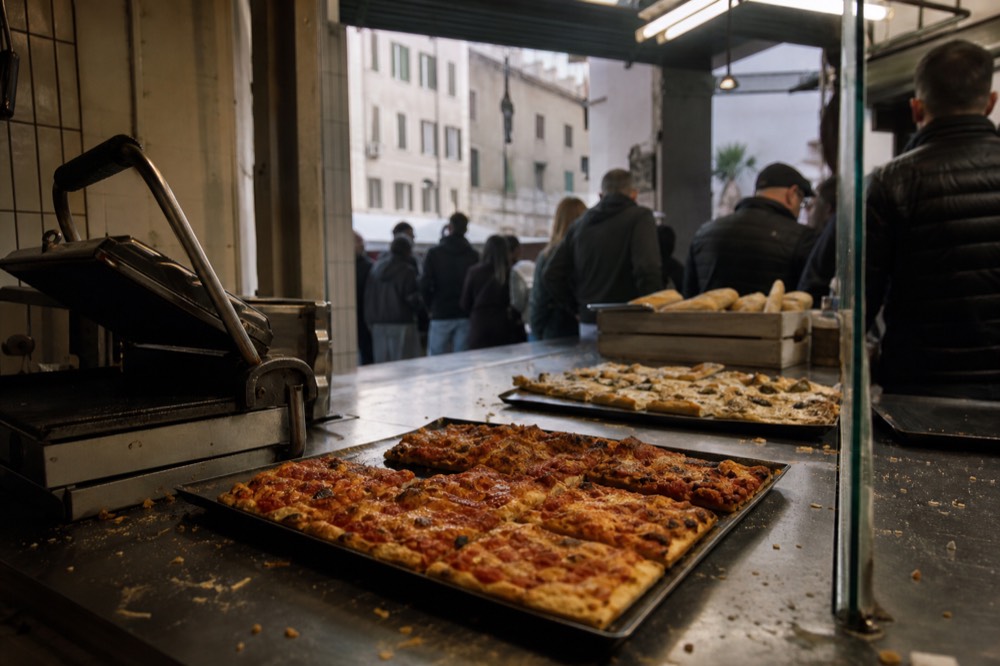
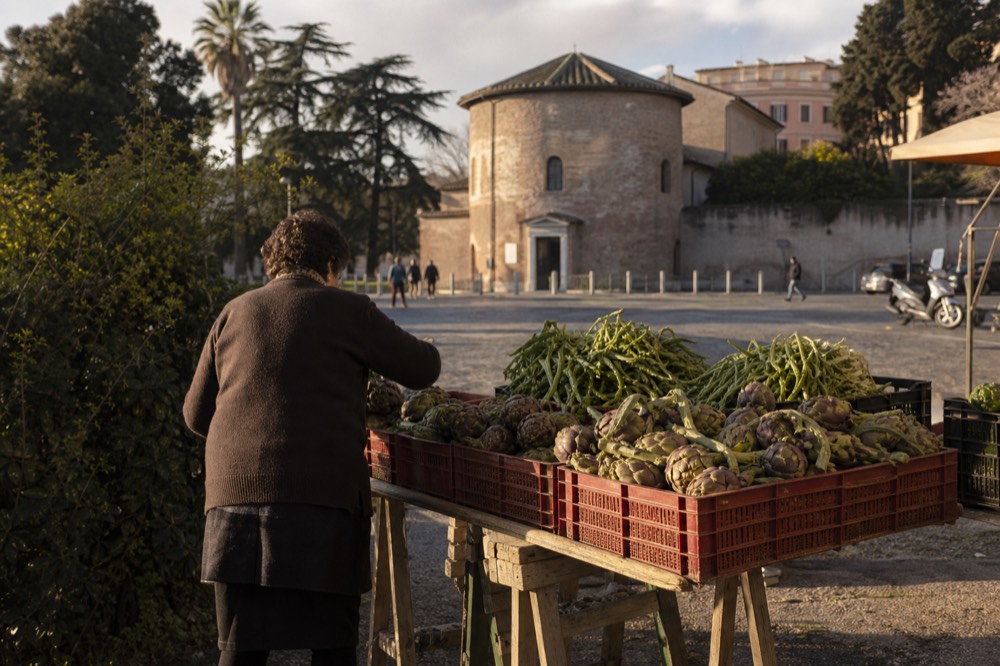
Around them sits the rest of the hall. Food Box runs a hot counter of its own. The greengrocers sell the artichokes and puntarelle that Roman cooking is built on, and the butchers sell the cuts that made Testaccio's name in the first place. The market's official information page is the source for the hours and the stall list throughout this section.
| Stall or counter | What it is known for | Where |
|---|---|---|
| CasaManco | Pizza alla pala, named by the market's own stall page | Banco 22, inside the hall |
| Mordi e Vai | Panino col bollito, picchiapò, polpette di bollito | Inside the hall, queue at lunch |
| Food Box | Hot food counter | Inside the hall |
| Market butchers and greengrocers | Roman vegetables, offal cuts, household shopping | Throughout the hall |
| Volpetti | Cured meats and Lazio cheeses, cut to order | Via Marmorata, a short walk away |
A guided version of this lunch removes the guesswork. The small-group Testaccio walk with a full pasta plate runs from $74.62 per person (checked September 2026), rated 4.9 across 293 reviews, covering fourteen tastings across eight establishments in about 3.5 hours. It meets at Piazza di S. Maria Liberatrice, and free cancellation is available.
The same operator's pickup-included listing covers the same ground with hotel collection added, which suits visitors staying outside the centre. Between the two, the meeting-point version is the lighter commitment for a first market day. For anyone still weighing the format, the box below frames the decision.
Which Food Market In Rome Is Considered The Best?
Testaccio holds the title among people who cook, and Trionfale is the practical rival. Testaccio is the eating market with the famous stalls and the 15:30 close; Trionfale in Prati is the largest covered hall, around 275 stalls, and its split hours mean the produce closes at 14:00 but the eating counters run until 23:00 Tuesday to Saturday. The best one depends on when you can go.
Trastevere's own market, San Cosimato, cannot be recommended with any hours at all, because no official or reliably dated source for its schedule exists. Esquilino is the city's most multicultural market, but its published hours are the weakest of the set, and Mercato dell'Unità in Prati has been under redevelopment with a reopening planned during 2026, so it is not somewhere to send a visitor on a schedule.
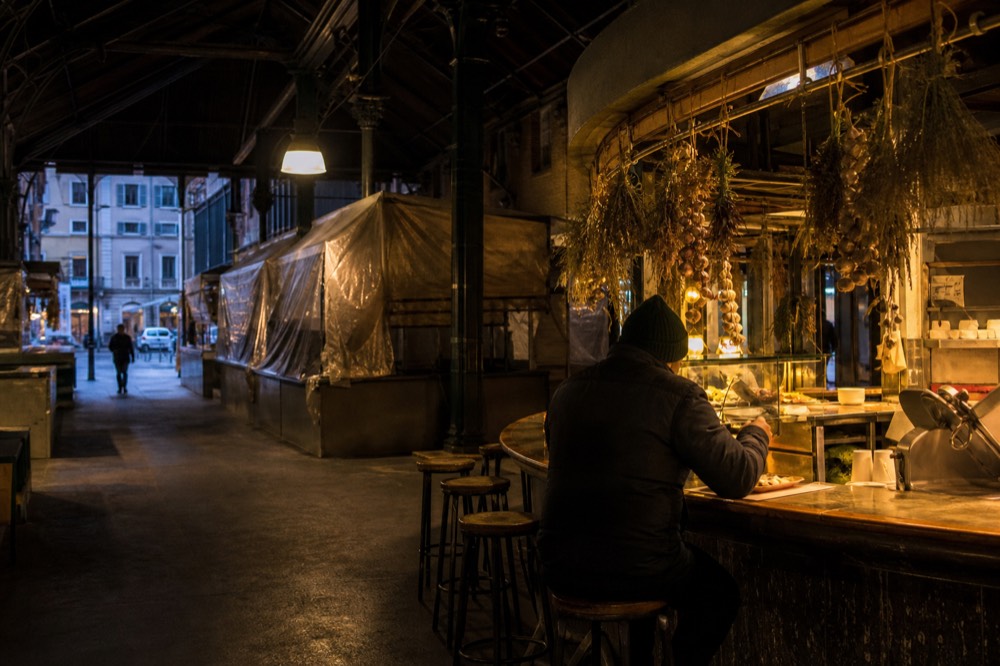
The two-market day is the strong play if you have the time. Testaccio in the morning for the stalls and the lunch counters, then Trionfale in the evening, when the produce aisles are shut but the ristorazione side is still serving. That inversion, a market that is genuinely open for dinner, is unique among Rome's covered halls and almost nobody plans around it.
For the fullest single outing, the four-hour Trionfale market tour covers the covered market in Prati and the counters around it. It runs from $105.19 per person (checked September 2026), rated 5 across 511 reviews, meeting at La Nicchia Cafè on Via Cipro, with free cancellation available.
Mercato Trionfale: The Covered Market With Split Hours
Mercato Trionfale, on via Andrea Doria in Prati, is the market with two opening times. The market side runs 07:00 to 14:00 Monday to Thursday and Saturday, 07:00 to 19:00 Friday, closed Sunday; the eating side runs 07:00 to 23:00 Tuesday to Saturday and 07:00 to 14:00 Monday, closed Sunday. The official site states both schedules and lists around 275 activities.
This split is the single most useful fact in Rome's market landscape, and it comes straight from the market's own contact page. Visitors who arrive at 17:00 expecting a produce market will find the aisles shut, and visitors who arrive at 20:00 expecting nothing will find dinner. The two halves of the hall serve different people on different clocks.
The practical consequences are straightforward. For shopping, go in the morning on any day but Sunday, with Friday offering the longest produce day. For eating, Tuesday to Saturday gives you a late option that no other covered market in the city matches. The address appears variously as via Andrea Doria 41 on the official site and other numbers in guidebooks, so print the street and the Prati district in your notes and let the signage do the rest.
The official Trionfale contact page is the source for both schedules above, and it is the page to check before a visit, because a hall this size adjusts its calendar. The market sits a short walk from the Cipro metro station, which makes it the easiest big market to reach from the centre without a tram.
Mercato Centrale At Termini: The Food Hall Open Late
Mercato Centrale, inside Termini station at Via Giovanni Giolitti 36, is open every day from 07:30 to 23:30, and it is not a produce market at all. It is a food hall on three levels: artisan botteghe on the ground-floor Piazza and seating on the first and second floors, with no working market underneath it, unlike its Florentine namesake, which sits above a real produce hall.
That distinction matters because almost every generic description of Mercato Centrale imports the Florence model, and in Rome it is wrong. The Rome site's own how-it-works page describes the Piazza of botteghe and the two floors of seating above, nothing more. The counters include fresh pasta, pizza and a trapizzino operation, and the single published hours, 07:30 to 23:30 daily, apply to all of them.
For a traveller, this is the reliable evening option. It is the one hall in this guide that is open through the afternoon gap when every other market has closed, and it is inside the main railway station, which makes it the default answer to the late-arrival dinner problem. Nothing here needs booking, and the format is counter service throughout.
| Market | Official hours | Closed | Type |
|---|---|---|---|
| Nuovo Mercato Testaccio | Mon to Sat 07:00 to 15:30 | Sunday | Covered produce and food market |
| Mercato Trionfale (market side) | Mon to Thu and Sat 07:00 to 14:00, Fri 07:00 to 19:00 | Sunday | Covered produce market |
| Mercato Trionfale (eating side) | Tue to Sat 07:00 to 23:00, Mon 07:00 to 14:00 | Sunday | Market eating counters |
| Mercato Centrale Roma | Every day 07:30 to 23:30 | Never | Food hall |
| Mercato Esquilino | Mon to Fri 07:00 to 14:00, Sat 07:00 to 17:00 | Sunday | Produce market |
The official Mercato Centrale Rome page states the daily 07:30 to 23:30 window. The Esquilino hours come from a dated property-news listing rather than an official page, so treat them as indicative and confirm locally if Esquilino is the target.
Campo De' Fiori: What The Market Has Become
Campo de' Fiori is Rome's most famous market square and the least reliable of the four for a food visit. It still trades as a produce and flower market in the mornings, but dated accounts describe a growing share of stalls selling souvenirs rather than food, and no official source publishes its hours, its closing day or its stall count, so no schedule can honestly be printed here.
The square itself is one of the great public spaces in the centre, and early morning is the quiet stretch, before the tourists fill it and the stalls give way to the evening scene. The market's character shift, from a rionali food market toward a tourist bazaar, is described qualitatively in dated reporting, and this page deliberately does not put a number on how many stalls sell what, because no source ever counted one.
What can be said with confidence is what surrounds it. The bakery counters near the square, including Forno Campo de' Fiori and Antico Forno Roscioli, sell pizza by weight and by the piece, and they are walk-in at any point in their day. The Rome street food guide covers those counters and how the by-weight pricing works, which is the useful companion read for this square.
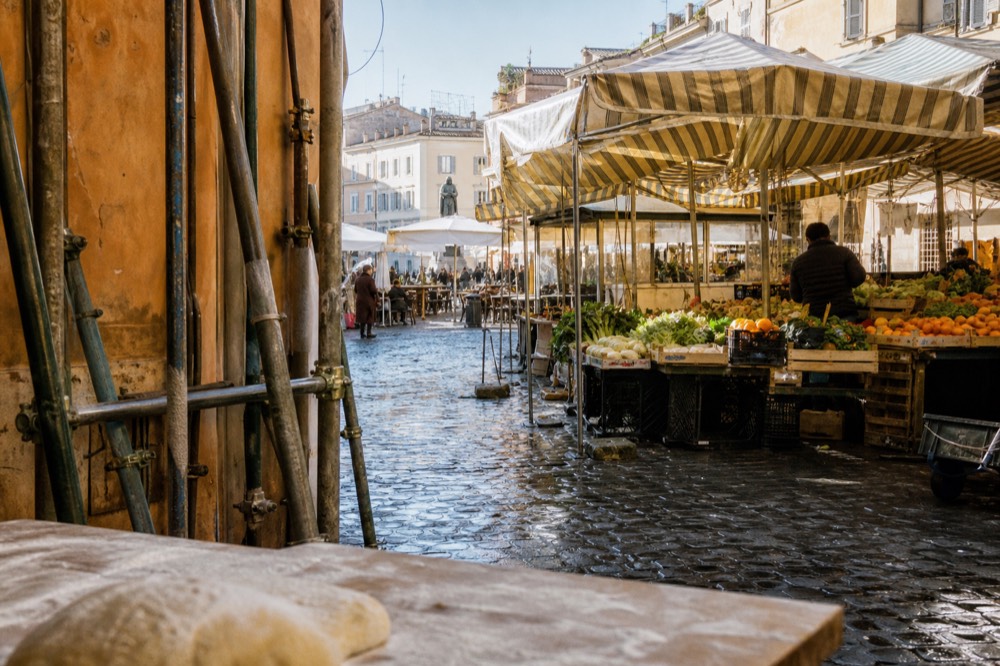
The honest verdict: go to Campo de' Fiori early or do not build a meal plan around it. If the food-market experience is the priority, the tram to Testaccio or the metro to Trionfale delivers the version of Rome's market culture that the guidebooks are describing when they describe Campo de' Fiori.
Is Testaccio A Safe Area In Rome?
Yes. Testaccio is a residential quarter with a nightlife strip and a working market, and the market itself, open Monday to Saturday 07:00 to 15:30, operates entirely in daylight hours. The ordinary-city cautions apply, the pickpocketing risk around crowds and stations, and Rome's street rules about where you may sit and eat, which are enforced by patrols near the centre's monuments.
The market hall is a family-shopping environment in the mornings, and the quarter's evenings centre on its bars and trattorias rather than on anything risky. Visitors walking between the market and the via Marmorata shops, or out to the Monte dei Cocci, are in ordinary Roman streets, not in a zone with a particular reputation.
The one genuinely Rome-specific caution applies anywhere in the city, not to Testaccio alone. Under the city's public-order regulation, sitting down on monuments, fountains and their steps, including to eat or drink, is prohibited, and patrols do enforce it. Eating a market sandwich is for the market's own tables and benches, or the equipped spaces, not the nearest set of historic steps.
For context on the wider quarter, the Rome neighbourhood dining guide sets out what Testaccio offers in the evening, once the market has shut and the trattorias open.
Market Tours And Cooking Classes That Start At A Market
A market walk or a market-plus-class outing turns the 15:30 close into a full day. The roster includes the three-Roman-pastas tour at Testaccio, from $128.83 per person (checked September 2026), rated 4.9 across 1,760 reviews, and the market-visit-plus-pasta-lunch class, from $124.26 per person, rated 4.9 across 278 reviews; both pair the stalls with a cooked meal, which the market alone cannot do after mid-afternoon.
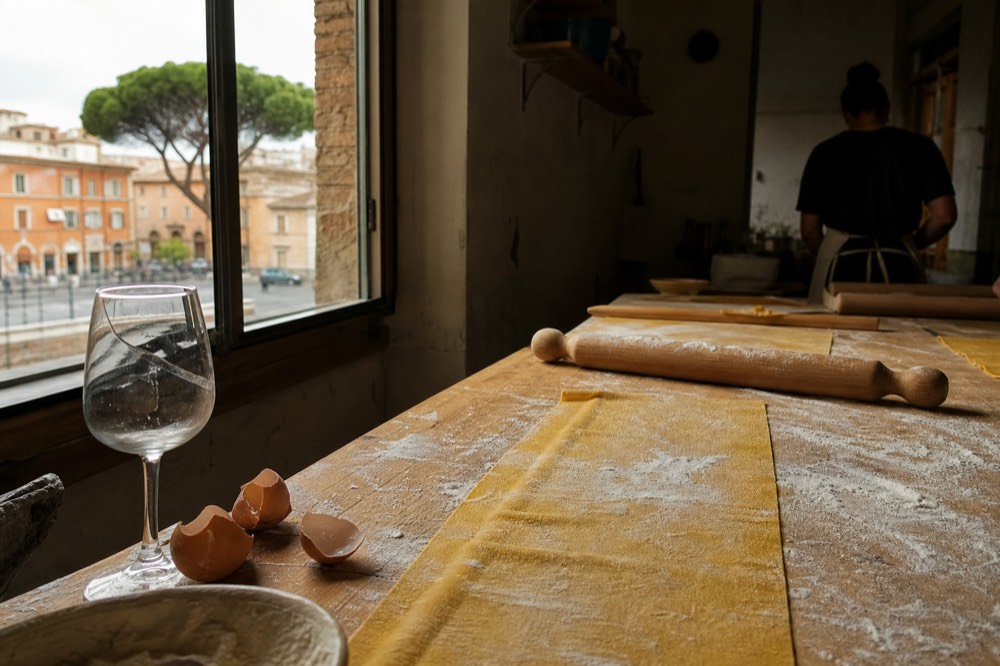
The reason to consider one is mechanical rather than culinary. The market's stall culture rewards knowing what to point at, and the cooking-class format finishes at a table with a full plate, hours after the raw ingredients stopped being sold. The three-pastas tour runs about 3.5 hours with nine tastings including the pastas, market bites and wine, meeting at Piazza Testaccio.
The market-visit-plus-lunch class runs about four hours from Via Palestro 51, with a market visit, a homemade pasta lunch, a glass of Italian wine and coffee, and free cancellation available. The pickup-included fourteen-tasting walk rounds out the set, from $77.81 per person (checked September 2026), rated 5 across 52 reviews, covering the Testaccio market and eight family-run eateries.
| Tour format | Length | Group | What you get | From |
|---|---|---|---|---|
| Testaccio small-group walk | 3.5 hours | Small group | Fourteen tastings at eight establishments, full pasta course | $74.62 |
| Trionfale market walk | 4 hours | Standard | Food and wine tastings around the covered market | $105.19 (checked September 2026) |
| Testaccio walk with pickup | 3.5 hours | Standard | Fourteen tastings, market visit, pickup included | $77.81 |
| Three Roman pastas tour | 3.5 hours | Small group | Nine tastings including three Roman pastas, market bites, wine | $128.83 (checked September 2026) |
| Market visit plus pasta lunch class | 4 hours | Standard | Market visit, pasta lunch, wine and coffee | $124.26 |
None of these tours enters a famous restaurant, because none of them does. What a tour removes is the reservation problem and the guesswork, covering several counters in one outing at a price fixed before you go, booked in advance like any other ticket. For visitors weighing the class question specifically, the Rome cooking classes guide compares the formats in detail.
Practical Planning: Market Days Against Everything Else
Build the trip around two fixed facts: every produce market in this guide is a morning activity, and Sunday closes all of them. Testaccio and Trionfale's market side both shut on Sunday, while Mercato Centrale runs every day to 23:30, which makes it the Sunday and the late-evening answer. Trionfale's eating counters, Tuesday to Saturday to 23:00, are the only covered-market dinner alternative.
The other fixed constraint is the afternoon gap. Rome's kitchens close between lunch and dinner, roughly 15:00 to 19:00, and the markets close on the same clock or earlier. A visitor who treats the market as a morning anchor and the trattoria as the evening anchor has the day shaped the way the city itself is shaped.
| Your constraint | The market that fits |
|---|---|
| Sunday only | Mercato Centrale, 07:30 to 23:30, every day |
| Arriving late afternoon | Mercato Centrale, or Trionfale's eating counters before 23:00 |
| Want the full stall experience | Testaccio, weekday morning, before 11:30 |
| Staying in Prati near the Vatican | Trionfale, via Andrea Doria |
| Want lunch standing at counters | Testaccio: CasaManco, Mordi e Vai, Food Box |
| Based near Termini | Mercato Centrale, no transit needed |
The wider eating picture is covered across this site's guides, including the what to eat in Rome overview for the dishes behind the stalls. Whether a guided market outing earns its price is a fair question, and the answer depends on how much of the planning you want done for you rather than on the food itself.
For the visitors who prefer the stalls with a guide attached, the three listings below are the ones that fit the market cluster: the small-group Testaccio walk with the full pasta plate, the four-hour Trionfale tour, and the pickup-included fourteen-tasting version.
The five questions below cover the decisions most visitors face: whether Testaccio earns the tram ride, which hours actually matter, what to point at once you are inside, how the other markets compare, and whether the quarter itself is safe. Each answer restates the market's published hours and the stall facts from this guide.
Common Questions About Rome Food Markets
Is Testaccio Market Worth Visiting?
Yes. It trades Monday to Saturday 07:00 to 15:30, closed Sunday, and combines a working covered market with famous eating stalls including CasaManco at banco 22 and Mordi e Vai. It is the market that best rewards a visitor's time, provided the visit is in the morning.
When To Visit Testaccio Market?
Go between 08:00 and 11:30 on a weekday. The official hours are Monday to Saturday 07:00 to 15:30, but the lunch queues form from about 12:00 and the stalls wind down before the official close. Sunday is closed.
What To Eat At Testaccio Market?
Pizza alla pala from CasaManco at banco 22, a boiled-meat sandwich from Mordi e Vai, and the hot counters of Food Box. Pizza is cut to the size you point at and weighed, so the price follows the weight.
Which Food Market In Rome Is Considered The Best?
Testaccio is the eating market with the famous stalls. Trionfale is the largest covered hall, around 275 stalls, and the only one where you can eat as late as 23:00. The best choice depends on the hour you can go.
Is Testaccio A Safe Area In Rome?
Yes. It is a residential quarter with a working market that operates in daylight hours. The ordinary city cautions about pickpocketing in crowds apply, and eating while seated on monuments and fountain steps is prohibited under Rome's public-order regulation.