Wine Bars In Rome And The Frascati Day Trip
Rome's wine bars are the one category of venue in this city where the hardest decision is which bottle to point at, not how to get a table. Frascati, twenty minutes out, is the wine Rome grew up drinking, and the Castelli producers deserve better than the bulk-wine reputation the name still carries.
Short answer
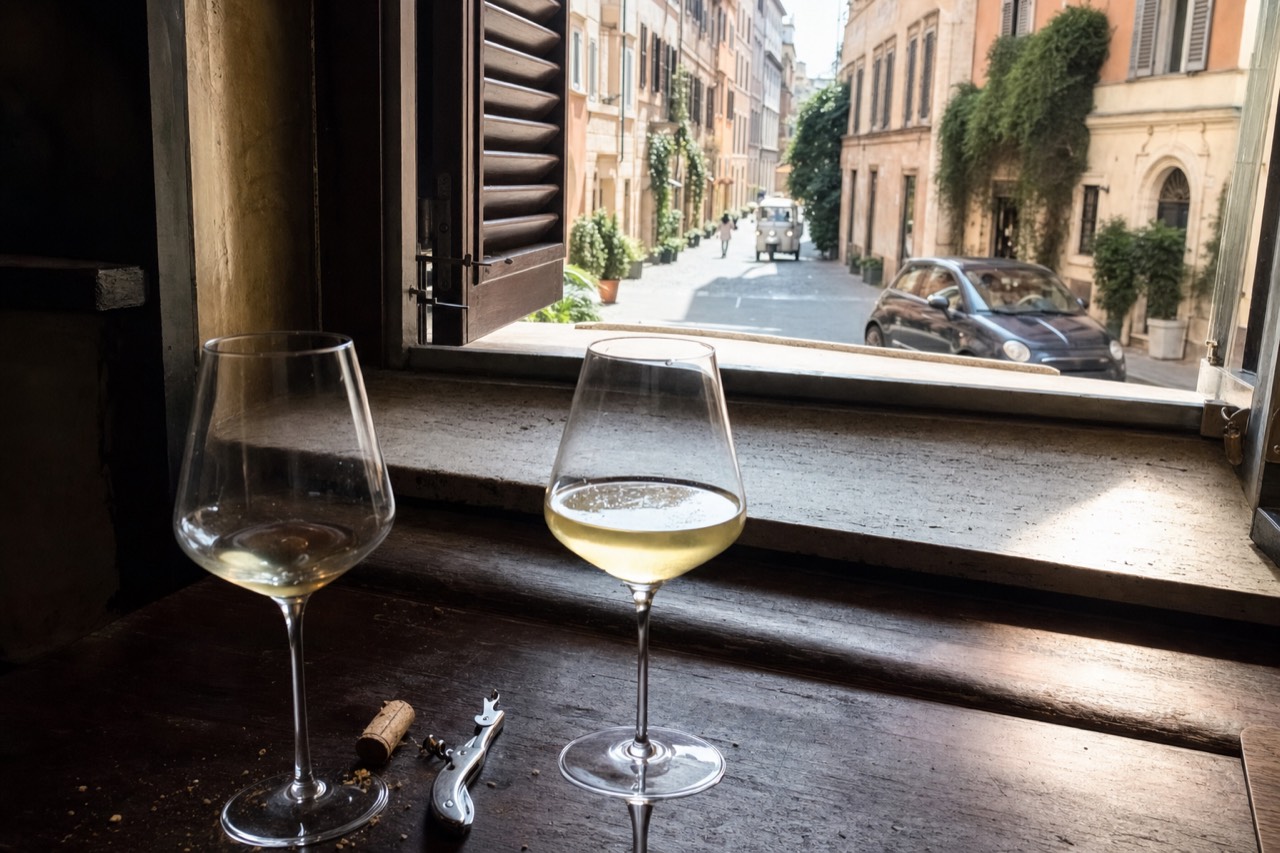
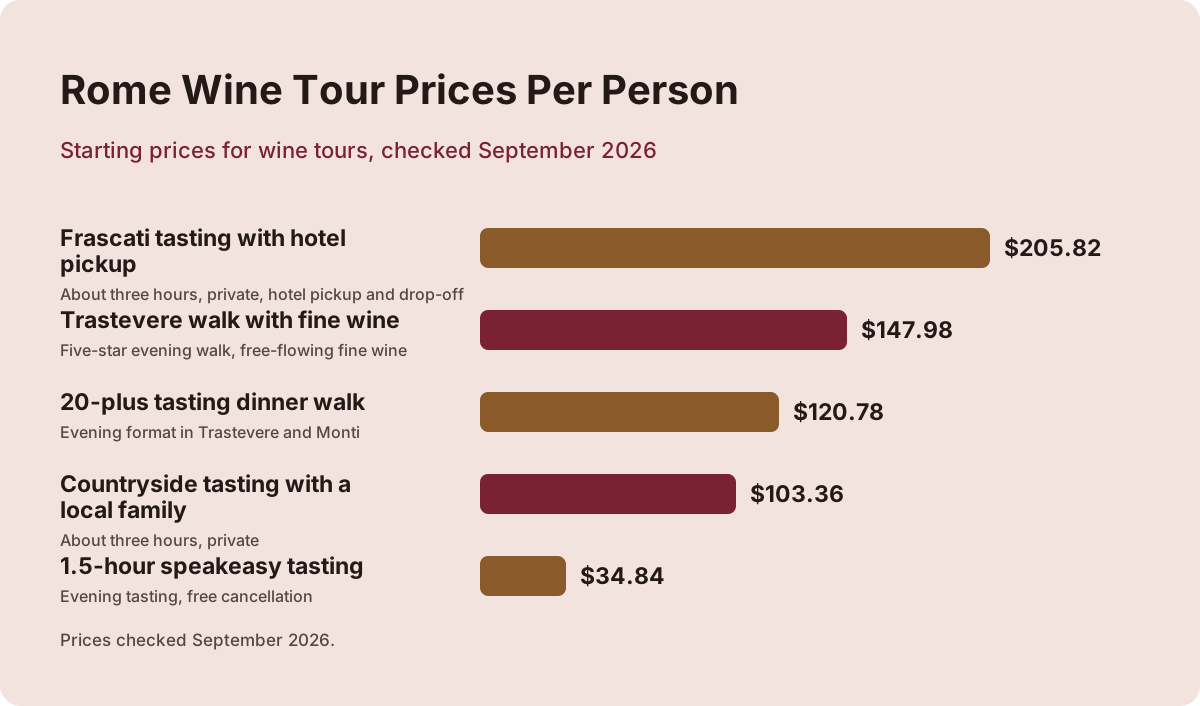
Rome calls its wine bars enoteche, and several of the best, including Il Goccetto and Ai Tre Scalini, take no bookings at all. Frascati is a light white from the Castelli Romani; the serious versions hold DOCG status. A tasting tour to the countryside starts from $103.36 per person (checked September 2026), and a full Frascati trip with hotel pickup from $205.82.
The enoteca is the structural answer to a problem this site documents everywhere else: half of Rome's famous trattorias take no bookings, and the other half want a card held against the table. The wine bar is the exception. Il Goccetto has poured from a blackboard since 1983 with no booking mechanism at all, Ai Tre Scalini in Monti is the same, and the deli counters attached to the better enoteche mean you eat as well as you drink. This is the easiest good plate in central Rome, and it comes with a glass of something local.
Then there is Frascati. The name still carries the memory of the bulk white that filled Roman osterie for a century, and it is that reputation that makes the honest question worth asking: is the day trip to the Castelli Romani worth a day of your holiday, or is it nostalgia for a wine that has moved on? The answer sits in what the region's serious producers now bottle, and in what the two wine tours listed here actually deliver.
What Is The Best Wine Bar In Rome?
There is no single best, because the category splits by what you want: Il Goccetto and Ai Tre Scalini are the standing, walk-in enoteche in the centre, Volpetti in Testaccio is the deli counter with a bottle to match, and Enoteca Bulzoni, trading since 1929, is the historic wine merchant of the same tradition. All of them take no bookings, which is the point. The honest shortlist is not a ranking; it is a set of formats. Each entry below takes no booking at all, and not one of them involves a reservation system, a card guarantee or a queue measured in hours.
The standing enoteca is the Roman format the word most often means. Il Goccetto in the centre pours wine by the glass off a blackboard, with a cheese and salumi counter alongside, and it does not book: early evening is easy, nine o'clock is a scrum. Ai Tre Scalini in Monti is the same shape, a small room with wine by the glass and a short kitchen menu, where a wait is common after work. Volpetti in Testaccio is the salumeria version: cured ham and a counter of Lazio cheeses cut to order, a place you queue for a minute and leave with lunch.
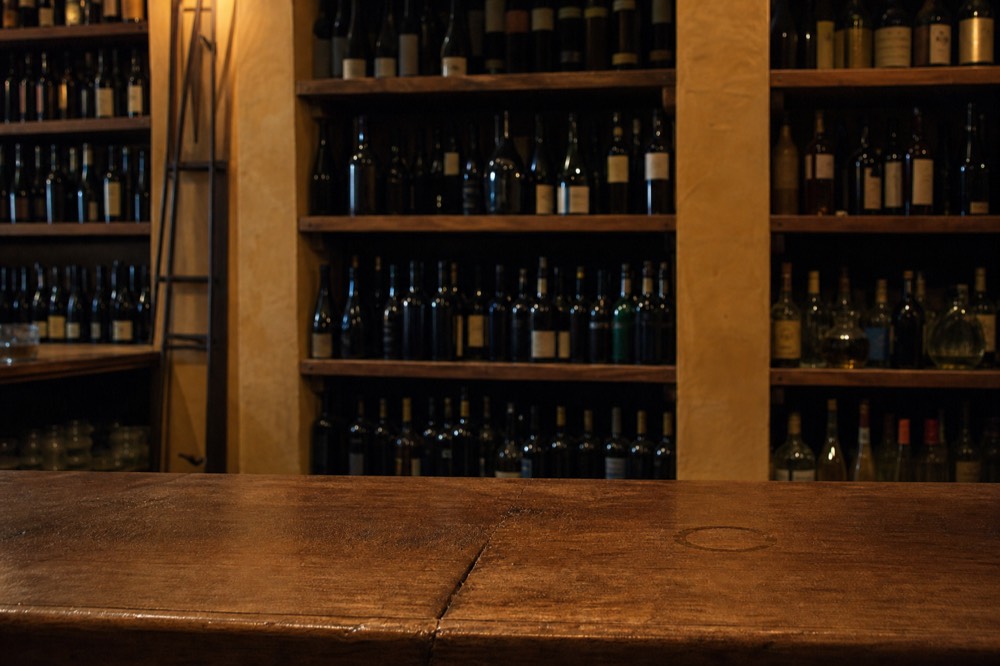
The oldest layer of the category is the wine merchant that became a bar. Enoteca Bulzoni opened in 1929 selling wine loose from the barrel, and still trades. L'Angolo Divino has occupied the same corner since 1946 under the same family. Trimani, the wine shop near Termini, is older than all of them: the family dates the business to 1821, and its current site to 1876, and its wine bar now carries a Tre Bottiglie award in the Gambero Rosso 2026 guide. These rooms are where the standing-drinking tradition comes from, and they are still the places a Roman will send you.
| Wine venue | Neighbourhood | Format | Booking |
|---|---|---|---|
| Il Goccetto | Centro Storico | Standing enoteca, blackboard by the glass | None, walk in |
| Ai Tre Scalini | Monti | Wine bar with short kitchen menu | None, walk in |
| Volpetti | Testaccio | Salumeria counter with Lazio cheeses | None, walk in |
| Enoteca Bulzoni | Salario / Trieste area | Historic wine merchant and bar | None, walk in |
| L'Angolo Divino | Centro Storico | Family wine bar since 1946 | None, walk in |
| Trimani | Near Termini | Wine shop and bar, since 1821 | None, walk in |
For a fuller picture of where a glass fits into a neighbourhood's eating, the Rome neighbourhood dining guide maps the quarters worth building an evening around, and where locals eat in Rome covers the trattorias that sit a street away from these counters.
What Do They Call Wine Bars In Italy?
In Italy, a wine bar is most commonly called an enoteca, plural enoteche. In Rome, the term refers to a licensed wine shop or bar that serves wine by the glass, often enjoyed standing at the counter, and typically paired with cheese and salumi rather than dishes from a full kitchen. The etymology is literal: a wine library, from the Greek oinos. What the word does not tell you is how the Roman version differs from the wine bar you know at home, and the difference is the format rather than the drink. Once you understand the format, the category becomes the least complicated place to eat well in the entire city, and everything below follows from that single difference.
You stand, often. Il Goccetto is a standing wine bar in the classic mould, and the enoteca tradition grew out of the bottiglieria, the bottle shop that put two stools by the counter. Ai Tre Scalini is small enough that standing is the default between eight and ten in the evening. Some rooms have proper seating, some have barrels to lean on, and none of it is bookable, which is the second difference from the Anglo wine bar: there is no table to reserve, so there is no reservation problem, so the whole friction structure that makes Roman restaurants difficult simply does not apply.
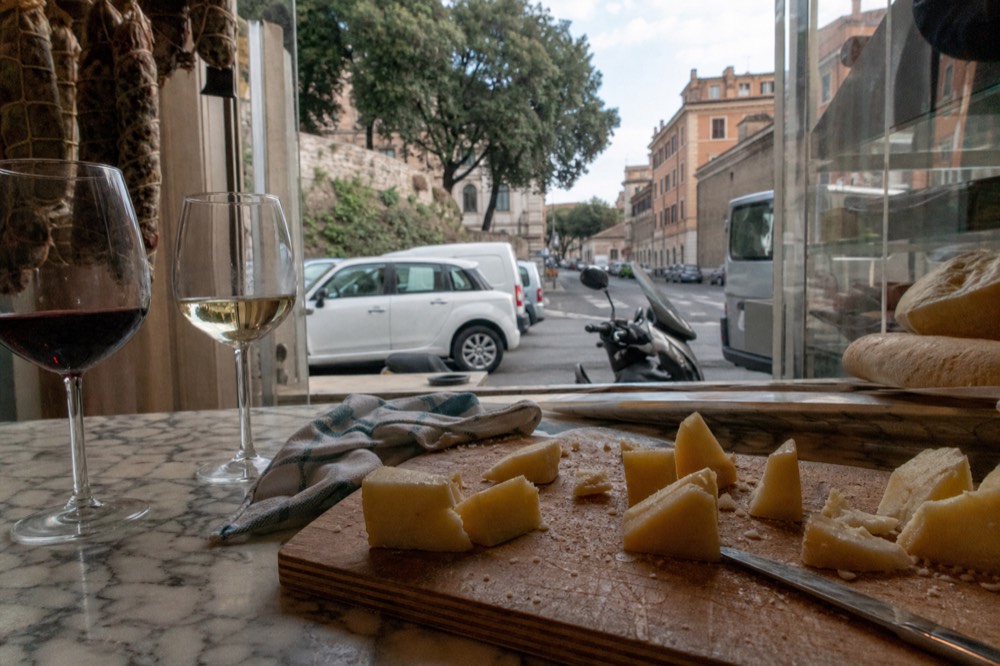
The third difference is food. An enoteca without a cheese and salumi counter is a rare thing in Rome, and the counter is often the best plate in the room. Volpetti's counter of Lazio cheeses and cured meats is the clearest example, and it is the reason the enoteca belongs on a restaurant site as much as on a drinking one. For the contrast with the evening version of drinking in Rome, the aperitivo, the aperitivo hours guide covers that ritual separately.
If standing and choosing sounds like more planning than you want on a given evening, the tours below solve the enoteca problem the same way a food tour solves the trattoria problem: they remove the choosing, cover several stops in one outing, and are booked in advance like a ticket rather than fought for on the night.
Which Rome Enotecas Can You Simply Walk Into?
Il Goccetto, Ai Tre Scalini, Volpetti, Enoteca Bulzoni, L'Angolo Divino and Trimani all take no reservations, and all six score 1 or 2 on the friction scale used across this site, which means no card guarantee, no booking window and no midnight release. That is the whole list of things you need to know, and it is the reason the enoteca carries structural weight on this site: it is the category where the famous venues and the easy venues are the same venues.
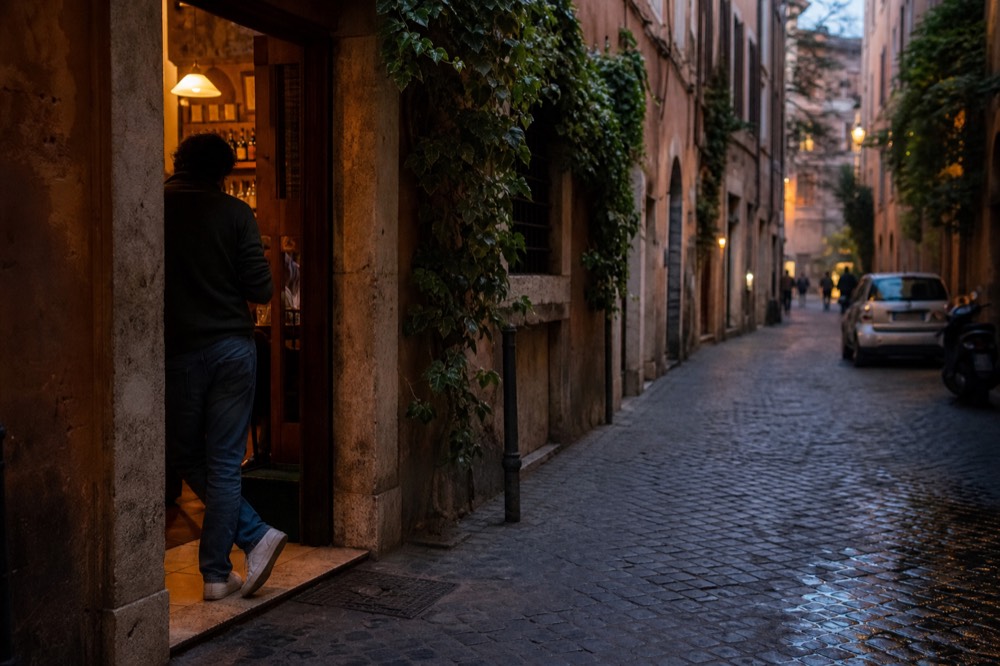
The timing still matters. Il Goccetto is easy at seven and a scrum at nine; the dated local guidance on Ai Tre Scalini says the same in plainer words. The enoteca fills after work, empties toward ten, and never develops the queue culture of a no-booking trattoria because nobody waits for a table that does not exist. Arrive on the early side of the evening and the category is close to friction-free. The one caveat worth printing: do not treat any of these rooms as a dinner reservation in disguise. The kitchen menus are short, the counters close when the counters close, and the trattoria one street over may still want booking.
| Venue | Friction score | Peak pressure | What you actually do |
|---|---|---|---|
| Il Goccetto | 2 | Nine o'clock scrum | Stand, order by the glass off the blackboard |
| Ai Tre Scalini | 2 | After work | Take a small table or stand, order wine and small plates |
| Volpetti | 1 | Saturday lunch | Queue a minute at the counter, leave with lunch |
| Enoteca Bulzoni | 1 | Weekday evenings | Browse the shelves, drink at the counter |
| L'Angolo Divino | 2 | Evening | Sit or stand, order from the list |
| Trimani | 1 | Any time | Wine shop browsing plus a poured glass at the bar |
The same walk-in logic runs through the whole wine economy of the centre, and it is the reason a wine-led evening is the low-friction alternative to a booked dinner. For the counter-food side of the same instinct, the Rome street food guide maps the walk-in fried-and-baked economy, which pairs with an enoteca stop more naturally than most restaurant dinners.
What Wine Is Rome Known For?
Rome is best known for Frascati, the crisp white wine of the Castelli Romani hills southeast of the city, along with the other Lazio whites of the DOC zone around the capital, and for Cesanese, a native red grape grown in the hills east of Rome. On paper, Lazio holds exactly three DOCG denominations, the highest tier of Italian wine classification: Cannellino di Frascati, Cesanese del Piglio o Piglio, and Frascati Superiore, with Roma DOC sitting one tier below as the region's everyday designation. That structure is the map of what ends up in your glass, and every serious wine list in the city is organised around it, whether or not the room announces the fact.
The region's official register lists those three DOCG wines for Lazio, and the third name tells the Frascati story in itself: the wine Rome drank by the carafe has a top tier now, and it is not marketing, it is the classification system. Cannellino di Frascati, the sweet-adjacent style made from late-picked grapes, and Frascati Superiore, the dry flagship, both carry the DOCG. Cesanese del Piglio, the red, completes the set, and it is the one most visitors never meet because it rarely leaves the province.
| Lazio denomination | Tier | Colour | Where you meet it in Rome |
|---|---|---|---|
| Frascati Superiore | DOCG | White | Enoteche with a serious Lazio list |
| Cannellino di Frascati | DOCG | White | Dessert and late-harvest slots |
| Cesanese del Piglio o Piglio | DOCG | Red | Specialist enoteche, rarely beyond |
| Roma DOC | DOC | Red and white | House lists, everyday pours |
Inside the city, the enoteca is where all four surface. Trimani's Tre Bottiglie in the Gambero Rosso 2026 guide, and Salumeria Roscioli's matching award as a wine bar, mark the two rooms where a Lazio list is taken seriously. The 2025 Lazio harvest, projected by the regional farmers' association at around 760,000 hectolitres, up about 5 per cent on 2024, is a small piece of context for why the local pour is not scarce: this is a producing region that drinks its own output, and the tourist trade gets the surplus.
What Kind Of Wine Is Frascati?
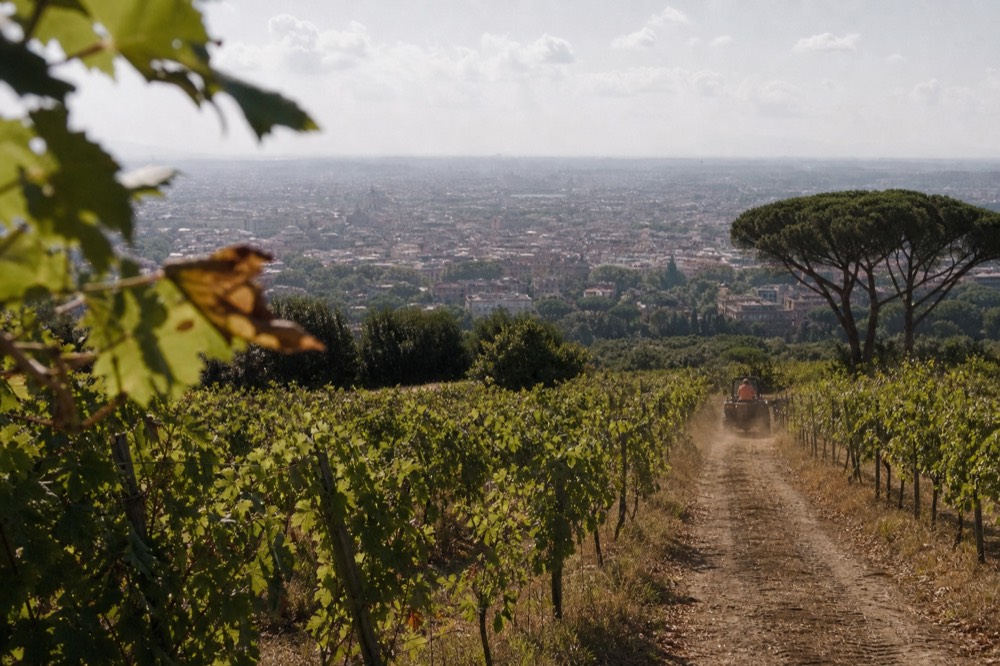
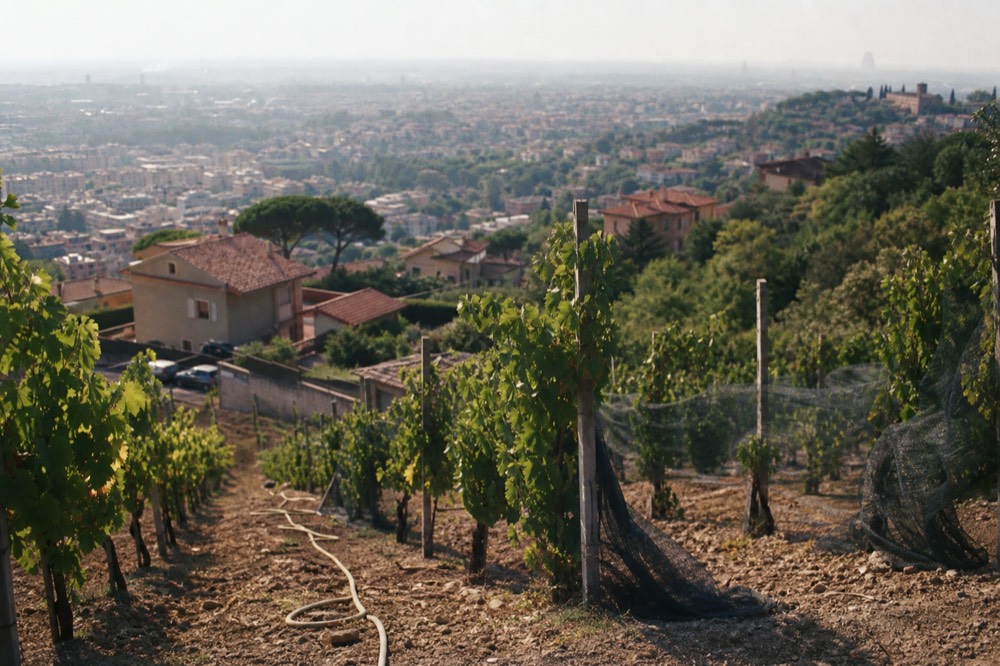
Frascati is a light, dry white wine from the volcanic hills southeast of Rome, made mainly from Malvasia and Trebbiano grapes, and it exists in three ascending tiers: basic Frascati DOC, Frascati Superiore DOCG, and the late-harvest Cannellino di Frascati DOCG. The name covers both a wine and the town in the Castelli Romani that anchors the zone, about twenty kilometres from the centre of Rome, and the volcanic soil is the detail that matters: the hills are the remains of an ancient volcano, and the porous ground is what gives the wine its minerality and its lightness.
The grapes do the rest. Malvasia di Candia and Malvasia del Lazio carry the perfume, Trebbiano carries the acid, and Greco and Bellone appear in some blends. The style is deliberately fresh: low alcohol by modern standards, drunk young, served cold, and historically sold in the refill-your-flask economy that made it Rome's house white for a century. That economy is where the reputation problem begins, and the tier system is where it ends. The DOCG tiers, granted in 2011, formalised stricter yields and vineyard rules for the producers who were already making a serious version, and the best Frascati Superiore now holds its own against white wine from anywhere in Italy.
The food pairing is the Roman canon, which is the reason the wine exists at all. Frascati's acidity and weightlessness cut through the three heavy cheeses of Roman pasta, pecorino-led cacio e pepe above all, and the carbonara-and-gricia family is built for a cold white with minerality. The match is not a marketing invention; the wine and the cooking grew up in the same hills with the same producers, and the trattoria list in Testaccio and the enoteca list in Monti both still assume it.
Is Frascati A Good Wine?
Yes, Frascati is a good wine, but the honest answer splits by tier. Basic Frascati is a pleasant, light, somewhat anonymous white best suited to casual drinking. Frascati Superiore DOCG from the serious producers, however, is genuinely good and remains widely underpriced for what it delivers, making it one of the better value picks among Italian whites. The reputation question is fair, because the name spent a century attached to bulk wine served by the carafe in Roman osterie, and a traveller who last drank it decades ago is remembering the bottom tier. That version still exists, and there is nothing wrong with it as a cold lunch wine. It is just not the story any more, and treating it as the story is the single most common mistake visitors make with this region's output.
The serious version is a modern one. The DOCG rules cut yields, pushed vineyard selection, and gave the better producers a label worth defending, and the wines that followed, from the estates in and around Frascati, Marino and the other Castelli towns, show the volcanic minerality that bulk blending used to wash out. Aged examples and riserva-level Frascati Superiore now appear on the sort of list that a decade ago would have stocked only Tuscan and Piedmont whites. The region's small red, Cesanese, has travelled the same road with less publicity.
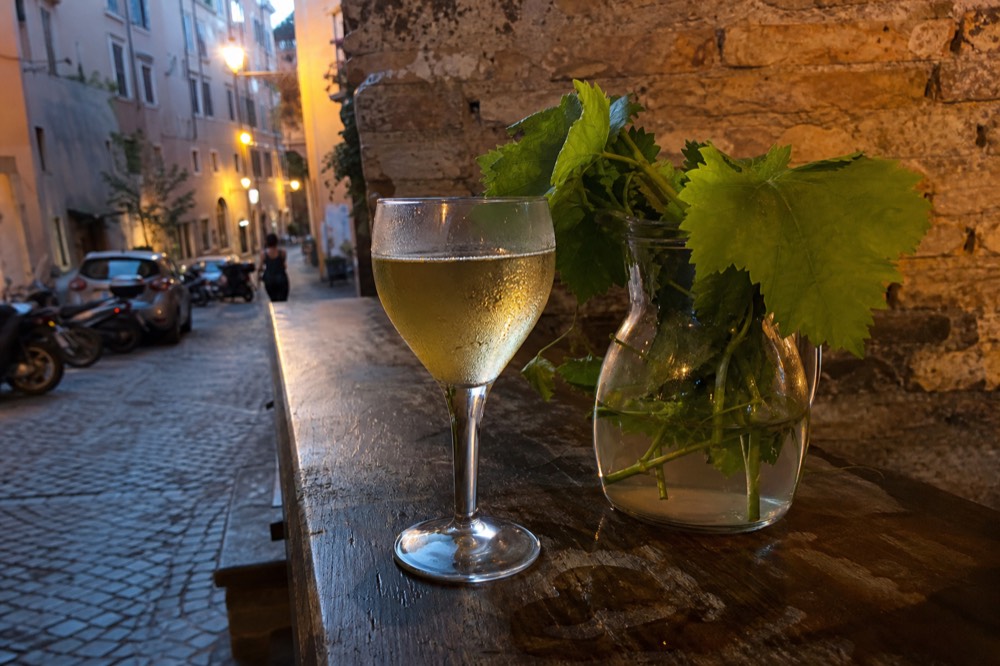
The practical verdict for a visitor: order the basic Frascati with a plate of fried artichoke or a carbonara and you get exactly the wine the dish wants. Ask for the Frascati Superiore at an enoteca with a real Lazio list and you get a wine worth the glass on its own. Both are cheap by the standards of anything Tuscan on the same list, which is the quiet advantage of a region the international market still underrates.
| Frascati tier | Classification | What to expect | Order it when |
|---|---|---|---|
| Frascati | DOC | Light, fresh, simple, drunk young | With Roman pasta, at lunch, in an osteria |
| Frascati Superiore | DOCG | Dry, mineral, more structure | When the enoteca list offers it by the glass |
| Cannellino di Frascati | DOCG | Late-harvest, richer, softer | As the sweet note at the end of a meal |
Is The Frascati Day Trip Worth It From Rome?
Yes, if the trip is built around a producer or a tasting rather than the town alone: the train to Frascati is short, the views over Rome are real, and the wineries of the Castelli Romani pour the DOCG tier in a way no city enoteca can. The honest caveat is that the day trip is a half-day, not a full one. Frascati the town is a small hillside place with a papal villa and a view, pleasant rather than dramatic, and a visitor who goes without a winery stop has spent the transport time on the weakest half of the offer.
The two wine tours listed here are the structured versions of the trip. The Frascati tasting with hotel pickup runs from $205.82 per person (checked September 2026), about three hours, private in format, with wine tasting paired with local snacks and both pickup and drop-off at your hotel. The countryside tasting with a local family runs from $103.36 per person, about three hours, also private, with wine tasting, local food pairings and olive oil, and pickup included. Both carry free cancellation. The difference is family winery versus Frascati specifically, and the second name costs more because the hotel door-to-door logistics of the Castelli trip cost the operator more to run.
Doing it independently is possible and cheaper in cash, though not in planning. The Rome to Frascati rail connection is short and frequent, the town is walkable from the station, and the wine shops in the centre pour well. What the independent version lacks is the producer: the working wineries of the Castelli are mostly outside the towns, reachable by bus, taxi or arrangement, and a visit needs to be set up ahead. A tasting tour is the version where somebody else has already made that call, the same way a food tour solves the reservation problem in the city.
Which Rome Wine Tours Include The Wine Without The Day Trip?
Not every wine-led evening in Rome needs a train ticket: the roster's city options include a five-star Trastevere walk with free-flowing fine wine from $147.98 per person, a 20-plus tasting dinner walk from $120.78, and a 1.5-hour speakeasy tasting from $34.84, all with free cancellation. (checked September 2026) These are evening formats, built around Trastevere and Monti counters rather than vineyards, and they solve the enoteca problem in the opposite direction from the Frascati trip: instead of taking you to the wine, they take the wine to you, by the glass, across several stops.
The free-flowing format is the Trastevere luxury walk: from $147.98 per person, rated 5 across 3,492 reviews (checked September 2026), about four hours, small group, with meals across the itinerary and fine wine poured without metering, meeting at Trapizzino in Piazza Trilussa. The volume format is the 20-plus tasting walk, from $120.78 per person, rated 4.9 across 1,708 reviews (checked September 2026), about four hours, more than twenty tastings at four venues with dinner included and free-flowing wine, and pickup is offered depending on the option booked. The short format is the speakeasy tasting, from $34.84 (checked September 2026), rated 5 across a small pool of 15 reviews, an hour and a half at Cabaret Voltaire in the Monti district.
The golf-cart aperitivo tour is the format in between: a four-hour small-group ride from $179.78 per person (checked September 2026), rated 5 across 41 reviews, with five tastings including an aperitivo and the cart included, meeting at Piazza di San Francesco d'Assisi. It is the choice when the evening is about covering ground rather than depth in the glass, and it pairs a drink with the parts of the centre that hurt to walk.
| Tour | Decision name | From, per person | Format | Duration |
|---|---|---|---|---|
| Frascati tasting | Frascati Tasting, Hotel Pickup | $205.82 | Private, hotel pickup | About 3 hours |
| Countryside family winery | Private Family Winery, Pickup | $103.36 (checked September 2026) | Private, pickup | About 3 hours |
| Trastevere luxury walk | Free-Flowing Fine Wine Walk | $147.98 | Small group | About 4 hours |
| 20-plus tasting walk | 20+ Tastings, Dinner Included | $120.78 | Standard group | About 4 hours |
| Speakeasy tasting | 1.5-Hour Speakeasy Tasting | $34.84 (checked September 2026) | Standard group | 1.5 hours |
| Golf cart aperitivo | Golf Cart, Aperitivo Included | $179.78 | Small group | About 4 hours |
How To Build A Wine Evening Around Rome's Enotecas
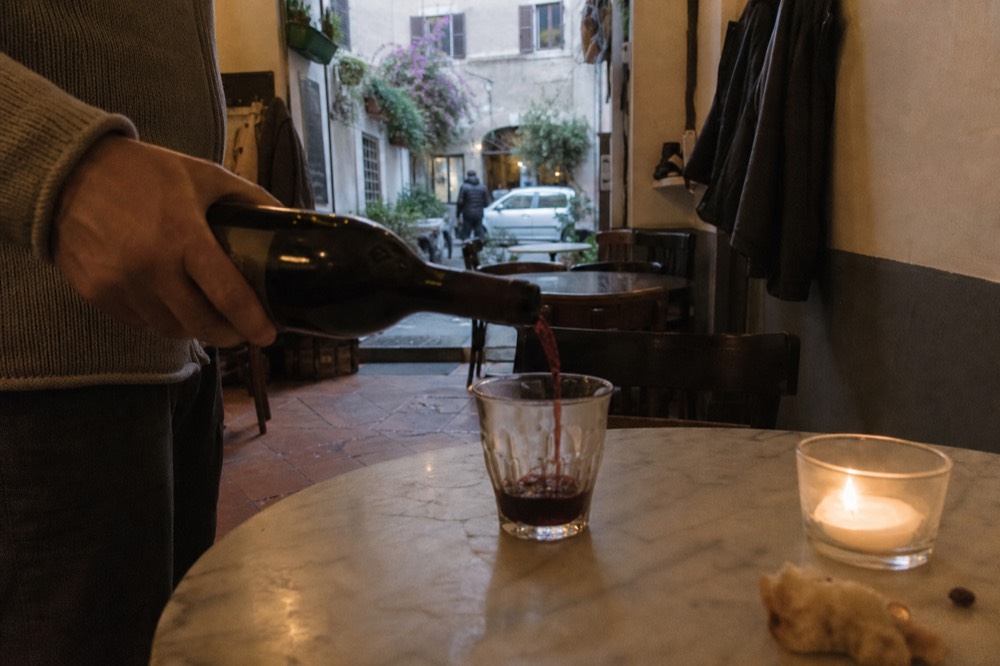
Start at an enoteca that never books, move to a second within walking distance, and let the format run on the counters rather than the clock: an evening built on Il Goccetto, Ai Tre Scalini and a salumeria counter carries no reservation risk at any point. The pattern that works is the two-stop night. One room for the first hour, a short walk to the next, and the cheese and salumi counters doing the work a tasting menu does in a booked restaurant. In Monti, Ai Tre Scalini sits inside one of the most walkable evening quarters in the city, with the trattorias and wine bars of via Urbana a street away.
The pairing logic is regional, and it is the easiest cheat in Roman drinking: order the Lazio pour and it will match whatever the counter is cutting. Frascati against the pecorino-led pastas, a Cesanese if the room has one against the cured meats, and the Cannellino as the finish against anything sweet. The enoteca list is short in most rooms, which means the choosing is easy, and the price of experimenting is the lowest in the Roman food economy. A traveller who spends an evening this way has eaten as well as at a booked trattoria, and has done it without a single piece of planning the morning of.
For the evenings that want structure, are food tours in Rome worth it runs the honest arithmetic on the format, and the question of what an evening should cost is covered in what time is aperitivo in Rome. The wine-led options sit at the top of the food-tour price range, and the speakeasy sits at the bottom, which is the spread that decides the answer for most travellers.
| Evening plan | Where it starts | Friction | Best for |
|---|---|---|---|
| Two-enoteca walk | Il Goccetto or Ai Tre Scalini | None | An unplanned evening |
| Deli counter plus glass | Volpetti, Testaccio | A minute's queue | Lunch with a bottle to take away |
| Free-flowing tour | Trapizzino, Piazza Trilussa | Booked like a ticket | A first night in Trastevere |
| Speakeasy hour | Cabaret Voltaire, Monti | Booked like a ticket | A short pre-dinner stop |
| Frascati day trip | Hotel pickup or the train | Booked or self-arranged | A day out of the city |
The cooking classes guide covers the version of this where the evening ends at your own stove, and Best Restaurants in Rome holds the full index, including the starred rooms where a Frascati Superiore earns its DOCG place on the list.
The short answers below cover the names, the words and the wines: enoteca is the word, Frascati is the wine, the three DOCG denominations are the top of the Lazio pyramid, and not one of the best wine rooms in the centre takes a booking. Each question repeats the exact phrasing travellers search for, and each answer keeps to what holds true about Rome's wine bars. If a figure matters to the answer, it appears in the body sections above with its full context; the answers here are the compressed version for a reader who landed on the last section of the page.
Common Questions About Wine Bars And Frascati In Rome
What Is The Best Wine Bar In Rome?
There is no single winner, and the honest answer is a set: Il Goccetto and Ai Tre Scalini for the standing, no-booking format in the centre, Volpetti for the salumeria counter in Testaccio, and the historic rooms, Enoteca Bulzoni, L'Angolo Divino and Trimani, for the wine-merchant tradition. All of them take no reservations.
What Do They Call Wine Bars In Italy?
An enoteca, plural enoteche. In Rome the word usually means a wine shop or bar serving by the glass, often with standing room and a cheese and salumi counter rather than a full kitchen.
What Wine To Drink In Rome?
Drink Lazio: a Frascati Superiore DOCG or basic Frascati with the Roman pasta canon, a Cesanese del Piglio if the list carries one, and the Cannellino di Frascati as the sweet finish. Roma DOC is the everyday tier for pouring by the carafe.
What Kind Of Wine Is Frascati?
A light, dry white from the volcanic hills southeast of Rome, made mainly from Malvasia and Trebbiano, in three tiers: Frascati DOC, Frascati Superiore DOCG and the late-harvest Cannellino di Frascati DOCG.
Is Frascati A Good Wine?
The basic tier is pleasant and simple. The Frascati Superiore DOCG from the serious producers is genuinely good and underpriced, with the volcanic minerality that bulk blending historically washed out.
What Wine Is Rome Known For?
Frascati, historically, as the city's house white from the Castelli Romani, and Cesanese as the regional red. Lazio holds three DOCG wines: Cannellino di Frascati, Cesanese del Piglio o Piglio and Frascati Superiore.
What Is The Best Wine In Rome?
No single wine holds that title, but the top of the regional pyramid is the Frascati Superiore DOCG tier and Cesanese del Piglio DOCG. The rooms most likely to pour them seriously are Trimani and Salumeria Roscioli, both carrying Gambero Rosso Tre Bottiglie awards.