Where Romans Actually Eat And How The Tourist-Trap Belt Works
The places that fill with Italian voices are not the ones with the laminated menus and the multilingual hosts. They are the trattorias that refuse to take a booking, the market stalls that shut by mid-afternoon, and the pizzerias that open for dinner only. This page walks the real radius from every major honeypot and explains the signals that separate a Roman table from a tourist one.
Short answer
Romans eat a five- to ten-minute walk from the immediate tourist orbit: in Monti behind the Colosseum, Prati behind the Vatican, and the back streets of Trastevere and Testaccio. The tell is not the decor but the booking policy: a place that takes no reservations, serves lunch only, or closes Sunday and Monday is a place Romans trust. The laminated menu translated into five languages and the host calling you in from the pavement are the two clearest signals you are in the wrong street.
The question every visitor asks, and the one the search engines answer worst, is where Romans actually eat. The algorithm returns a list of the same ten trattorias, and the signal collapses: the moment a restaurant appears on a listicle, it is no longer a secret. Best Restaurants in Rome is not a list of hidden gems, because the genuinely hidden ones are the ones that stay off the page. What this page does instead is explain the radius. How far from the Colosseum, the Vatican walls and Piazza Navona you need to walk, and which direction, to find a table full of Italian voices.
Where Do Locals Eat In Rome?
The short answer is that Romans eat outside the immediate tourist orbit. A five- to ten-minute walk from the Colosseum, the Vatican walls or Piazza Navona puts you in a different city. The places that fill with Italian voices are the trattorias that take no reservations, the market stalls that shut by mid-afternoon, and the pizzerias that open for dinner only. The signal is not the decor; it is the booking policy and the lunch-only timetable.
The engine of the Roman restaurant economy is a short list of honeypots. The Trevi Fountain, the Spanish Steps, the Pantheon, the Colosseum, St Peter's Square, and Piazza Navona. Each one draws a radius of about two hundred metres inside which the restaurant trade is overwhelmingly foreign. The laminated menu translated into five languages, the glossy photograph of every dish, and the host stationed on the pavement calling you "amico" are the three signals that the kitchen is cooking for a one-time customer. The further you walk from the monument, the shorter the menu gets, the fewer the languages, and the more likely the room is to be full of Romans at eight o'clock.
The real distinction is not between a tourist restaurant and a local one. It is between a restaurant that needs a tourist to survive and a restaurant that does not. A trattoria that serves lunch only, Monday to Saturday, and shuts for three weeks in August is a business that relies on the same people eating there every week. A restaurant that stays open all afternoon, every day of the year, with a menu that reads like a greatest-hits compilation of Roman cooking, is a business that relies on a constant flow of first-time visitors. Neither is a trap, and neither is a secret. The question is only which one you are looking for. The dishes that define the Roman table are covered in what to eat in Rome.
How Far Do You Have To Walk From The Colosseum To Eat Where Romans Eat?
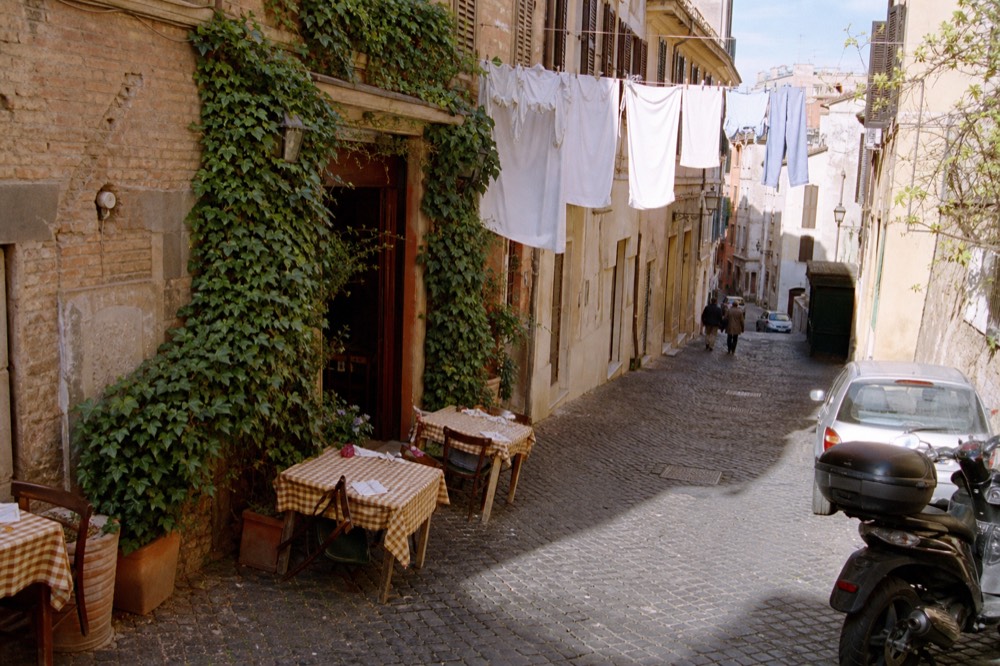
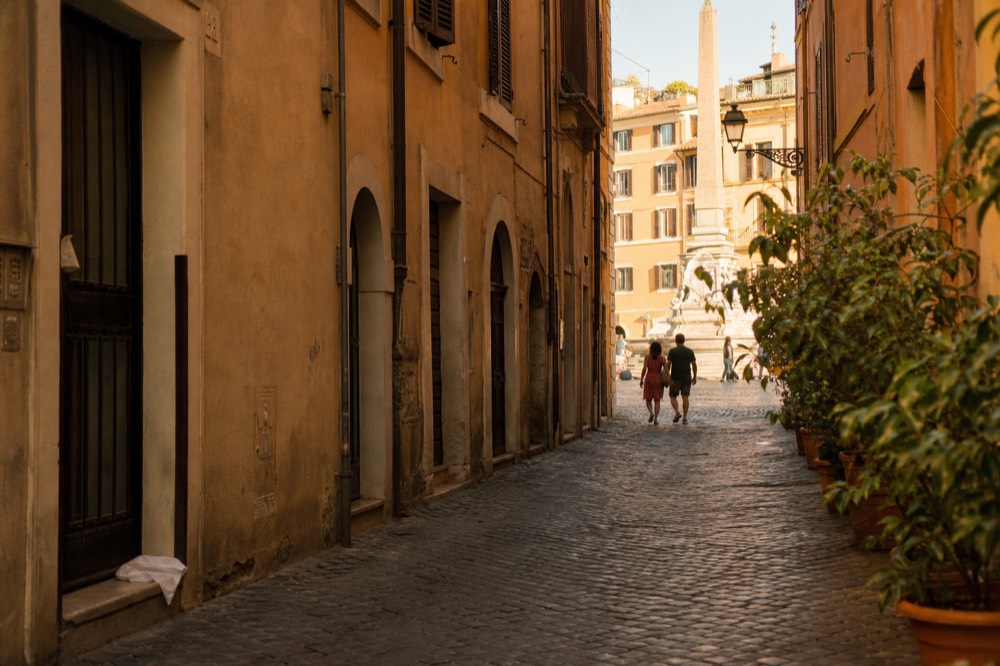
The Colosseum is the easiest honeypot to escape. Walk north-east into the Monti quarter, and within three minutes you are on via dei Serpenti or via Urbana, where the lunch trade is neighbourhood and the dinner trade is young Romans. The key is the direction: the streets immediately west of the Colosseum, towards the Forum, are a dead zone of kiosks and sandwich bars with a captive audience. Walk east, and the first proper trattorias appear.
Monti is the quarter that sits on the hill behind the Colosseum, and it is the answer to the shortest walk from a monument to a Roman table. The streets are narrow, the shops sell vintage clothes and hand-bound books, and the restaurants are a mix of old osterie and younger places. Ai Tre Scalini on via Panisperna is a wine bar that does not take bookings and fills with Italians after work. La Carbonara, a few doors down, has been trading on the same street since 1906, and it closes on Sundays. That Sunday closure is a signal: a restaurant that gives up a full day of tourist trade is a restaurant that is not chasing tourists. Zia Rosetta on via Urbana makes gourmet rosetta-roll sandwiches and shuts on Mondays, and on a weekday lunchtime the queue is made up of Romans on their break.
The other direction from the Colosseum is south, into the Celio and the edge of San Giovanni, but the walk is longer and the reward is a quieter neighbourhood. The real lesson of the Colosseum is that the difference between a tourist meal and a Roman one is a three-minute walk and a turn off the main road. Our neighbourhood dining guide maps the full geography of where each quarter's restaurants cluster.
What Is The Real Trap Belt And How Do You Avoid It?
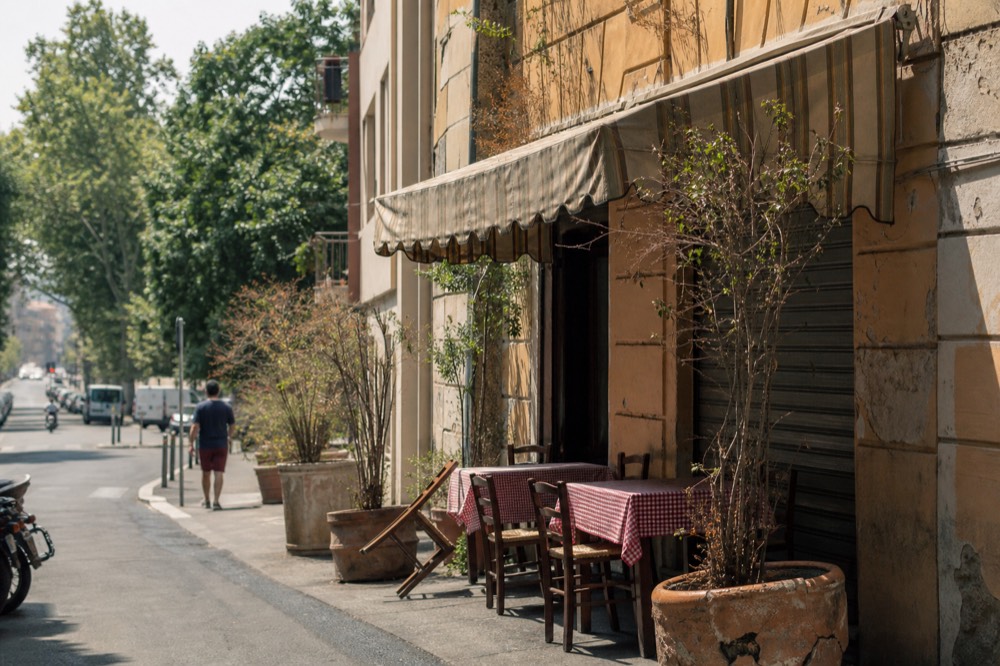
The trap belt is a set of streets and signals, not a list of restaurants. The highest-risk zones are the two blocks around the Trevi Fountain, the porticoed edge of Piazza Navona, the restaurants on via della Conciliazione, and the belt at the Colosseum entrance. The signals are a laminated menu in four or five languages with a photograph of every dish, and a host stationed outside calling you in. Walk three streets back, and the laminated menus disappear.
The trap belt is a real phenomenon, and it is documented by two dated Rome guides that describe the same patterns. The menu is the first and clearest signal. A Roman trattoria prints a single sheet of paper, in Italian, and the dishes change with the season. A restaurant that prints a glossy booklet in English, French, German, Spanish and Japanese, with a photograph of a pizza and a plate of spaghetti, is cooking for people who will never come back. The second signal is the host. A Roman restaurant does not need someone on the pavement to fill the room. The third signal is the carbonara. Cream has no place in a Roman carbonara, and a kitchen that pours it in is cooking for a foreign palate.
The zones matter because the rents are the highest next to the monuments, and the business model follows the rent. A restaurant that pays a premium for a table on the edge of Piazza Navona cannot survive on a lunch trade of Romans eating a single plate of pasta. It needs a high turnover of tourists ordering a three-course meal, a bottle of wine, and a limoncello. The honest advice is not to avoid these streets entirely. It is to understand that the restaurant you are looking for is never on the square itself. It is one street behind, on a quieter alley, with a shorter menu and a room that buzzes with Italian.
The other half of the story is the list of places that nobody needs to book. Rome has twenty-nine walk-in spots that score 1 or 2 on the friction scale. The gelaterie, the coffee counters, the bakeries, the market stalls, and the wine bars. Giolitti near the Pantheon, Sant'Eustachio il Caffè, Tazza d'Oro, Antico Forno Roscioli, Forno Campo de' Fiori, La Renella, Supplì Roma, Trapizzino, Volpetti, Mordi e Vai, the Nuovo Mercato Testaccio, Il Goccetto, Ai Tre Scalini, and the big evening pizzerias like Ai Marmi and Da Remo. These are the places that make the city navigable. You do not need a reservation to eat a supplì, a slice of pizza al taglio, or a gelato. The budget meal in Rome is a counter meal, and the counters are the same ones Romans use. For a full breakdown of Rome's hardest tables and how to book them, see the guide to the hardest restaurant reservations in Rome.
Where Do Romans Eat Near The Vatican?
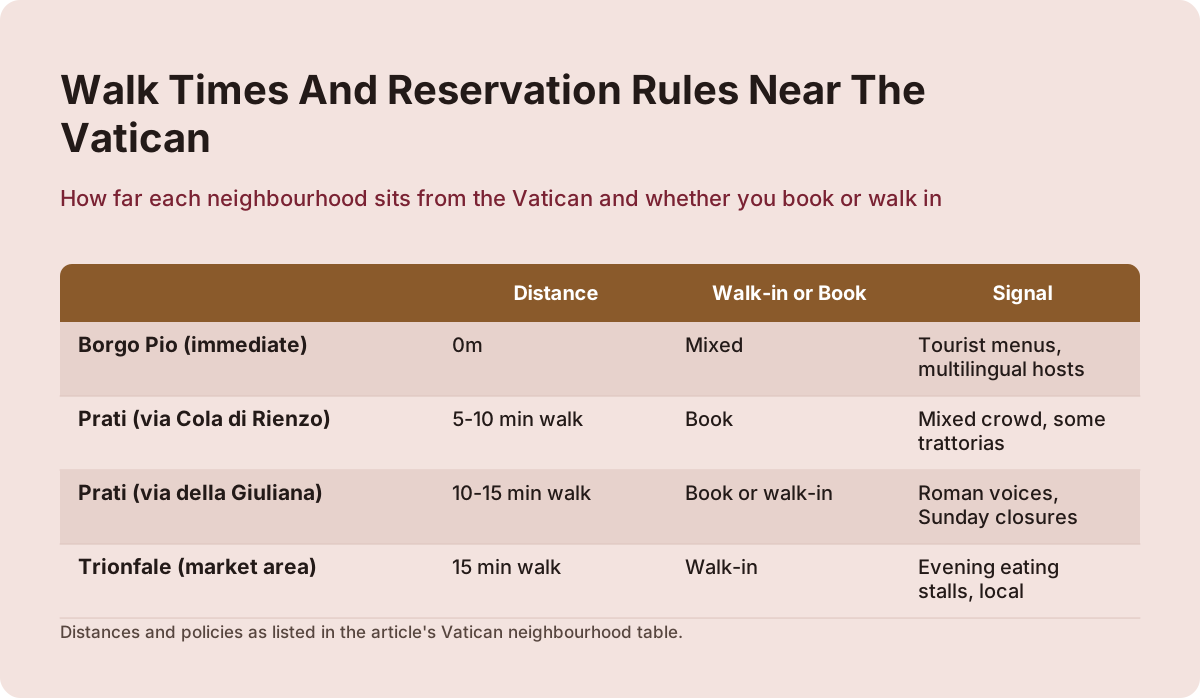
The Vatican is the hardest honeypot to escape because the walls are long and the streets immediately outside are a commercial corridor of souvenir shops and tourist menus. The answer is to walk north, into Prati, or east, across the river into the historic centre. Prati is the residential quarter behind the Vatican, and the further you walk from the walls, the more the restaurants turn into neighbourhood trattorias with a regular Roman clientele.
Prati is the cleanest example of the radius rule. The streets immediately behind the Vatican, around via Cola di Rienzo and via Germanico, are a mix of mid-range restaurants that serve a mixed crowd. Walk another five minutes, to via della Giuliana or via Andrea Doria, and the rooms become smaller and the menus become shorter. L'Arcangelo on via Giuseppe Gioachino Belli is a trattoria in an art-nouveau room that closes on Sundays and shuts for the last three weeks of August. Its own site publishes the summer dates, and the room is full of Romans at dinner. Pizzarium Bonci on via della Meloria is a standing pizza al taglio counter that sells by weight, and the queue, when it forms, is a mix of Romans and visitors who have done their homework. The Mercato Trionfale on via Andrea Doria is the largest covered market in the city, and the eating stalls stay open until 23:00 Tuesday to Saturday, long after the produce stalls have shut. The market's own site publishes the split hours, and the evening crowd is almost entirely local.
The key to the Vatican is the direction. Walk north, and the city changes. Walk south, and you are in the Borgo, which is a tourist corridor. Walk east, and you cross the river into the historic centre, where the same radius rule applies: the streets around Piazza Navona are the trap belt, but the streets behind it, in the direction of the Pantheon or Campo de' Fiori, are a different city.
| Neighbourhood | Distance from Vatican | Walk-in or Book | Signal |
|---|---|---|---|
| Borgo Pio (immediate) | 0m | Mixed | Tourist menus, multilingual hosts |
| Prati (via Cola di Rienzo) | 5-10 min walk | Book | Mixed crowd, some trattorias |
| Prati (via della Giuliana) | 10-15 min walk | Book or walk-in | Roman voices, Sunday closures |
| Trionfale (market area) | 15 min walk | Walk-in | Evening eating stalls, local crowd |
Where Do Romans Eat In Trastevere Without The Tourist Crowds?
Trastevere is the hardest quarter to read because the whole neighbourhood is a tourist destination, but the back streets are full of Romans. The restaurants on the main squares serve a mixed crowd, and the restaurants on the quieter alleys serve the neighbourhood. The booking policy is the signal: a Trastevere restaurant that refuses to take a reservation seats people in the order they arrive, a commitment to the neighbourhood, not the tourist.
The most famous example is Da Enzo al 29, the small trattoria on via dei Vascellari that has become the most-recommended restaurant in Trastevere. Its own site states plainly that it takes no reservations, in any service, and it explains why: the room is small, the plates are cooked to order, and it seats people in the order they arrive. The queue forms before the door opens, and the room is a mix of Romans and well-informed visitors. The policy is not a gimmick; it is a business model. A restaurant that refuses to manage a book is a restaurant that knows its regulars will wait.
The other side of Trastevere is the walk-in trade. Tonnarello has five addresses in the neighbourhood, and every one of them is labelled "No Reservation, Just Walk in" on its own site. The wait at peak dinner can be an hour, but the room is large and the turnover is fast. The kitchen turns out tonnarelli cacio e pepe, carbonara, gricia and amatriciana, and the crowd is a mix of Romans and visitors who have figured out the line. Supplì Roma on via di San Francesco a Ripa is a takeaway counter that sells fried rice balls and closes on Sundays. It is cash only, and the queue is a minute long. Otaleg on via di San Cosimato is a gelateria that stays open until midnight, and the pistachio is a dull khaki, not a bright green, which is the signal that the gelato was made that morning, not in a factory.
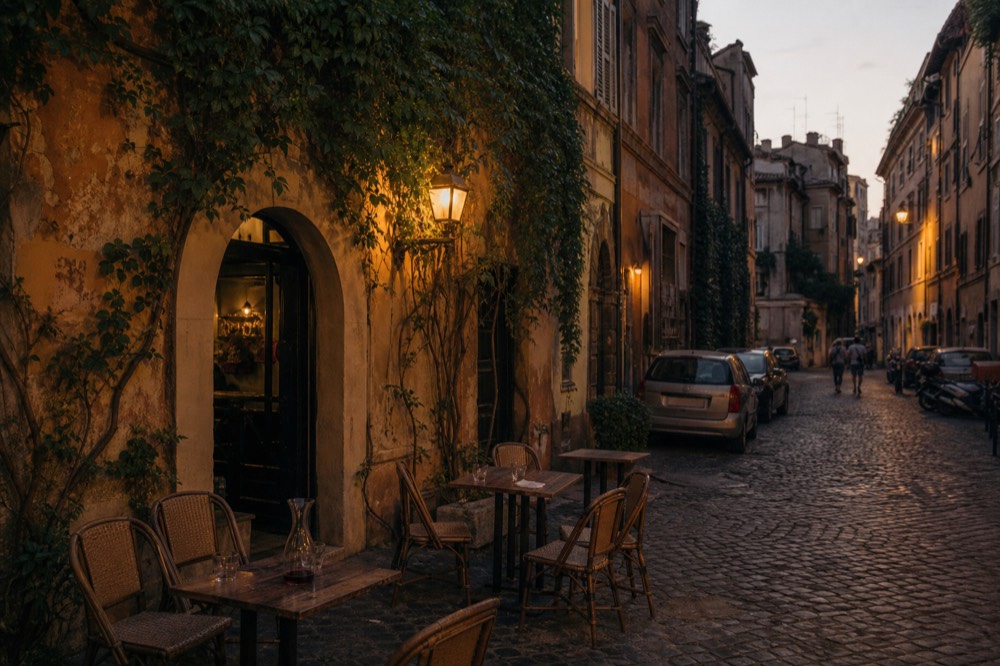
The Trastevere lesson is that the tourist and the local share the same streets. The difference is the time of day and the restaurant you choose. A Roman eats lunch at a counter, dinner at a trattoria that closes on Sunday, and gelato from a window that stays open late. A tourist eats lunch at a table on the piazza, dinner at a restaurant with a laminated menu, and gelato from a shop that piles it into fluorescent mounds. The distance between the two is one street and one menu.
| Trastevere Spot | Type | Reservation | Who Eats There |
|---|---|---|---|
| Da Enzo al 29 | Trattoria | None, walk-in only | Mix of Romans and informed visitors |
| Tonnarello | Trattoria | None, walk-in only | Mostly visitors, some Romans off-peak |
| Supplì Roma | Friggitoria | None, counter | Romans and visitors |
| Otaleg | Gelateria | None, counter | Romans and visitors |
| Roma Sparita | Trattoria | 15-day window, book online | Romans and visitors who book ahead |
Where Do Romans Eat In Testaccio?
Testaccio is the neighbourhood Romans point to when asked where to eat. A twenty-minute walk from the Colosseum, it has no major monument, and the absence of a honeypot is why the restaurants are full of locals. The quarter was built around the old municipal slaughterhouse, and the cooking is the offal tradition the workers were paid in. The restaurants range from historic trattorias to market stalls with no bookings at all.
Checchino dal 1887 is the quinto quarto institution of Testaccio, and its own booking form requires at least six hours' notice. It closes on Mondays and Tuesdays, and it shuts for three weeks in August, dates it publishes on its own site. The rigatoni con la pajata is the dish that defines the quarter, and the room is full of Romans who have booked ahead. Da Felice a Testaccio takes online bookings only, and its own site warns that it will not accept a cancellation by telephone, email or social media. The cacio e pepe is tossed at the table, and the three-week booking window, reported by a dated guide, is the price of a seat.
The other half of Testaccio is the market. The Nuovo Mercato Testaccio is open Monday to Saturday, 07:00 to 15:30, and it closes on Sundays. The market's own site states the hours, and the food stalls inside it are the reason Romans queue at lunchtime. Mordi e Vai is the stall that sells the panino col bollito, and the market's own page acknowledges the queue. The stall is finished by mid-afternoon, and the only way to eat there is to arrive before two. CasaManco is box 22, and the pizza alla pala is sold by weight, so you point at the piece you want and it goes on the scale, with the specials priced per kilo above the classics. The queue forms around midday, and the crowd is a mix of Romans and visitors who have read about the market.
The Volpetti deli on via Marmorata is a salumeria that cuts cured ham and Lazio cheeses to order, and it closes on Sundays. The queue is a minute long, and the lunch you build from the counter is the same lunch a Roman builds. The real lesson of Testaccio is that the absence of a monument is the presence of a neighbourhood. The restaurants are not secret; they are just not on the way to anything else.
| Testaccio Spot | Type | Reservation | Lunch/Dinner | Closed |
|---|---|---|---|---|
| Checchino dal 1887 | Historic restaurant | 6 hours' notice, book online | Lunch and dinner | Mon, Tue |
| Da Felice a Testaccio | Trattoria | Online only, book ahead | Lunch and dinner | None |
| Nuovo Mercato Testaccio | Covered market | None, walk-in | Lunch only (07:00-15:30) | Sun |
| Mordi e Vai | Market stall | None, walk-in | Lunch only | Sun |
| Volpetti | Salumeria | None, walk-in | Daytime | Sun |
Where Do Romans Eat In The Historic Centre Without A Reservation?
Romans know that the historic centre’s best tables without a reservation are the old trattorias that refuse email bookings, close on Sunday, and serve whoever turns up. Look for the queues formed by locals at lunchtime at places like Da Enzo al 29, where the only way in is to wait, not book.
Armando al Pantheon is the restaurant that proves the mechanism matters more than the fame. Its own site states that bookings are online only, and it explicitly refuses email requests. The book runs thirty days ahead, and a new day is released every night at midnight. The restaurant closes on Saturday evening and Sunday, and it will not seat a dinner party above six. The spaghetti cacio e pepe is the dish that keeps the room full, and the Romans who eat there know to refresh the page at midnight.
The other strategy in the centre is to eat at a counter. The Centro Storico has the highest concentration of walk-in spots in the city. Giolitti, the gelateria that has been working since 1900, is a counter with a queue, and the queue moves fast. Sant'Eustachio il Caffè is open every day of the year except Christmas Day and Ferragosto, and the gran caffè is sugared at the bar unless you say otherwise. Tazza d'Oro, a step from the Pantheon, serves a granita di caffè con panna that is a meal in itself, and the queue is a standing bar. Il Goccetto on via dei Banchi Vecchi is a wine bar that does not take bookings, and the room is a scrum after nine o'clock. The early evening is the window to get a seat, and the crowd is a mix of Romans and visitors who know the wine list.
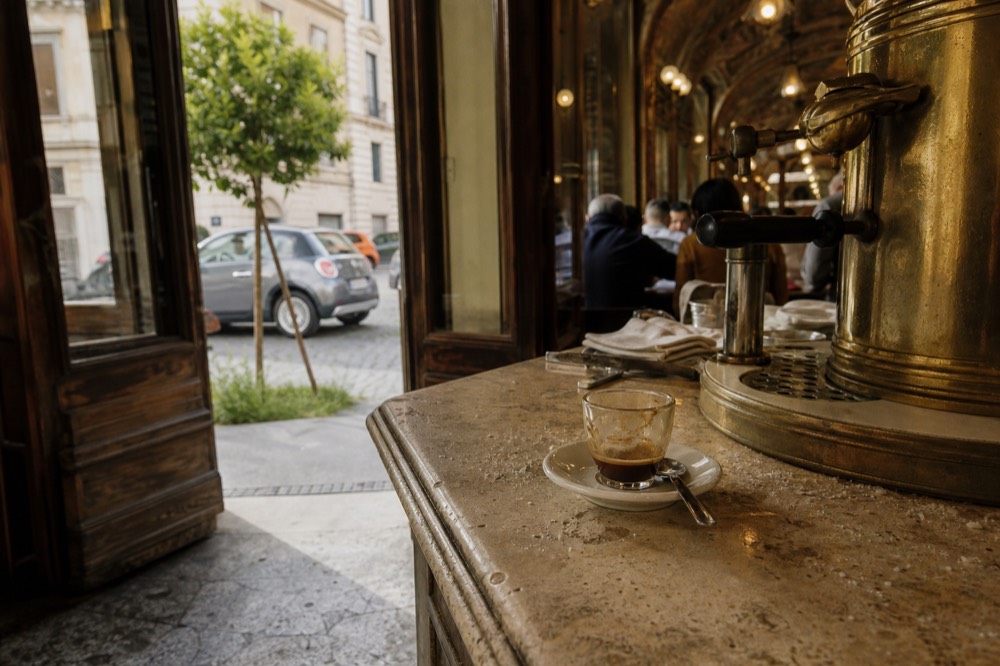
The historic centre is not a neighbourhood. It is a collection of monuments with a neighbourhood woven through them. The Romans who live there eat at the same counters and the same trattorias as the visitors, but they eat at different times and they know the booking system. The lesson is the same: the restaurant with the laminated menu is the restaurant you walk past. The restaurant with the midnight booking release is the restaurant you refresh for.
| Historic Centre Spot | Type | Reservation | Signal |
|---|---|---|---|
| Armando al Pantheon | Trattoria | Online only, 30-day book, midnight release | Closed Sat evening, Sun; no email |
| Giolitti | Gelateria | None, walk-in | Counter since 1900 |
| Sant'Eustachio il Caffè | Caffè | None, walk-in | Open all year except 25 Dec and 15 Aug |
| Tazza d'Oro | Caffè | None, walk-in | Granita counter by the Pantheon |
| Il Goccetto | Wine bar | None, walk-in | No bookings, early is easy |
The Signals That Separate A Roman Table From A Tourist One
The clearest signal is not the presence of Italians in the room; it is the booking policy. A restaurant that takes no reservations, runs a narrow online book, or closes on Sunday is built around a regular clientele. A restaurant that serves lunch only and shuts for three weeks in August relies on the same people eating there every week. The menu is the second signal: a single sheet of paper in Italian, with the dishes changing with the season.
The booking policy is the single most reliable signal because it is the one a restaurant cannot fake. A restaurant that takes a credit card as a guarantee and charges a per-head fee for a late cancellation, like Il Pagliaccio, is a restaurant that cannot afford an empty table. A restaurant that refuses to take a booking at all, like Da Enzo al 29, is a restaurant that knows its regulars will wait. The policy is a statement about who the restaurant is for.
The hours are the second signal. A restaurant that serves lunch only, like the stalls in the Testaccio market, is a restaurant that finishes by mid-afternoon. A restaurant that opens for dinner only, like Ai Marmi in Trastevere, is a restaurant that serves the evening trade. A restaurant that stays open all afternoon, from midday to eleven, is a restaurant that serves a foreign trade, because the Italian lunch break is over by three. The afternoon gap is the single most reliable signal in the centre of Rome.
The August closure is the third signal. A restaurant that shuts for three weeks in August and publishes the dates on its own site is a restaurant that is closed for the holidays. A restaurant that stays open through August is a restaurant that is open for the tourists. The two are not a judgement; they are a business model. The Roman who eats at Checchino dal 1887 in July knows that the kitchen will be dark in August, and the visitor who arrives in August needs to know that the restaurant they read about is closed.
| Signal | What It Means | Example |
|---|---|---|
| No reservations, walk-in only | A restaurant that relies on regulars | Da Enzo al 29, Tonnarello |
| Online booking only, narrow window | A restaurant that controls the book | Armando al Pantheon, Felice |
| Lunch only, Monday to Saturday | A restaurant that serves the working day | Mordi e Vai, Testaccio market |
| Closed Sunday and Monday | A restaurant that takes two days off | Checchino, Il Pagliaccio |
| August closure published on own site | A restaurant that shuts for the holidays | Checchino, L'Arcangelo, Piatto Romano |
The Walk-In Rome: Twenty-Nine Places You Can Simply Walk Into
The honest counterweight to the booking anxiety is the twenty-nine places that score 1 or 2 on the friction scale: the gelaterie, coffee counters, bakeries, market stalls, and wine bars. These are the places that make the city navigable, and they are the same places Romans use. You do not need a reservation to eat a supplì, a slice of pizza al taglio, or a gelato. The budget meal in Rome is a counter meal.
The walk-in list is not a concession; it is the other half of the story. For every Da Enzo that requires a queue, there is a Supplì Roma that requires a minute. For every Armando that releases a table at midnight, there is a Giolitti that has been serving gelato since 1900 and has never taken a booking (see Giolitti Verdict). The city is not a wall of impossibility. It is a city where the specific places people have written down are the difficult ones, and the rest of the city is waiting.
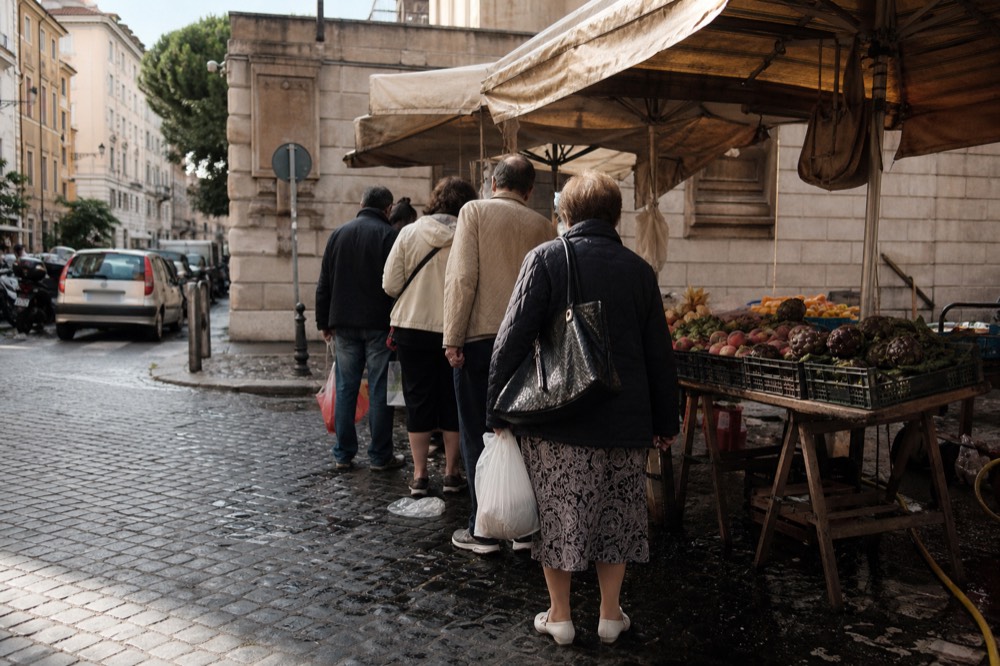
The market stalls are the most useful walk-in spots. The Nuovo Mercato Testaccio is open Monday to Saturday, and the food stalls inside it serve lunch until they sell out. The Mercato Centrale at Termini is a food hall on three levels, open every day from 07:30 to 23:30, and the counters serve fresh pasta, pizza, and trapizzino. The Mercato Trionfale is the largest covered market in the city, and the eating stalls stay open until 23:00 Tuesday to Saturday. The Campo de' Fiori market is a morning market, and the Forno Campo de' Fiori sells pizza rossa and pizza bianca by weight, with no queue ticketing system, so you hold your own place.
The wine bars are the second walk-in category. Il Goccetto in the historic centre, Ai Tre Scalini in Monti, and the enoteche that pour wine by the glass off a blackboard. These are the places that Romans use for an aperitivo, and they are the places that do not require a plan. The rule is the same: arrive early, or expect a crowd.
| Walk-In Category | Examples | When to Go | Cost |
|---|---|---|---|
| Gelaterie | Giolitti, Otaleg, Gelateria dei Gracchi, Fassi | Late evening | Per-scoop pricing |
| Coffee counters | Sant'Eustachio, Tazza d'Oro | Morning and afternoon | Under the counter price |
| Bakeries | Antico Forno Roscioli, Forno Campo de' Fiori, La Renella, Panificio Bonci | Daytime | Sold by weight |
| Market stalls | Mordi e Vai, CasaManco, Trapizzino | Lunchtime | Per-item pricing |
| Wine bars | Il Goccetto, Ai Tre Scalini | Early evening | Glass pricing |
The Radius From Every Honeypot: A Practical Guide
The most useful thing to know is the direction to walk from each major monument. From the Colosseum, walk north-east into Monti. From the Vatican, walk north into Prati or east across the river. From Piazza Navona, walk one street back in any direction. From the Trevi Fountain, walk north-east towards the Quirinale. The rule is the same: the monument is the centre of the tourist belt, and the local table is a five-minute walk away.
The radius is the simplest tool on this page. The laminated menu is the first signal, and the direction is the second. The further you walk from the monument, the shorter the menu gets, and the more likely the restaurant is to close on Sunday. The Romans who live in the centre eat at the same trattorias as the visitors, but they eat at the ones that are not on the square. The difference is one street.
The other tool is the time of day. A Roman lunch is a quick plate at a counter, finished by two. A Roman dinner starts at eight. The afternoon gap, from three to seven, is the window when the tourist restaurants stay open and the Roman ones are shut. The restaurant that serves a full meal at four in the afternoon is a restaurant that serves a foreign trade, and that is not a secret; it is a clock.
| Honeypot | Walk Direction | Neighbourhood | Walk-in or Book | Example |
|---|---|---|---|---|
| Colosseum | North-east | Monti | Mixed | Ai Tre Scalini, La Carbonara |
| Colosseum | South | Celio/San Giovanni | Book | Santo Palato, Da Danilo |
| Vatican | North | Prati | Book or walk-in | L'Arcangelo, Pizzarium, Trionfale |
| Vatican | East | Historic centre | Book | Armando, Il Goccetto |
| Piazza Navona | One street back | Any direction | Book | Emma, Hosteria Grappolo d'Oro |
| Trevi Fountain | North-east | Quirinale | Book | Colline Emiliane |
| Trevi Fountain | West | Pantheon | Book | Armando |
| Spanish Steps | East | Via Veneto | Book | Various |
| Spanish Steps | South | Trevi area | Book | Various |
Common Questions About Where Locals Eat In Rome
Where Do Locals Go To Eat In Rome?
Romans eat in the neighbourhoods that sit outside the immediate tourist orbit: Monti behind the Colosseum, Prati behind the Vatican, the back streets of Trastevere, and the whole of Testaccio. The signal is the booking policy: a restaurant that takes no reservations, closes on Sunday, or serves lunch only is a restaurant built around a regular Roman clientele.
Where To Eat In Rome That Is Not Touristy?
The key is to walk at least three streets back from any major monument. The laminated menu translated into five languages and the host calling you in from the pavement are the two clearest signals you are in a tourist-oriented restaurant. The further you walk, the shorter the menu, and the more likely the room is to be full of Italian voices.
Where To Eat In Rome That Isn't Touristy?
The same rule applies: walk away from the monument. The Colosseum, the Vatican, Piazza Navona, the Trevi Fountain and the Spanish Steps are the honeypots. A five- to ten-minute walk in the right direction puts you in a different city. The direction from the Colosseum is north-east into Monti, and from the Vatican it is north into Prati.
Where To Eat In Rome To Avoid Tourist Traps?
Avoid the two blocks around the Trevi Fountain in any direction, the porticoed edge of Piazza Navona, the restaurants on via della Conciliazione by the Vatican, and the belt at the Colosseum entrance. The signals are a laminated menu, a host outside, and a carbonara with cream. Walk one street back, and the trap belt disappears.
What Are Some Hidden Gem Restaurants In Rome?
The hidden gems are the ones that are not on the list. The trattorias that take no reservations, the market stalls that shut by mid-afternoon, and the pizzerias that open for dinner only. Testaccio is the neighbourhood that Romans themselves point to, and the market stalls inside the Nuovo Mercato Testaccio are the places that serve lunch until they sell out.
Where's The Best Place To Eat In Rome?
The best place to eat in Rome is the place that is full of Romans. The signal is the booking policy, the menu, and the hours. A restaurant that refuses to take a booking, prints a single sheet of paper in Italian, and closes on Sunday is a restaurant that Romans trust. The walk-in spots, like the gelaterie, the coffee counters, and the market stalls, are the other half of the answer.
Where Do Locals Eat In Rome?
Locals eat in the neighbourhood trattorias of Monti, Prati, Trastevere and Testaccio. They eat lunch at a counter, dinner at a restaurant that closes on Sunday, and gelato from a window that stays open late. The laminated menu is the signal to walk past, and the handwritten chalkboard is the signal to stop.