Should I Take A Cooking Class In Rome?
The honest decision page on Rome cooking classes: what you learn, what it costs your itinerary, the price and format comparison, and when the answer is no.
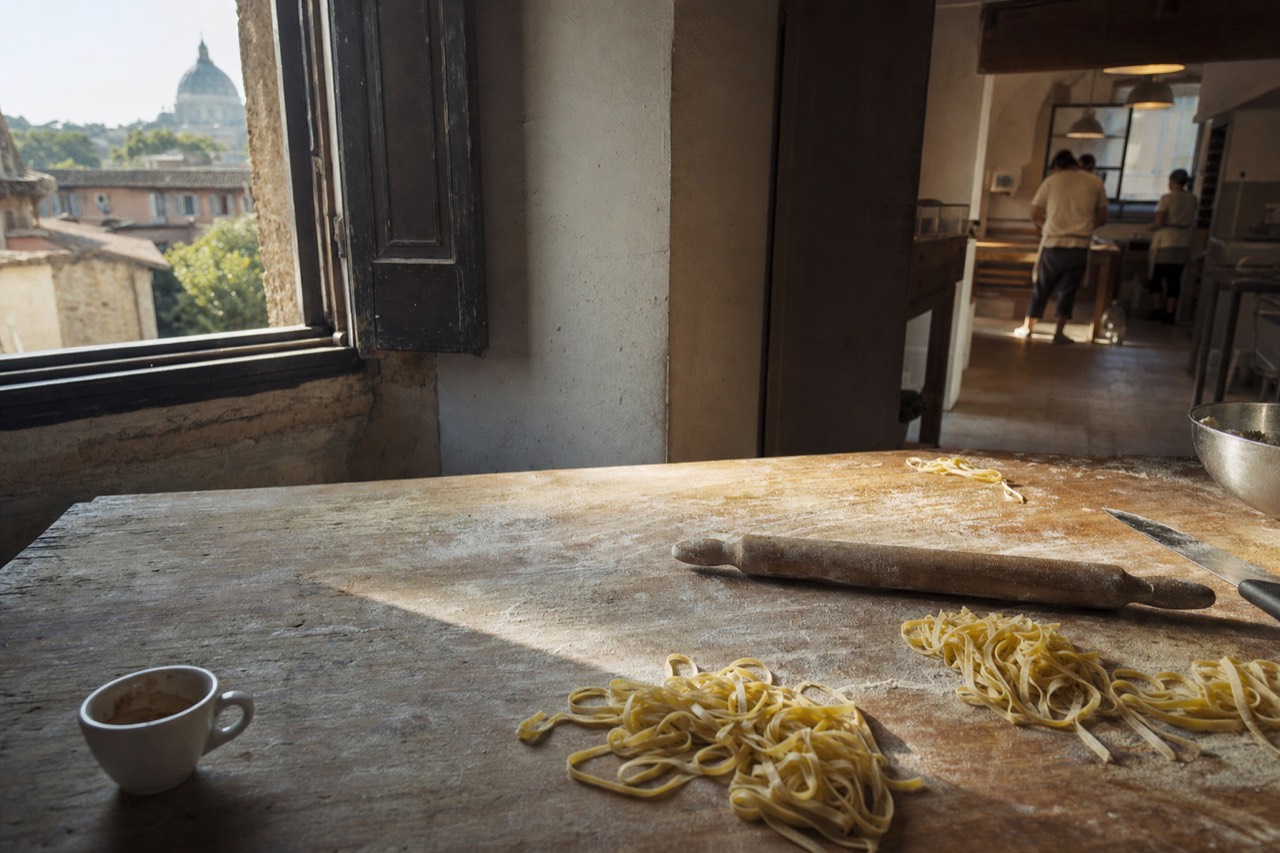
Should I Take A Cooking Class In Rome?
Yes, if a short trip has room for a half-day that ends in a meal you cooked yourself, and no, if it does not. The argument for the class is not the food you eat in the room: it is that the four canonical Roman pastas are the most reproducible Italian dishes there are, so the lesson survives the flight home in a way a restaurant dinner cannot. The honest cost is a lunch or dinner slot.
The question deserves a real weighing rather than a reflexive yes, because the case against is not trivial. Rome is a city where the specific tables people travel for are hard: rooms that take no bookings at all, rooms whose online books release a new day at midnight, rooms that shut on Sundays and for stretches of August. Every hour inside a cooking school is an hour not spent at any of them. A four-hour class taken at the wrong time of day can take your only Roman dinner slot out of the trip entirely, and that trade should be made deliberately (see Roman Dinner Times).
The case for is equally concrete. A restaurant meal in Rome ends when the plates are cleared. A class in which you mix, roll and sauce your own fettuccine hands you a skill with a return on it: the recipe, the hand positions, the sense of how the dough should feel, all of it portable. You can cook tonnarelli cacio e pepe in your own kitchen next month. You cannot rebook the table.
It also solves a planning problem that restaurant dining in Rome creates on its own. A booked cooking class is the one food plan that cannot be lost to a full room, because the seat exists the moment the booking does. Rome's dinner kitchens open late, roughly 19:00 to 19:30, and several open earlier only for lunch, which leaves a real gap in the middle of the afternoon and a scramble at the opening hour. A class fills that gap with something that ends in dinner.
What Do You Actually Learn In A Roman Cooking Class?
Most Rome classes teach pasta: the dough, the shaping, the sauce. The format is consistent across the roster, from a two-hour fettuccine session to a six-hour market-and-class day: you make the pasta by hand, you cook it, you eat it as your meal, and wine or coffee closes the session. What varies is how many shapes, how long, and how much of the market you see first. That is the whole of the choice.
The core curriculum is the Roman canon, and it is short. The four canonical pastas are carbonara, cacio e pepe, amatriciana and gricia, and the traditional carbonara is five ingredients and no more: pasta, guanciale, pecorino romano, egg and black pepper, with no cream, garlic or onion in the traditional version, as La Cucina Italiana's recipe records it. Gricia is the same idea without the tomato; amatriciana adds it. A class that teaches you to build these four teaches you the entire backbone of Roman home cooking, which is why the payoff travels.
The 2.5 to 4 hour formats all follow the same arc. You watch a demonstration, you work the dough yourself, you shape it, and the room eats together at the end. The two-hour fettuccine class by Piazza Navona is the tightest version: bruschetta, fettuccine with a sauce of your choice, and coffee or tea, from $59.23 per person (checked September 2026), rated 4.9 across 2,186 reviews, meeting at Restaurant Tucci on Piazza Navona 94. It meets on the square itself, which is unusual: the nearby pizza class meets at Osteria Pasquino on Piazza di Pasquino, a different square, and one pizza class on the roster publishes no meeting point at all.
The longer formats add either more shapes or a market. The three-hour class from $63.87 per person covers fresh fettuccine and ravioli with sauces, prosecco and unlimited wine, then gelato. The three-and-a-half-hour Testaccio home-cooking class from $103.36 per person (checked September 2026) puts all three of the named sauces in front of you: you cook and eat cacio e pepe, amatriciana and carbonara in one session, rated 4.9 across 88 reviews, meeting on Via Galvani 4 in Testaccio. The four-hour and six-hour formats add a market visit and a longer lunch, covered below.
The formats differ less in skill than in appetite. None of them requires experience, and none of them certifies you as anything. What each one hands over is a set of proportions and a feel for the dough, which is precisely the part a recipe page cannot transmit.
| Class format | What you cook | How long | What you can repeat at home |
|---|---|---|---|
| Two-hour fettuccine class | Bruschetta, fettuccine, one sauce, coffee or tea | About 2 hours | Egg-pasta dough, one sauce |
| Two-shape pasta class | Fettuccine and ravioli, sauces, gelato | About 3 hours | Two shapes, two sauces |
| Three-sauces home class | Cacio e pepe, amatriciana, carbonara | About 3.5 hours | All three classic sauces |
| Market visit plus class | Market walk, pasta lunch, wine | About 4 to 6 hours | Dough, sauce, shopping habits |
Which Class Format Fits A Short Trip?
For a trip of three nights or fewer, the two-hour class is the defensible choice: it fits the late-afternoon gap before dinner without consuming a full meal slot, and it still teaches a complete, repeatable dish. Longer formats suit a fourth or fifth night, or a day deliberately given to food. The six-hour market-and-class day is a commitment, and it should be chosen for itself, not squeezed in.
Timing is what actually decides this, and Rome's meal rhythm sets the constraint. Rome kitchens open for dinner roughly 19:00 to 19:30, with a few from 18:00, and lunch runs roughly 12:30 to 15:00 before the kitchen shuts. A dated example from a restaurant's own posted hours: Armando al Pantheon serves lunch 12:30 to 15:00 and dinner Monday to Friday from 18:00 to 23:00, closing Saturday evening and Sunday, per its own site. Between 15:00 and 19:00 the sit-down options in the centre thin out, and that dead stretch is exactly where a short cooking class slots without costing you a restaurant meal.
A class is also the booking that holds. Where a trattoria may refuse reservations entirely and seat people in arrival order, a class seat is confirmed in advance, at a price fixed before you go, and the roster's classes all carry free cancellation. The planning page on Rome food tours versus classes covers the walk formats; the class question is narrower and comes down to whether the slot exists.
For the two-hour choice, the Piazza Navona fettuccine class is the cleanest fit for a short trip: central, short, and it ends in a meal. The three-hour two-shape class from $63.87 per person (checked September 2026), rated 4.9 across 928 reviews, adds ravioli and unlimited wine, and needs the lunch slot or the late-afternoon one, with a Trastevere-area meeting point that varies by option booked. The Testaccio three-sauces class from $103.36 per person (checked September 2026) is the one for a traveller whose priority is the sauces themselves rather than the shapes, and Testaccio puts the market and the old slaughterhouse quarter around it.
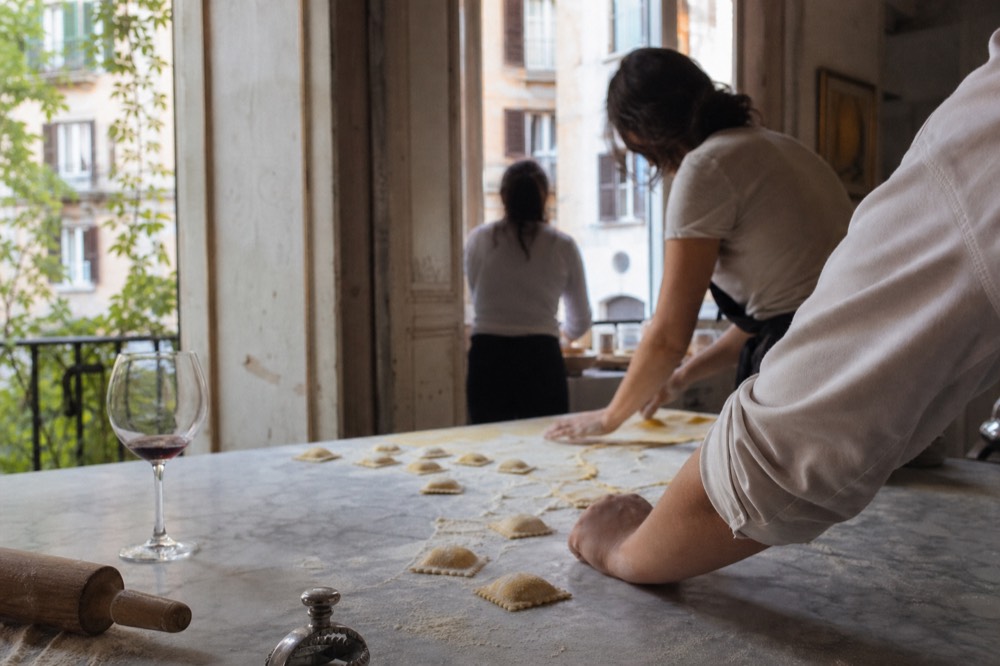
The Honest No: When A Class Is The Wrong Call
Skip the class if the trip is two nights, if you have already secured the one restaurant meal you traveled for, or if the group format itself is the attraction you wanted: classes are seated, guided and structured, and they are not a night out in Trastevere. Also skip it if a market morning matters more, because the longer formats consume that too. The class is a trade, and the trade is real.
The strongest version of the no is the slot arithmetic. A two-hour class plus arrival plus eating the results consumes about three hours of a day; the four-hour and six-hour formats consume the afternoon and the dinner. On a two-night trip that is half your eating time in Rome, and Rome's signature rooms are not interchangeable with anything. The most-recommended trattoria in Trastevere takes no bookings at all, in any service, and seats people in the order they arrive, per its own site. If standing in that line is the reason you came, the class loses.
There is also a format mismatch worth naming. A class is a quiet, seated, instructional half-day. It is not the evening noise of Trastevere, and it is not the counter energy of a market at lunch. Travellers who most remember Rome by its rooms and its streets will find a cooking school calm by comparison. The one thing a class is guaranteed not to be is a famous restaurant: no tour or class on the roster enters any of the celebrated trattorias, and the honest claim is the reverse of that promise. A class removes the reservation problem and covers a curriculum in one outing, nothing more.
The cost side is honest and printable: the roster prices run from $41.33 per person (checked September 2026) for the pizza-and-tiramisu class up to $147.98 for the six-hour market day, in US dollars, and all of them include the meal. Against that, a restaurant dinner's cost is not a figure this site can state, so the comparison is not a price one: it is a time one.
Can You Really Reproduce Roman Pasta At Home?
Yes, and that is the actual argument for the class. Carbonara is five ingredients with no cream, cacio e pepe is two, gricia is three, and amatriciana's traditional version bans garlic, onion and pancetta outright. These are proportion and technique problems, not shopping problems, and a class transmits the technique directly. The one sauce with real physics in it is cacio e pepe, and even that failure mode is now understood and taught.
The canon is unusually small and unusually strict. Amatriciana Tradizionale is registered with the EU as a Traditional Speciality Guaranteed, and the registered specification excludes garlic, onion and pork belly, which is to say pancetta, in so many words. Carbonara's five-ingredient definition is stable across the Italian sources. Gricia is guanciale, pecorino and pepper, the tomato-free ancestor of amatriciana. Four sauces, one cheese, one cured meat, one technique of emulsifying fat, starch and cheese. A traveller who learns that structure in a Roman kitchen can rebuild it anywhere pecorino and guanciale are sold.
| Sauce | Core ingredients | The hard part | What the class fixes |
|---|---|---|---|
| Carbonara | Pasta, guanciale, pecorino, egg, black pepper | Emulsifying without scrambling | Heat control and timing |
| Cacio e pepe | Pecorino, black pepper, pasta water | The cheese clumping | Starch levels and off-heat mantecatura |
| Gricia | Guanciale, pecorino, black pepper | Rendering the guanciale | Pan discipline |
| Amatriciana | Guanciale, pecorino, tomato, optional wine | Balancing acid and fat | Building the base in order |
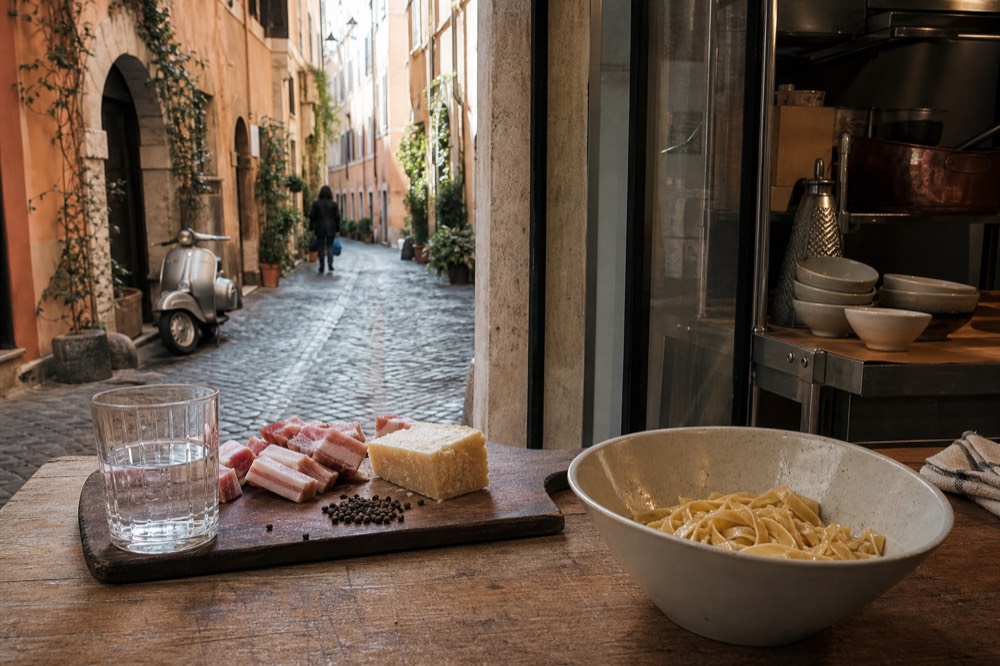
Cacio e pepe deserves its own sentence, because it is the dish most likely to fail at home and the one where a class earns its fee. A 2025 physics paper on the sauce identified starch concentration as the key factor in whether the pecorino emulsion holds, and described a failure regime in which too little starch relative to the cheese mass produces system-wide clumps, a condition the authors call the Mozzarella Phase. Roman classes teach the practical version of this: enough starchy pasta water, the pan off the heat, the cheese added in stages. The insight that the failure is a measurable physical regime, not bad luck, is the kind of thing a guided session communicates in one demonstration.
The home-reproducibility point also narrows which class to take. A pizza class travels less well: most home ovens cannot reach a Roman deck temperature. A gelato class travels not at all. The pasta classes travel completely, and among them the three-sauces Testaccio class teaches the most home-relevant content per hour, since it puts all three sauced classics in your own hands on one afternoon.
How Much Does A Cooking Class In Rome Cost?
Roster prices run from $41.33 per person (checked September 2026) for the pizza-and-tiramisu class to $147.98 for the six-hour market-and-class day, with the pasta formats clustered between $59.23 and $124.26. Every one of the listed classes includes the meal you cooked, and every one carries free cancellation. Duration, not quality, is what moves the price.
The bands are tight enough to plan against. The pizza and pizza-plus-tiramisu formats sit at the bottom, from $41.33 and $56.73 per person (checked September 2026). The pure pasta classes sit in the middle, from $59.23 to $68.52, whether short or three hours long. The classes that add a market or a full home kitchen sit at the top, from $103.36 to $147.98. Ratings across the roster sit at 4.7 and above, so price tracks hours and inclusions rather than satisfaction.
| Class | From (per person) | Rating and reviews | Duration | Meal included |
|---|---|---|---|---|
| Pizza plus tiramisu, flowing wine | $41.33 | 5 across 1,501 | About 3 hours | Yes |
| Fettuccine, Piazza Navona | $59.23 (checked September 2026) | 4.9 across 2,186 | About 2 hours | Yes |
| Two-shape pasta, wine and gelato | $63.87 | 4.9 across 928 | About 3 hours | Yes |
| Three sauces, Testaccio home kitchen | $103.36 | 4.9 across 88 | About 3.5 hours | Yes |
| Market visit plus pasta lunch | $124.26 (checked September 2026) | 4.9 across 278 | About 4 hours | Yes |
| Six-hour market and class | $147.98 | 4.8 across 140 | About 6 hours | Yes |
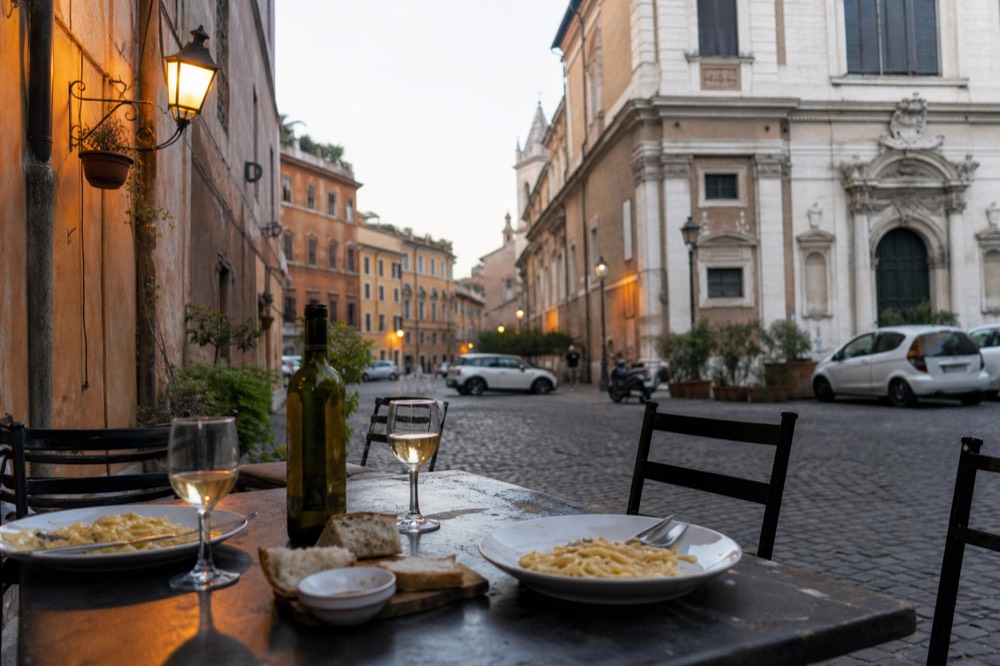
Two structural points are worth more than any single price. First, the two-shape class includes unlimited wine, and the premium Trastevere food walks pour free-flowing wine through the itinerary, so the drink inclusion is where formats compete. Second, pickup is not uniform: the two-shape class and the three-sauces class both list pickup, while the fettuccine class names its meeting point on Piazza Navona 94 and the six-hour day meets at the YellowSquare Rome reception on Via Palestro 51. Check the operator's live listing for what the option you pick actually includes.
The comparison a budget page would make against restaurant meals is not one this site can print as a figure, since no sourced Roman restaurant-meal cost exists. What can be said is the mechanic: the class price is fixed before you go, includes the meal, and carries free cancellation, which a walk-in trattoria queue does not.
What A Rome Cooking Class Does To Your Day Plan
Plan the class against Rome's meal windows. Lunch runs roughly 12:30 to 15:00 and dinner opens 19:00 to 19:30, so a class ending by 14:30 or starting by 16:30 costs no restaurant meal at all, while a 17:00 start on a four-hour format replaces dinner. Classes that end in a meal let you treat them as the meal itself, the whole scheduling trick.
This is the part of the decision most travellers get wrong, and it is checkable. A three-hour class that starts at 17:00 ends at 20:00 with dinner included, which is a dinner replacement, not an addition. A two-hour class at 16:00 ends around 18:30 with you fed, in time for a passeggiata and a late gelato rather than a second full meal. A morning class with a market visit replaces lunch cleanly and leaves the evening free for the room you booked a month out.
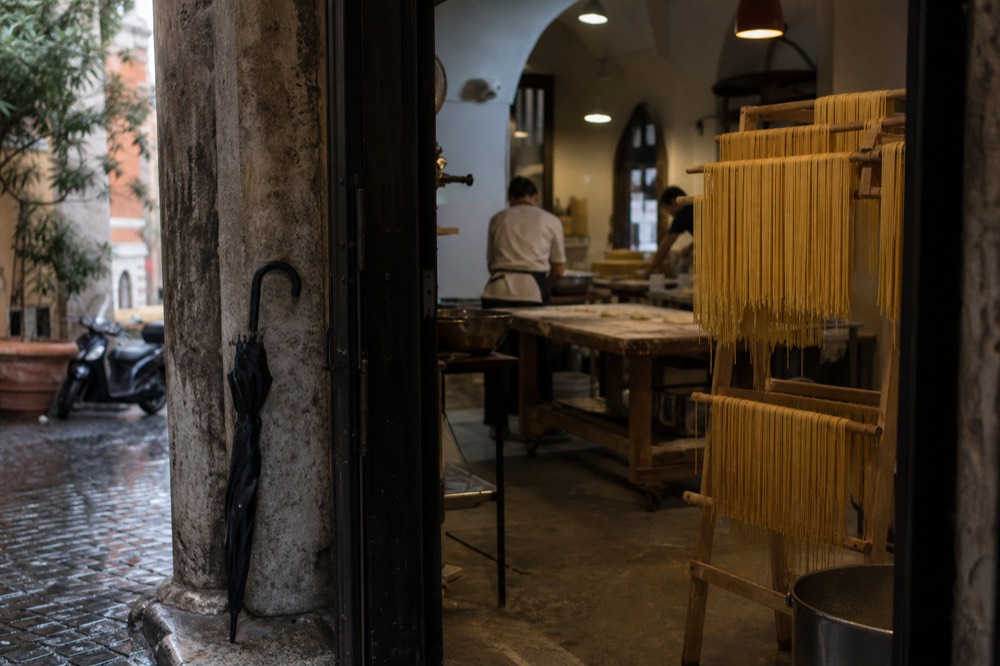
The market formats reward the morning slot specifically. The four-hour market-visit class from $124.26 per person (checked September 2026), rated 4.9 across 278 reviews, meets on Via Palestro 51 and builds a pasta lunch out of a market walk; the six-hour Kitchen of Mamma day from $147.98 does the same at greater length. Both are morning commitments, and the market itself is a morning thing: the Testaccio market trades Monday to Saturday 07:00 to 15:30, so any market-anchored format ends by mid-afternoon at the latest and preserves the dinner.
Where the decision still feels close, the tiebreaker is what you want to still have in a year. A restaurant evening is gone by breakfast. The recipe, the proportions and the hand feel for the four Roman pastas are still in your kitchen. That asymmetry, more than any single listing, is the honest answer to the question, and it is the reason a class earns its slot on a trip long enough to spare one. For the full format-by-format breakdown, the Rome cooking classes guide lays out the whole roster; for the walking alternative, the question is covered from the other side in are food tours worth it in Rome. And if the evening itself, the noise and the wine and the streets of Trastevere, is the thing you are actually shopping for, this article's argument does not apply: book the walk, and let Best Restaurants in Rome handle the rest of the week.
The short answers: yes for trips of three nights or more, two to three hours for most pasta formats, pasta and the classic sauces in most classes, from $41.33 to $147.98 per person (checked September 2026), beginners welcome, and the meal you cooked is always included. Each question below expands one of those answers with the roster's figures.
Common Questions About Taking A Cooking Class In Rome
Should I Take A Cooking Class In Rome?
Yes, if the trip has a spare lunch or late-afternoon slot and you want a skill that survives the flight home, since the four Roman pastas are the most reproducible Italian dishes there are. No, if the trip is two nights or the evenings are already committed to hard-to-book rooms.
How Long Does A Rome Cooking Class Take?
The roster runs from about two hours for the fettuccine class to about six hours for the market-and-class day, with most pasta formats at two to three and a half hours. Every format ends in a meal you cooked.
What Do You Cook In A Rome Cooking Class?
Pasta in most formats: fettuccine, ravioli, and the classic Roman sauces including cacio e pepe, carbonara and amatriciana. Pizza and tiramisu classes exist as a separate, cheaper format.
How Much Does A Cooking Class In Rome Cost?
From $41.33 per person (checked September 2026) for the pizza plus tiramisu format up to $147.98 for the six-hour market and class day, with the pasta classes clustered between $59.23 and $124.26. The meal is included in every listed class.
Is A Cooking Class In Rome Suitable For Beginners?
Yes. No class on the roster requires experience, the formats are demonstration plus hands-on dough work, and the sessions are built around complete dishes rather than technique drills.
Does A Rome Cooking Class Include Dinner?
Every class on the roster ends with the meal you cooked, so the class can serve as lunch or dinner depending on the start time. Free cancellation is offered on all of them.